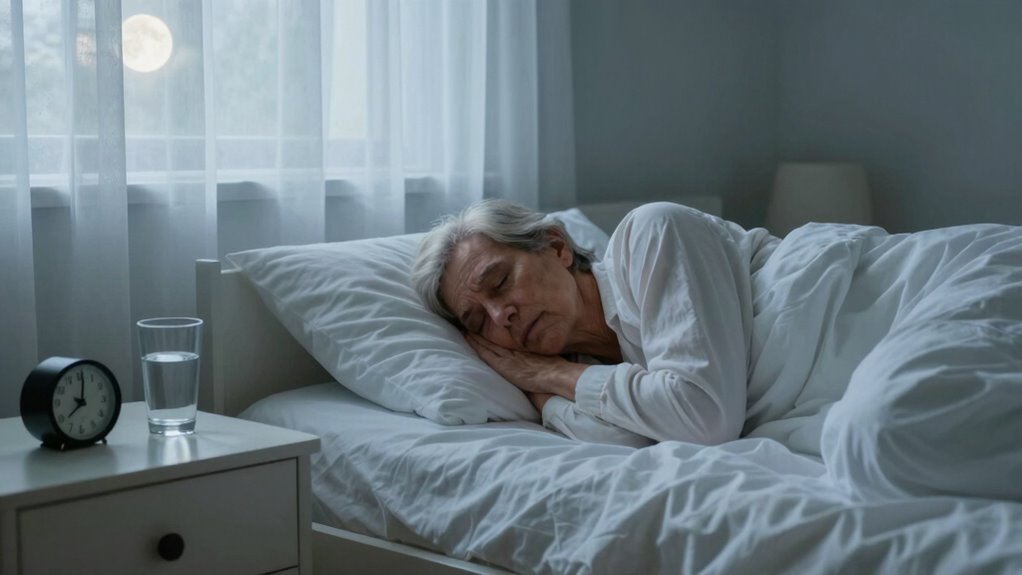

If you’re experiencing sleep problems as an older adult, start by understanding the common causes, like natural age-related changes, health issues, medications, and environmental factors. Creating a “cause map” helps identify specific triggers, so you can adjust your routines, improve sleep hygiene, or seek medical advice if needed. Addressing lifestyle and environmental influences often makes a big difference. Keep exploring to discover targeted strategies that can help you sleep better without panic.
Key Takeaways
- Identify specific sleep disruptions and their causes using a cause map to target effective solutions.
- Track sleep patterns with a journal to recognize triggers and adjust routines accordingly.
- Improve sleep hygiene through consistent schedules, calming routines, and optimal bedroom environment.
- Utilize relaxation techniques like meditation and gentle stretches to promote better sleep.
- Seek professional help if sleep issues persist, worsen, or indicate underlying conditions such as sleep apnea.
What Are Common Sleep Problems in Older Adults?

Many older adults experience sleep problems that can disrupt their daily lives. Common issues include trouble falling asleep, waking up frequently during the night, and early morning awakenings. Poor sleep hygiene often worsens these problems, making it harder to maintain restful sleep. You might notice changes in your dream patterns, such as less vivid dreams or more frequent awakenings during REM sleep. These disruptions can leave you feeling tired and less alert the next day. Understanding these common sleep problems helps you recognize what might be affecting your rest. By improving sleep hygiene—like maintaining a consistent sleep schedule and creating a calming bedtime routine—you can promote healthier sleep patterns. Addressing these issues early can make a significant difference in your overall well-being.
What Causes Sleep Difficulties as We Age?

As you age, your sleep cycles naturally change, making it harder to stay asleep through the night. Medical conditions and medications can also disrupt your rest, while lifestyle factors like stress or caffeine intake play a role. Understanding these causes can help you find ways to improve your sleep quality. Additionally, changes in sleep architecture may affect how restorative your sleep is. Recognizing how biological clock shifts influence sleep patterns can empower you to adopt better sleep habits. Being aware of circadian rhythm changes can help tailor your routines to support healthier sleep. Recognizing how older adults’ sleep patterns evolve over time can further guide effective sleep management strategies, especially when considering age-related biological changes.
Changes in Sleep Cycles
Changes in sleep cycles are a common part of aging that can make it harder to get restful sleep. As you age, your circadian rhythms, or internal body clocks, shift, causing you to feel sleepy earlier in the evening and wake earlier in the morning. These circadian shifts can lead to fragmented sleep and less deep sleep overall. Additionally, REM sleep, which is pivotal for memory and emotional health, undergoes alterations, often resulting in shorter or less intense REM periods. These changes mean you might wake up feeling less refreshed, even if you’ve spent enough time in bed. Recognizing these natural shifts can help you adjust your expectations and develop strategies to improve your sleep quality. Understanding how sleep architecture changes with age can also guide effective interventions for better rest. Being aware of age-related sleep changes can empower you to make adjustments that support healthier sleep habits.
Medical and Lifestyle Factors
While the natural shifts in sleep cycles can explain some difficulties, medical conditions and lifestyle choices also play a significant role in sleep problems among older adults. Certain medications may cause side effects like insomnia or disrupted sleep patterns, making rest harder to achieve. Additionally, dietary influences—such as caffeine intake, heavy evening meals, or alcohol consumption—can interfere with sleep quality. Chronic health issues like arthritis, heart disease, or depression further complicate restful sleep. Lifestyle factors, including irregular routines and reduced physical activity, contribute as well. Recognizing these influences helps you understand that improving sleep isn’t just about aging; it often involves addressing medical treatments and making healthier lifestyle choices to promote better rest.
How to Create a Cause Map for Your Sleep Troubles

To start creating a cause map for your sleep troubles, first identify what specific disruptions you experience during the night. Next, map out the contributing factors, such as lifestyle habits or health issues, that might be affecting your sleep. To gain a clearer understanding of these factors, consider tracking your sleep patterns over several nights to identify recurring issues. Incorporating vetted sleep aids like sound healing science or calming music into your routine can also support better sleep. Additionally, paying attention to automation and monitoring tools can help you identify patterns and triggers affecting your sleep quality. For example, using a Flat Iron Bike might seem unrelated, but understanding your physical activity levels can influence your sleep quality, as regular exercise is known to promote better rest. Finally, develop targeted strategies to address these factors and improve your sleep quality.
Identify Sleep Disruptions
Have you ever wondered what exactly causes your sleep disruptions? The first step is to identify where your sleep hygiene and bedtime routines might be contributing. Poor sleep hygiene, like irregular sleep times or consuming caffeine late, can disturb your sleep cycle. Similarly, inconsistent or disruptive bedtime routines can make it harder to fall asleep or stay asleep. Pay attention to what happens right before bed—are screens still on, or are you engaging in stimulating activities? Keep a sleep journal to track habits, noise levels, and environmental factors. Recognizing these disruptions helps you pinpoint specific issues. Additionally, understanding the home environment can reveal factors like lighting or temperature that interfere with sleep. Factors such as indoor air quality and allergens might also subtly impact sleep quality, so consider how your home’s air quality could be affecting you. Subpar indoor air quality can contribute to sleep problems by increasing exposure to pollutants or allergens that disrupt rest. Improving sleep hygiene by establishing consistent routines and reducing stimulating activities before bed can significantly enhance your sleep quality. Addressing sleep environment issues, like improving ventilation or reducing noise, can further enhance sleep quality. Once identified, you can start adjusting routines and habits to improve your sleep quality. This focused approach creates a clear picture of what’s interfering with your rest.
Map Contributing Factors
Creating a cause map for your sleep troubles involves systematically organizing the factors that contribute to your sleep disruptions. Start by identifying key areas affecting your sleep, such as sleep hygiene, bedtime routines, medical issues, stress, and environment. Mapping these factors helps you see how they relate and impact each other. For example, poor sleep hygiene or inconsistent bedtime routines can lead to difficulty falling asleep. Medical conditions or stress may also disrupt sleep, often worsened by an uncomfortable environment. Use this table to visualize your contributing factors:
| Factor | Impact on Sleep | Possible Solutions |
|---|---|---|
| Sleep hygiene | Irregular sleep schedule | Establish consistent routines |
| Bedtime routines | Disrupted circadian rhythm | Develop calming pre-sleep habits |
| Medical issues | Night awakenings, discomfort | Consult healthcare provider |
| Stress | Insomnia, racing thoughts | Practice relaxation techniques |
| Environment | Noise, light, uncomfortable bed | Optimize bedroom setting |
Develop Targeted Strategies
Once you’ve identified the factors affecting your sleep, developing targeted strategies can help address each issue effectively. Start with improving sleep hygiene by establishing a consistent bedtime, limiting screen time before bed, and creating a cool, dark environment. Incorporate dream analysis to understand subconscious worries that may disrupt your rest, noting any recurring themes. Consider relaxation techniques, like meditation or gentle stretches, to ease your mind. Keep a sleep journal to track patterns and identify triggers. If worries persist, consult a specialist to refine your approach. Additionally, exploring environmental impact of sleep aids or bedroom conditions can contribute to more sustainable sleep solutions. Recognizing sleep disturbances caused by environmental factors such as noise or light pollution can help you implement more effective adjustments. Being aware of piercing care and hygiene practices and their role in overall well-being can also support better sleep quality. Understanding household safety measures can help create a secure sleeping environment that reduces stress and promotes restful nights. Paying attention to bedroom ergonomics and proper mattress support can further improve sleep comfort. These strategies allow you to tailor your efforts to your specific sleep challenges, making your path to restful nights clearer and more manageable.
What Medical Conditions and Medications Affect Sleep?

Medical conditions such as arthritis, asthma, and depression can markedly disrupt sleep in older adults. Chronic illnesses often cause discomfort or mood changes that interfere with rest. Managing these conditions effectively can significantly improve sleep quality. Additionally, incorporating proper sleep hygiene practices can enhance sleep patterns and overall restfulness. Medications for these conditions may have side effects like insomnia, daytime drowsiness, or restless leg syndrome, further complicating sleep quality. Understanding how specific conditions and medications impact your sleep helps you address the root causes effectively. Additionally, recognizing the importance of proper cabling solutions and equipment setup can ensure that any sleep-related devices or monitors function correctly, providing accurate data to inform treatment.
Environmental and Lifestyle Changes to Improve Sleep

Adjusting your environment and daily habits can considerably improve your sleep quality. Focus on creating a calming bedroom environment and optimizing lighting conditions. Dim the lights an hour before bed to signal your body it’s time to wind down. Keep your bedroom cool, quiet, and dark to promote restful sleep. Remove electronics that emit blue light, which can interfere with melatonin production. Establish a consistent sleep schedule, even on weekends, to regulate your internal clock. Limit caffeine and heavy meals close to bedtime. Incorporate relaxing activities like reading or gentle stretching into your nightly routine. These small changes help signal your body that it’s time to rest, making it easier to fall asleep and stay asleep throughout the night. Reducing screen time is especially important for maintaining healthy melatonin levels and overall sleep hygiene. Additionally, environmental factors such as air quality and noise levels can significantly impact sleep quality and should be considered when optimizing your sleep environment.
When Should You See a Sleep Specialist?

If you’ve tried improving your sleep environment and habits but still struggle with restful sleep, it may be time to consult a sleep specialist. You should consider seeing one if your sleep issues persist despite making lifestyle changes. A sleep specialist can conduct a sleep study to diagnose underlying conditions like sleep apnea or restless leg syndrome. Seek professional help if you experience loud snoring, choking during sleep, or excessive daytime fatigue. Worsening insomnia or sleep disturbances that interfere with daily functioning also warrant a consultation. A sleep specialist can provide tailored treatment options and help identify hidden causes of your sleep problems. Don’t ignore persistent issues—getting expert advice can appreciably improve your sleep quality and overall health.
Practical Tips to Improve Sleep Based on Your Cause Map

Understanding the specific causes of your sleep problems can help you choose the most effective strategies to improve your rest. Based on your cause map, focus on enhancing your sleep hygiene and incorporating relaxation techniques. Maintain a consistent sleep schedule by going to bed and waking up at the same time. Create a calming bedtime routine, like reading or gentle stretching. Limit screen time before bed, and avoid caffeine or heavy meals late in the day. Make your bedroom a restful environment—dark, quiet, and cool. Practice relaxation techniques such as deep breathing, meditation, or progressive muscle relaxation to ease your mind. Visualize yourself sinking into a peaceful, comfortable bed, free of distractions. These targeted steps can markedly improve your sleep quality.
Frequently Asked Questions
Can Diet Influence Sleep Quality in Older Adults?
Yes, diet can influence sleep quality in older adults. As you age, maintaining proper diet and nutrition becomes vital, since dietary choices impact your sleep. Incorporate nutrient-rich foods and consider nutritional supplements if needed, as they can support better sleep patterns. Eating a balanced diet tailored for aging helps regulate your sleep cycle, making it easier to rest. Focus on nutrient-dense foods and consult a healthcare professional for personalized advice.
Are There Natural Remedies for Sleep Problems in Seniors?
You can try natural remedies like herbal supplements, such as valerian root or melatonin, which may promote relaxation and improve sleep. Aromatherapy techniques, like lavender or chamomile essential oils, also help create a calming environment. While these options sound soothing, remember they work differently for everyone. Always consult your healthcare provider before starting any new remedy, especially if you’re on medication or have health concerns.
How Does Mental Health Impact Sleep in Older Adults?
Mental health profoundly impacts your sleep as poor emotional well-being can cause insomnia, restless nights, and disrupted sleep patterns. When you’re anxious, depressed, or stressed, it’s harder to fall asleep and stay asleep. Prioritizing your emotional well-being through relaxation techniques, therapy, or social connections can improve your sleep quality. Addressing mental health issues early helps create a healthier sleep routine and enhances overall well-being in older adults.
What Role Does Exercise Play in Improving Sleep?
Exercise benefits your sleep by promoting better physical activity, which helps regulate your sleep-wake cycle. Regular physical activity can reduce insomnia and make it easier to fall asleep and stay asleep throughout the night. You should aim for activities like walking or gentle stretching, especially earlier in the day. By staying active, you not only improve your overall health but also create a foundation for more restful, restorative sleep.
Can Sleep Problems Cause Other Health Issues in Seniors?
Sleep problems can be the dominoes toppling, causing other health issues in seniors. Poor sleep hygiene weakens your immune system and increases risks for heart disease and diabetes. Medication effects can also disrupt sleep patterns, worsening overall health. When you neglect quality sleep, you unintentionally set off a chain reaction, making it harder to maintain your health and well-being. Prioritizing restful sleep helps protect your body from these potential health hazards.
Conclusion
By understanding your cause map, you’re taking control of your sleep struggles. But remember, identifying the root is just the beginning. There could be hidden factors waiting to be uncovered, and solutions that go beyond what you expect. Are you ready to explore deeper? Your journey to better sleep might reveal more than you ever imagined. Keep questioning, keep searching — the key to restful nights might be closer than you think.