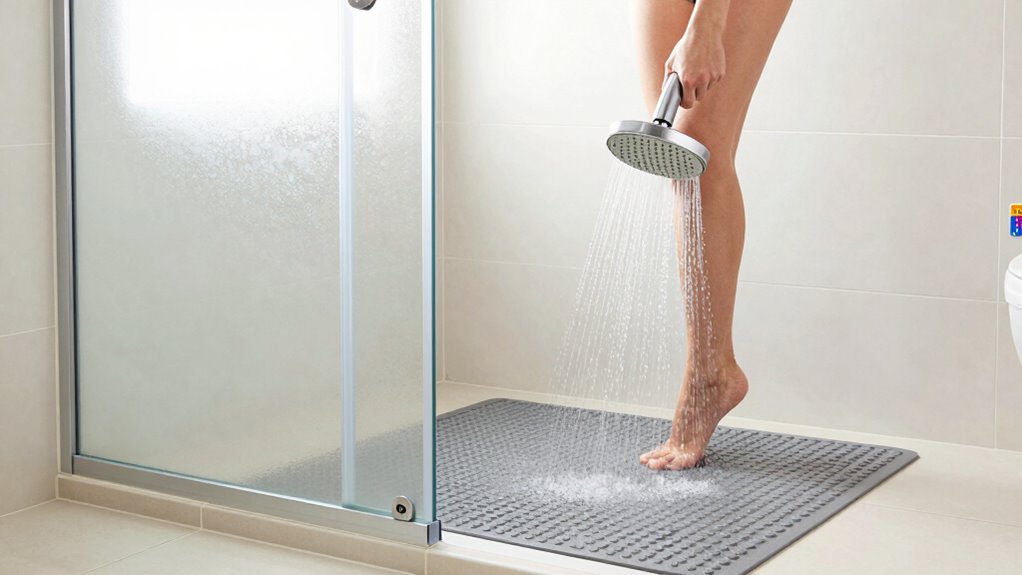
To reduce slips fast, focus on creating a safer shower routine by ensuring proper ventilation, using non-slip mats, and installing secure grab bars. Keep the floor clear of clutter, test water temperature before stepping in, and hold onto support bars when entering or exiting. Regularly clean and inspect fixtures for hazards. Practicing balance exercises and upgrading bathroom features can also help prevent falls—carry on to learn how to make your shower even safer.
Key Takeaways
- Install non-slip mats and grab bars in strategic locations to enhance stability and prevent slips.
- Ensure proper bathroom ventilation and control water temperature to reduce moisture and dizziness risks.
- Keep the shower area clutter-free and dry, regularly inspecting for hazards like mold or loose fixtures.
- Use bright lighting and accessible fixtures to facilitate safe entry, exit, and movement within the shower.
- Practice routine safety checks and balance exercises to maintain stability and quickly address potential hazards.
Why Shower Safety Is So Important
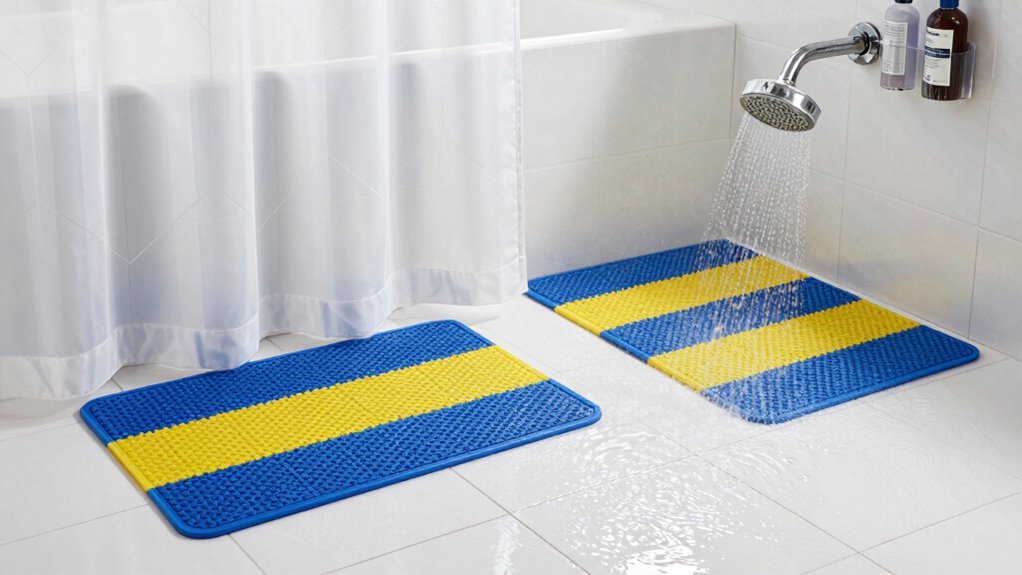
Shower safety is essential because slips and falls are common in the bathroom, especially in the shower where surfaces can be slippery. Proper bathroom ventilation helps keep the area dry and reduces excess humidity that can make surfaces slick. When ventilation is inadequate, moisture lingers, increasing the risk of slipping on wet tiles. Adjusting water temperature is equally important; water that’s too hot can cause you to become dizzy or faint, impairing your balance. Keeping the water at a comfortable, moderate temperature minimizes hazards and keeps you alert. Good ventilation and controlled water temperature work together to create a safer shower environment, reducing the likelihood of accidents. Additionally, understanding the importance of ventilation effectiveness in home safety can be beneficial for creating a relaxing, visually pleasing space, similar to how a safe shower environment enhances your daily routine. Proper airflow management can significantly improve overall bathroom safety by preventing mold growth and maintaining a consistently dry environment. Ensuring non-slip surfaces are in place is another crucial step to prevent accidents. Prioritizing these factors helps protect you from injuries and makes your shower routine safer, especially when combined with proper safety accessories like grab bars and non-slip mats.
How Wet Surfaces Increase Slips in the Shower
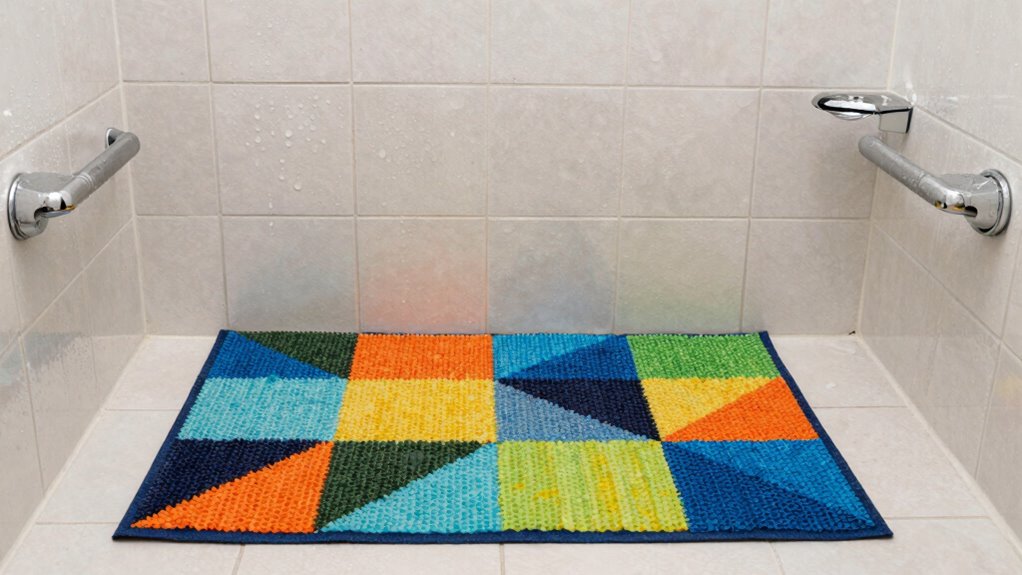
Wet surfaces in the shower considerably increase the risk of slipping because water makes tiles and other flooring surfaces slick and unpredictable. These wet floor hazards create slippery surfaces that challenge your balance and stability. When the floor is wet, even small movements can cause you to lose footing. Soap, shampoo, and water residue make surfaces even more hazardous, adding to the slipperiness. Without proper precautions, you’re more likely to fall and injure yourself. Recognizing how water transforms your shower floor into a hazard zone is essential for preventing accidents. Incorporating mind-body healing techniques such as mindful movement and awareness can help you stay attentive and cautious during your shower routine, further reducing your risk of slips. Developing slip prevention strategies can empower you to take proactive steps to keep your shower safe. Staying mindful of these slippery surfaces and taking steps to keep your shower dry can profoundly reduce your chances of slipping and falling, keeping you safe during every shower routine. Additionally, understanding how surface conditions influence slip risks can guide you in choosing safer flooring options or treatments to enhance grip. Being aware of other hazards like uneven surfaces or soap buildup can also help in maintaining a safer shower environment.
Top Shower Safety Tips to Prevent Slips and Falls
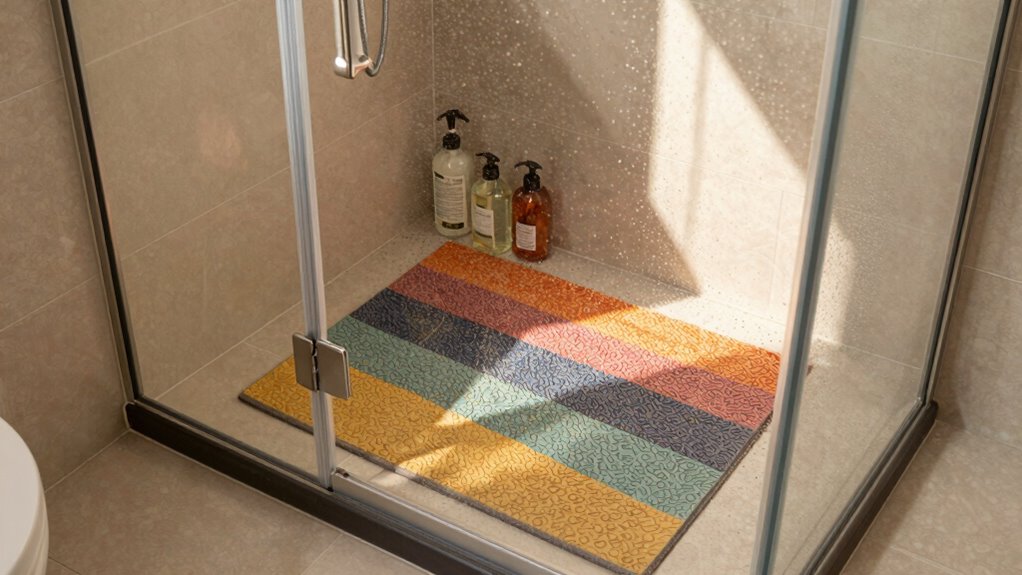
To prevent slips and falls in the shower, implementing simple safety strategies can make a significant difference. First, ensure your bathroom lighting is bright enough to clearly see the shower floor and walls, reducing the risk of missteps. Next, prioritize shower curtain safety by using a sturdy, properly hung curtain to prevent water from spilling onto the floor, which can create slippery spots. Additionally, keep the shower area tidy by removing clutter and loose items that could cause you to lose balance. Consider installing a dimmer switch if your bathroom lighting is too harsh or too dim, enhancing visibility. Using non-slip mats in the shower area can also significantly reduce the risk of slipping. Properly maintaining bathroom lighting and ensuring all safety measures are in place can further enhance your shower safety. Incorporating bathroom safety features, such as grab bars and handrails, can provide additional support and stability. Regularly inspecting your bathroom for potential hazards and updating safety equipment can help maintain a secure environment over time. Additionally, performing regular safety checks ensures that all safety devices remain effective and in good condition. These small adjustments create a safer environment, making your shower routine more secure and slip-free.
Choose the Best Non-Slip Mats and Grab Bars for Your Shower
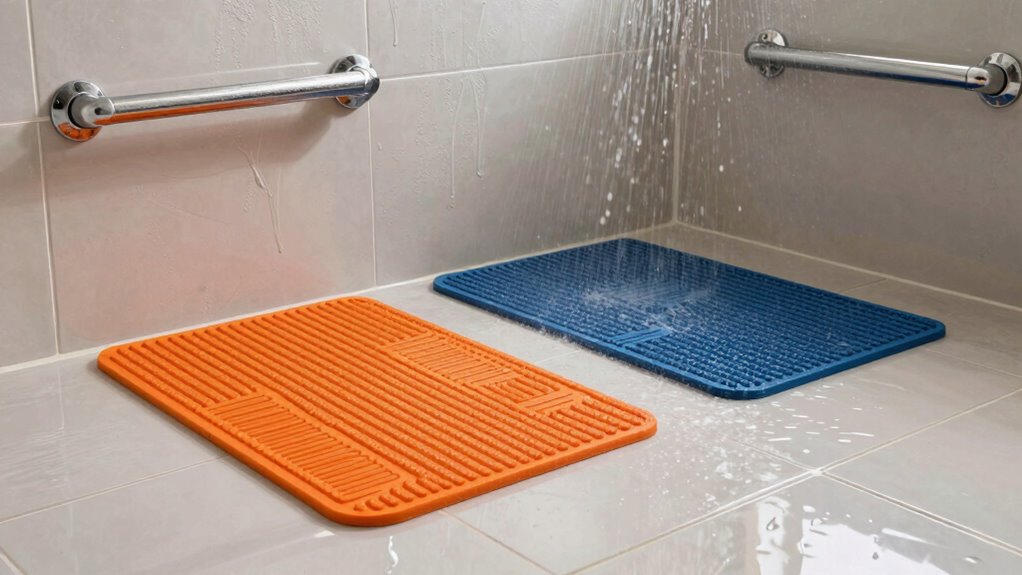
Choosing the right non-slip mats and grab bars can substantially boost your shower safety. When doing a mats comparison, look for textured surfaces that grip your feet even when wet. Opt for mats with suction cups or anti-slip backing to prevent slipping. For grab bars, consider the different grab bar types—straight, angled, or adjustable—based on your shower layout and needs. Secure mounting is essential; look for sturdy, corrosion-resistant materials like stainless steel or reinforced plastic. Properly installed grab bars provide reliable support, especially in high-risk areas. The installation process plays a crucial role in ensuring safety and stability of these fixtures. Combining a high-quality non-slip mat with the appropriate grab bar types ensures stability and reduces the risk of falls. Take the time to select products that fit your shower’s size and your safety requirements for maximum protection.
How to Arrange Your Shower for Maximum Safety
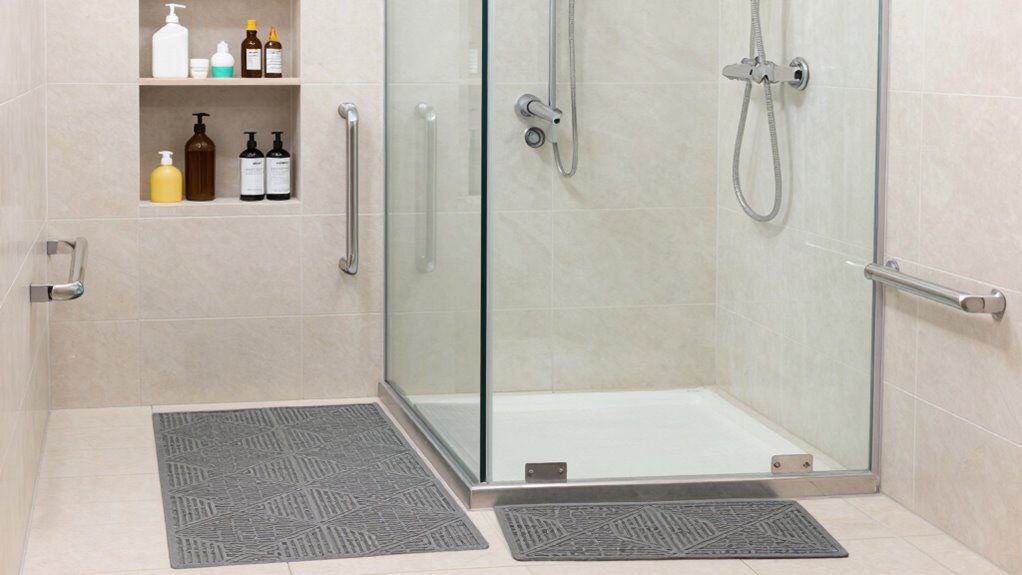
To make your shower safer, start by placing non-slip mats in key areas to prevent falls. Install sturdy grab bars where you need extra support, especially near the shower entrance and controls. Arrange everything for easy access, so you minimize the risk of slipping or losing balance while you shower. Incorporating Free Floating principles can also help you create a more adaptable and secure shower environment. Additionally, choosing a shower stall with good ventilation can prevent mold buildup and ensure a dry, safe space. Ensuring proper water temperature control is also crucial to avoid accidental scalding and enhance overall safety. Using safety-focused household products designed specifically for shower safety can further reduce hazards in your shower routine.
Use Non-Slip Mats
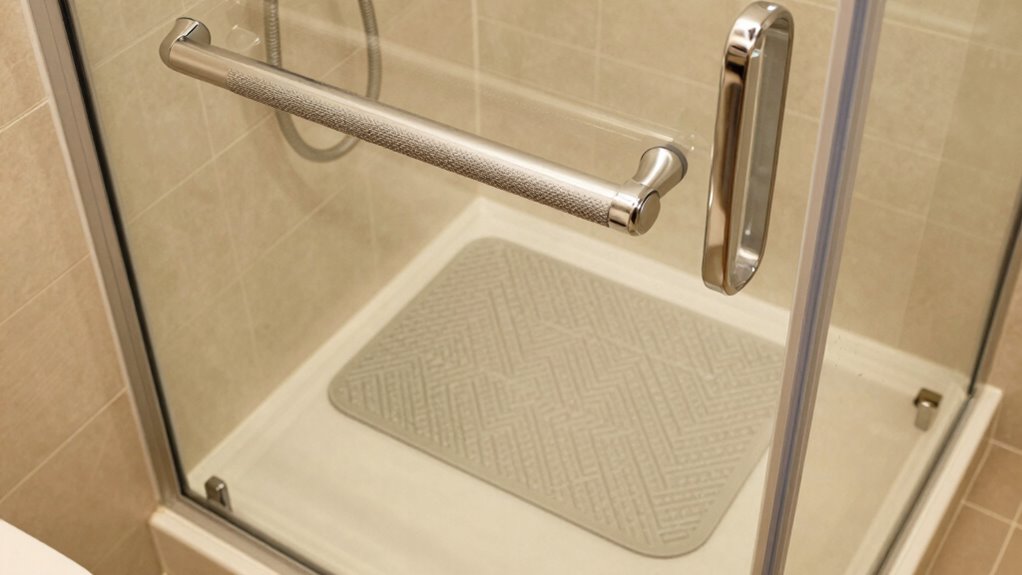
Placing non-slip mats inside your shower considerably reduces the risk of slips and falls. These mats enhance mat safety by providing traction underfoot, especially on wet surfaces. Opt for a textured, rubber-backed mat designed for shower use, or use bath rugs with non-slip backing to keep them in place. Arrange the mat where you stand most often, like directly in front of the showerhead or drain. Guarantee the mat covers a broad enough area to prevent slipping. Keep the surface clean and dry to maintain grip and prevent mold buildup. Proper device maintenance of bath mats enhances their effectiveness and longevity. Additionally, selecting mats with humidity management features can help prevent mold and mildew growth over time. Choosing mats with antimicrobial properties can further reduce the risk of bacteria and mold development, promoting a safer shower environment. Regularly inspecting and replacing worn or damaged mats is crucial for ongoing slip prevention. Using quality materials in your shower mats ensures better durability and safety. By choosing the right bath rug or shower mat, you make your shower safer and more comfortable. Remember, a secure footing is vital to prevent accidents.
Install Grab Bars
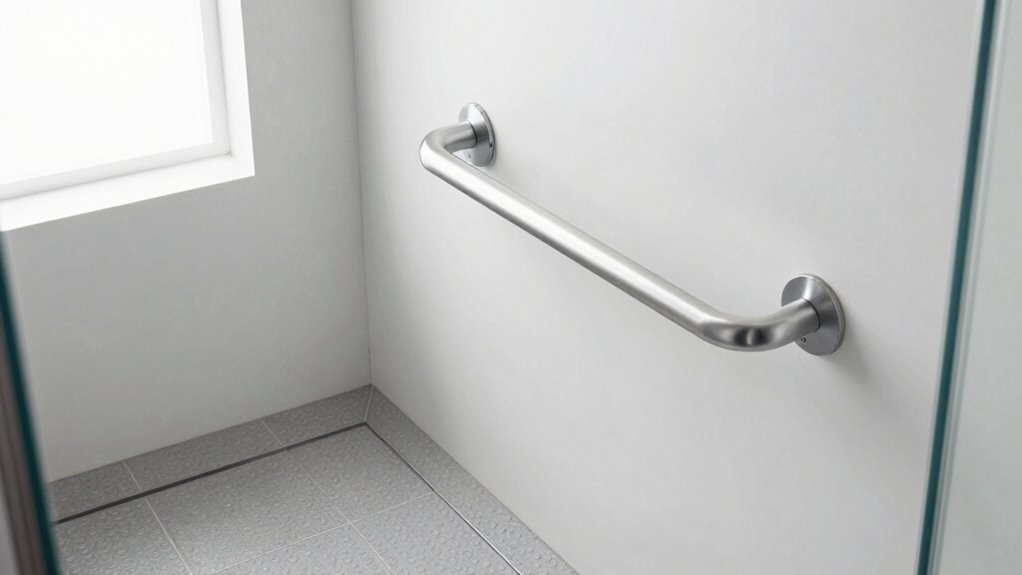
Installing grab bars in your shower can substantially enhance safety by providing sturdy support when needed. Proper grab bar installation is essential to ensure they hold your weight and prevent falls. First, identify the most critical spots—near the shower entrance, along the walls where you stand, and close to the shower controls. Use durable, corrosion-resistant materials designed for bathroom safety. Secure the grab bars into wall studs or use appropriate anchors if studs aren’t accessible. Make sure they are firmly attached and positioned at a height that feels comfortable and natural for you. Additionally, understanding regional bathroom safety standards can help ensure your installation meets recommended guidelines. Confirming that the installation is compliant with safety codes can further prevent accidents and ensure long-term durability. Proper installation techniques are crucial for the longevity and safety of your grab bars. By carefully installing grab bars, you create a safer shower environment, reducing the risk of slips and falls. This simple step can make a significant difference in your bathroom safety routine.
Optimize Shower Layout
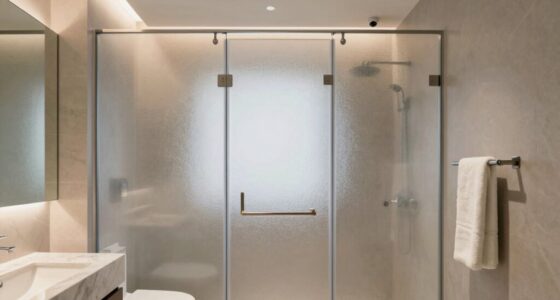
Arranging your shower for maximum safety involves thoughtful placement of fixtures and accessories to minimize hazards and enhance accessibility. A well-planned shower layout improves bathroom ergonomics and reduces the risk of slips. Consider positioning the showerhead at a comfortable height and placing grab bars near the entrance and shower controls. Keep the floor clear of clutter to prevent tripping.
Visualize your setup with these key features:
- Non-slip mats or textured tiles for secure footing
- Accessible soap dishes or holders within easy reach
- Adequate space around fixtures to move freely
Properly Entering and Exiting Your Shower Safely
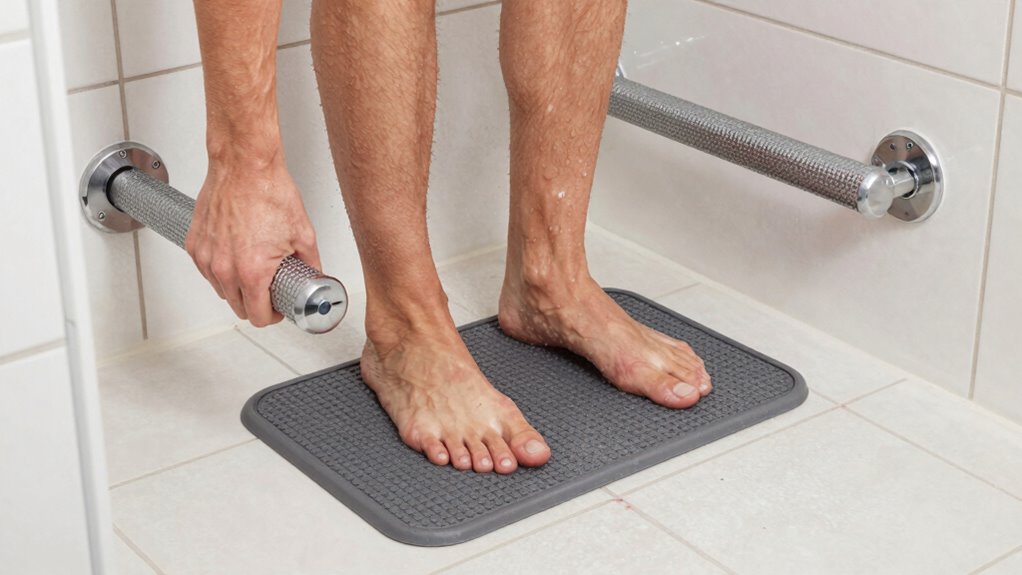
To enter and exit your shower safely, you need to be mindful of your footing and balance. Use a sturdy shower seat if you have mobility concerns, as it provides added stability when stepping in or out. Before entering, test the water temperature to prevent scalding and adjust the tap accordingly. When stepping into the shower, hold onto grab bars or stable surfaces, especially if the floor is wet. When exiting, turn off the water first, then carefully step onto a non-slip mat or surface. Take your time, avoid rushing, and use the shower seat if needed. Maintaining steady footing and controlling water temperature helps prevent slips and falls, making your shower safer and more comfortable.
Keep Your Shower Safe by Regular Cleaning and Maintenance
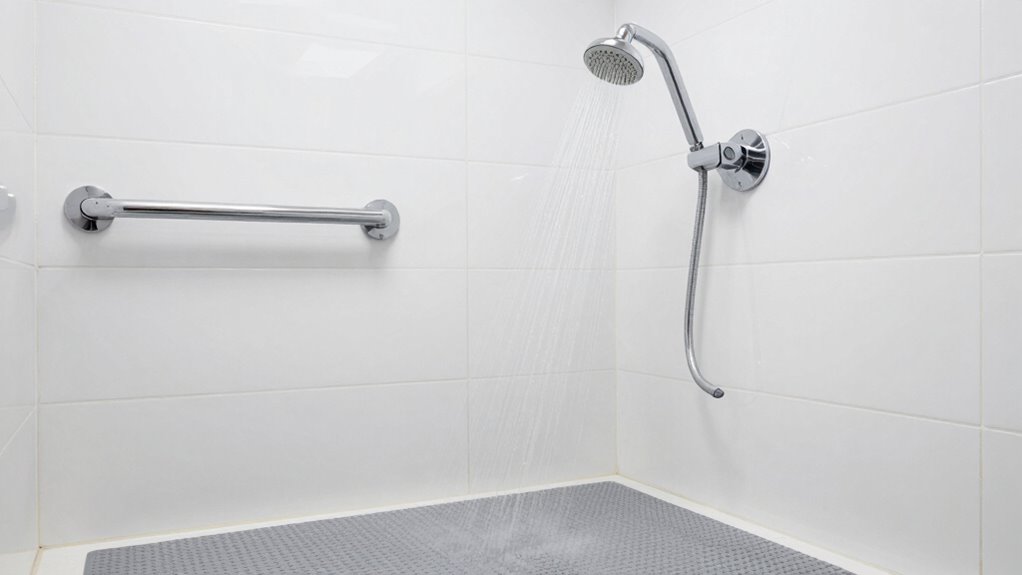
Regular cleaning and maintenance are essential to keep your shower safe and prevent accidents. By staying on top of routine tasks, you reduce the risk of slips caused by slippery buildup or mold growth. Focus on removing soap residue, which can make surfaces slick, and prevent mold by keeping the area dry and well-ventilated. Regularly inspect your shower for any cracks or loose tiles that could cause tripping hazards.
Regular cleaning and inspection keep your shower safe and mold-free.
You can picture a clean shower with:
- Sparkling tiles free of soap scum and residue
- No visible mold in corners or grout lines
- Dry, ventilated surfaces that prevent dampness
Consistent cleaning keeps your shower safe, minimizes slip hazards, and maintains a hygienic environment.
Balance Exercises to Reduce Fall Risks in the Bathroom
In addition to keeping your shower clean, practicing balance exercises can considerably lower your risk of falls in the bathroom. Regular balance exercises strengthen your core and lower body, making you more stable on slippery surfaces. Simple routines like standing on one leg for 10-15 seconds, heel-to-toe walking, or gentle leg lifts can make a big difference. Incorporate these into your daily routine to enhance fall prevention. You’ll notice improved stability, which helps you navigate the bathroom safely and confidently. Remember, balance exercises don’t require special equipment and can be done anywhere. Consistency is key—over time, you’ll develop better control and reduce your chances of slipping or losing footing, making your bathroom a safer place for everyone.
Recognize Common Shower Hazards and How to Fix Them
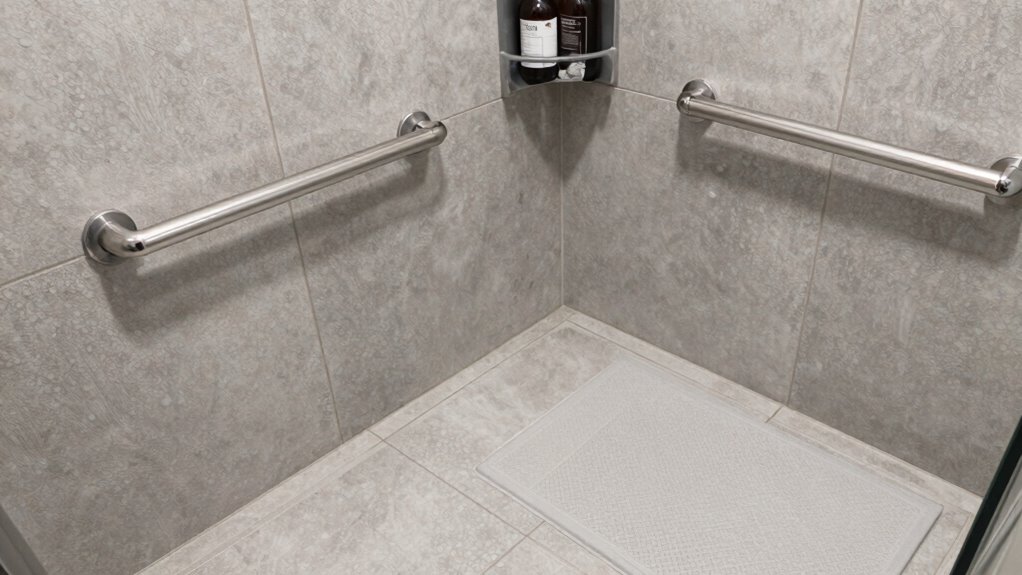
Many common shower hazards can lead to slips and falls if left unaddressed. Recognizing these dangers helps you stay safe. Shower door hazards, like unsecured or broken doors, can cause sudden shifts or falls if not fixed. Soap dish dangers are also common; loose or sharp-edged soap dishes can cause cuts or tripping hazards. Other hazards include:
Address common shower hazards like broken doors and loose soap dishes to prevent slips and injuries.
- Slippery soap scum buildup on tiles or floors
- Wobbly grab bars or handles
- Loose or uneven mats and rugs
To fix these issues, secure or replace broken shower doors, install non-slip mats, and ensure soap dishes are firmly attached or stored safely away from high-traffic areas. Staying alert to these hazards reduces the risk of slips and creates a safer shower environment.
When to Consider Professional Modifications for Bathroom Safety
Sometimes, DIY fixes aren’t enough to guarantee your bathroom is completely safe. If your bathroom lighting is dim or uneven, it can increase the risk of slips and falls, making professional upgrades worthwhile. Likewise, if your shower curtain isn’t securely installed or doesn’t prevent water from splashing, it can create slippery floors outside the shower. Consider professional modifications if you notice persistent hazards like poor lighting, unstable fixtures, or ineffective shower curtain safety measures. A licensed contractor can install better lighting, grab bars, or non-slip flooring to reduce fall risks. These upgrades provide long-term safety, especially if you’re dealing with mobility issues or ongoing hazards. When DIY solutions aren’t enough, investing in professional modifications can markedly improve your bathroom’s safety and peace of mind.
Frequently Asked Questions
How Often Should I Replace Shower Safety Equipment?
You should replace your shower safety equipment every 6 to 12 months, depending on the replacement schedule and safety equipment lifespan. Regularly inspect items like non-slip mats, grab bars, and adhesive strips for wear and tear. If you notice any deterioration, fraying, or looseness, substitute them immediately. Keeping up with these replacements ensures your safety remains effective, preventing slips and falls during your shower routine.
Are There Specific Shoes Recommended for Shower Safety?
Yes, you should choose non-slip footwear or waterproof shoes for shower safety. These shoes provide better grip on wet, slippery surfaces, reducing your risk of falls. Look for shoes with textured soles and good traction. Avoid regular sneakers or sandals that can slide easily. Wearing proper non-slip footwear guarantees you maintain stability, especially on smooth or wet shower floors, keeping you safe during your routine.
Can Everyone Benefit From Shower Safety Modifications?
Yes, everyone can benefit from shower safety modifications. Installing a bathroom grip or non-slip mats helps prevent slips and falls, especially if you’re elderly, have mobility issues, or tend to rush. These simple upgrades provide extra stability and confidence during your shower routine. Even if you’re careful, accidents happen. Incorporating bathroom grip features and non-slip mats creates a safer environment for all users, reducing the risk of injury.
What Are Signs That My Shower Needs Safety Upgrades?
If you notice water pooling or a sudden increase in bathroom hazards, your shower likely needs safety upgrades. For example, Jane slipped on a wet, slippery surface, highlighting the risk of slippery surfaces. Signs include loose grab bars, cracked tiles, or worn-out mats. Addressing these issues quickly prevents falls, ensuring your shower remains a safe space by reducing hazards like slippery surfaces and other bathroom dangers.
How Do I Educate Family Members About Shower Safety?
You can educate your family about shower safety by explaining the importance of bathroom lighting and proper grab bar placement. Show them how good lighting reduces hazards and demonstrate how grab bars provide stability. Encourage them to ask questions and practice safe habits. Make safety a family priority by sharing tips regularly, and consider creating a simple checklist to reinforce the importance of bathroom safety every time they shower.
Conclusion
By following these shower safety tips, you can substantially reduce your risk of slips and falls. It’s a common belief that non-slip mats alone prevent accidents, but research shows combining mats with grab bars and regular maintenance offers the best protection. Remember, creating a safer shower environment isn’t just about physical measures—it’s about understanding how your habits and surroundings interact. Embrace a proactive approach, and you’ll enjoy safer, more confident showers every day.