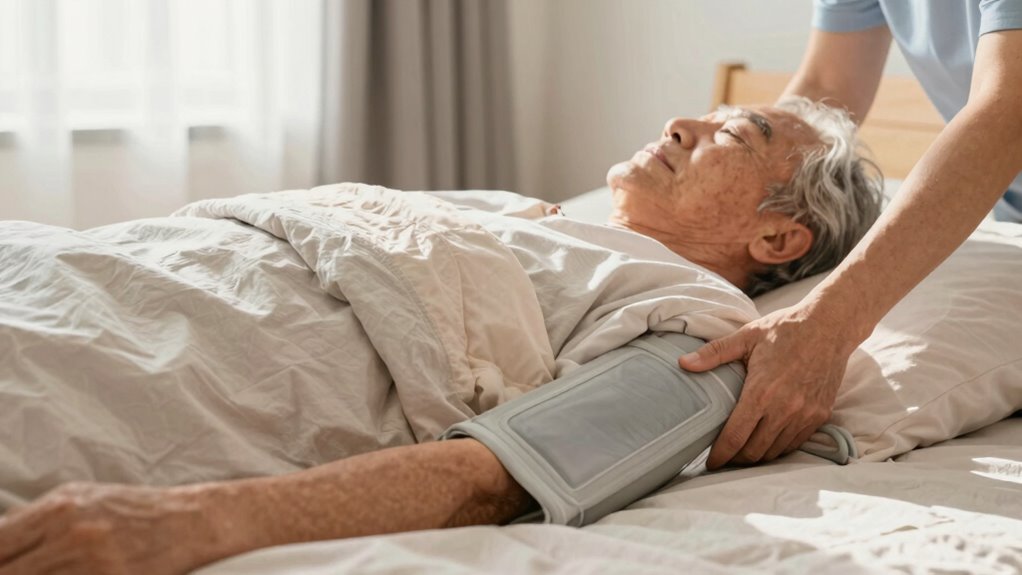

To prevent pressure ulcers, you should reposition your loved one every two hours, ensuring each position lasts at least 15 minutes. Use supportive devices like pillows, keep head elevation below 30 degrees, and vary positions to distribute weight evenly. Watch for signs of discomfort or skin changes, and adjust your schedule as needed. Using simple reminders and proper techniques can make this routine easier—keep going, and you’ll learn how to protect their skin even better.
Key Takeaways
- Reposition individuals every two hours to relieve pressure and prevent skin breakdown.
- Ensure each position is held for at least 15 minutes to allow pressure redistribution.
- Use supportive devices like pillows and proper positioning techniques to enhance comfort and protection.
- Regularly monitor skin for early signs of redness or soreness, adjusting the schedule as needed.
- Maintain clear communication with caregivers and healthcare providers to tailor repositioning routines effectively.
Why Is Repositioning Important to Prevent Pressure Ulcers?
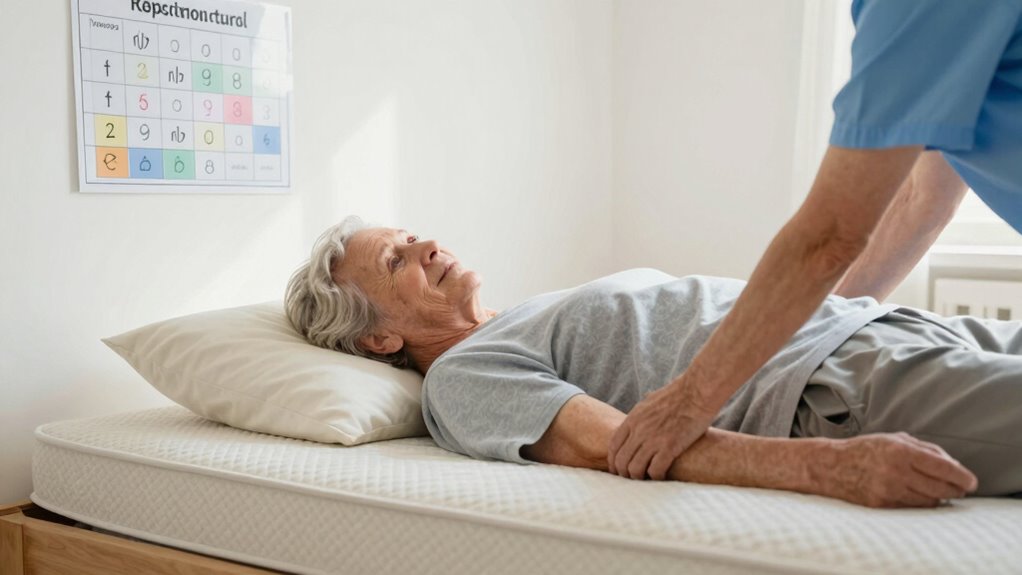
Have you ever wondered why repositioning is so essential in preventing pressure ulcers? Proper repositioning helps distribute your loved one’s weight evenly, reducing pressure on vulnerable areas like the heels, hips, and sacrum. Adjusting the bed height is also vital; lowering the bed makes it easier to reposition safely and minimizes shear and friction. Regular skin assessments are crucial to catch early signs of pressure damage, such as redness or breakdown, before they worsen. By maintaining proper bed height and routinely checking the skin, you can identify problem spots early and take prompt action. Repositioning, combined with these practices, helps protect the skin and underlying tissues, significantly lowering the risk of pressure ulcers developing over time. Understanding pressure ulcer prevention is key to promoting recovery and maintaining skin integrity. Additionally, being aware of pressure distribution techniques can further enhance efforts to prevent pressure injuries effectively. Proper education on pressure redistribution strategies empowers caregivers to implement effective repositioning schedules and protect vulnerable skin areas.
How Often Should You Reposition Your Loved One?

To effectively prevent pressure ulcers, it’s important to know how often your loved one should be repositioned. Typically, repositioning every two hours is recommended to relieve pressure and promote healthy bed positioning. This schedule helps prevent tissue damage and encourages circulation. Proper caregiver training ensures you understand the correct techniques and timing for repositioning, reducing the risk of injury. Regular intervals are key, but individual needs may vary based on health conditions. If your loved one is unable to shift themselves, you’ll need to be diligent with the schedule. Incorporating pressure redistribution surfaces can further enhance comfort and safety. Understanding pressure management techniques can optimize comfort and healing. Staying informed about regional flavors and techniques also allows caregivers to provide a more personalized and engaging care experience. Maintaining a consistent repositioning routine is essential for pressure ulcer prevention, and staying informed through caregiver training keeps you confident and effective in providing care. Additionally, considering individual health factors can help tailor the repositioning schedule to better suit your loved one’s specific needs.
What Are the Best Positions to Reduce Pressure?

Choosing the right positions is crucial for reducing pressure and preventing ulcers. To do this effectively, focus on shifting your loved one’s weight away from pressure points like the sacrum, hips, heels, and elbows. Elevating the head to no more than 30 degrees can help reduce pressure on the sacrum and tailbone. Side-lying positions redistribute weight across the hips and shoulders, minimizing skin breakdown. When repositioning, avoid keeping your loved one in the same position for too long, especially on pressure points. Using supportive devices like pillows can help maintain these positions comfortably. Regularly changing positions ensures that pressure isn’t concentrated on vulnerable areas, lowering the risk of skin breakdown and pressure ulcers. Proper positioning is a critical part of pressure relief. Understanding historical movements like citizen actions during pivotal moments can also inspire proactive care strategies. Additionally, incorporating pressure redistribution techniques can further enhance comfort and skin integrity. Adopting a comprehensive repositioning schedule tailored to your loved one’s needs can significantly improve their comfort and health. Regular education on pressure management can empower caregivers to implement effective repositioning routines and prevent complications. Incorporating evidence-based practices ensures that repositioning techniques are both safe and effective.
How to Create a Simple Repositioning Schedule

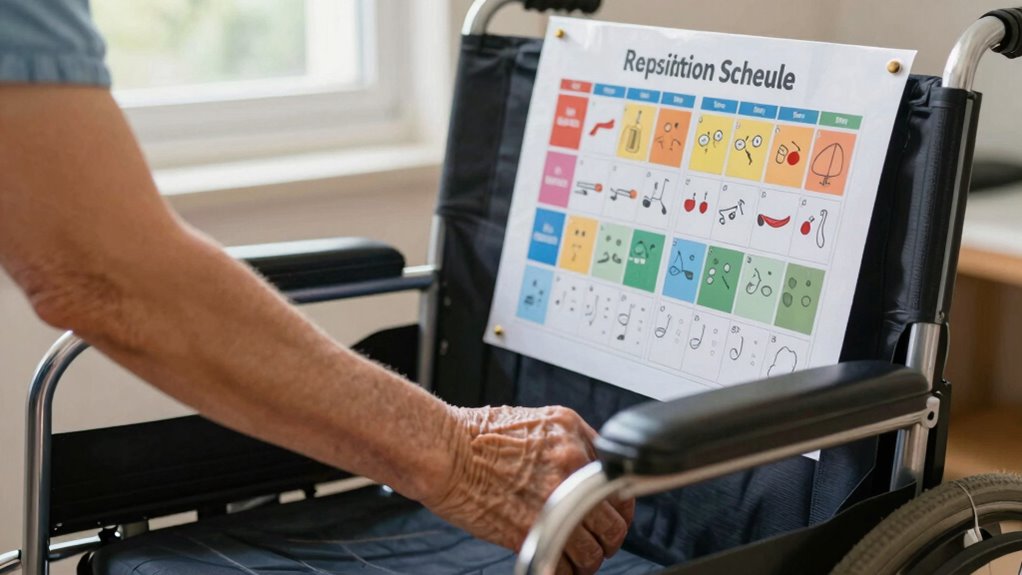
Creating a simple repositioning schedule is vital for effectively preventing pressure ulcers. Start by evaluating your loved one’s needs and identifying the best treatment options, including specific positions and intervals. Develop a routine that rotates them every two hours, ensuring pressure is relieved regularly. Clear documentation helps everyone stay consistent. Proper caregiver training is essential; family members and caregivers should understand the importance of timely repositioning and how to do it safely. Use visual reminders or charts to keep track of repositioning times. Keep communication open with healthcare providers to adjust the schedule as needed. A straightforward, well-planned schedule minimizes risks and promotes comfort, making pressure relief manageable for both caregivers and those in your care. Incorporating art and culture into caregiving routines can also promote emotional well-being and reduce stress for everyone involved. Additionally, understanding pressure distribution techniques can enhance the effectiveness of repositioning efforts. Recognizing the importance of piercing care and hygiene ensures that skin integrity is maintained during repositioning routines. Incorporating educational tools such as visual aids and checklists can further improve adherence to the schedule and ensure consistent care. Engaging with connected fitness technology can also help caregivers monitor and track repositioning intervals more effectively.
How Long Should Each Repositioning Last?

Determining how long to stay in each position depends on your individual needs and comfort levels. Follow duration guidelines but stay attentive to signs of discomfort or skin changes. Monitoring these factors helps guarantee effective repositioning without causing additional issues. Incorporating craftsmanship and design principles into your approach can enhance comfort and support proper skin health during repositioning routines. Additionally, understanding patient-centered care can help tailor the schedule to better suit personal requirements. Recognizing pressure injury prevention strategies is essential for maintaining skin integrity and overall well-being during routine repositioning. Regularly assessing pressure points can further improve the effectiveness of your repositioning schedule and reduce the risk of injury. Employing filtration and pump protection techniques from relevant industries can also contribute to safer and more effective repositioning practices.
Duration Guidelines for Repositioning
To effectively prevent pressure ulcers, it’s important to know how long each repositioning should last. Typically, repositioning should be maintained long enough to relieve pressure and protect skin integrity. Generally, a repositioning should last:
- At least 15 minutes for each position to reduce pressure on vulnerable areas.
- Every 2 hours for those at high risk, ensuring continuous pressure relief.
- More frequent changes if the person experiences discomfort or signs of skin redness.
- Adjustments based on individual needs, but never less than 15 minutes per position.
- Monitoring skin response and using appropriate repositioning techniques can further enhance skin protection and prevent sores.
- Regularly assessing skin condition helps determine if repositioning intervals need to be modified for optimal safety.
- Keeping a repositioning schedule and documenting each change can improve adherence and effectiveness.
- Incorporating patient comfort into the schedule can help ensure compliance and reduce the likelihood of pressure-related issues.
- Understanding pressure redistribution strategies can optimize skin health and comfort during repositioning.
Keeping each position for the appropriate duration helps prevent pressure sore formation and maintains healthy skin. Remember, consistent repositioning is key to safeguarding skin integrity and avoiding long-term complications.
Individual Patient Needs
Understanding your patient’s individual needs is essential for determining the appropriate duration of each repositioning. Factors like mobility level, skin condition, and overall health influence how long they should stay in each position. Incorporate simple bed exercises to promote circulation and reduce pressure points, especially for patients with limited mobility. Proper nutrition tips also support skin health and healing, making repositioning more effective. Some patients may need shorter intervals if they’re highly sensitive or recovering from surgery, while others with stronger skin can tolerate longer periods. Always observe your patient’s comfort and signs of discomfort, adjusting repositioning times accordingly. Tailoring the schedule to their specific needs helps prevent pressure injuries and promotes overall well-being.
Monitoring for Discomfort
How long should each repositioning last? Usually, repositioning should be maintained for about 15 to 30 minutes to prevent pressure sores and preserve skin integrity. During this time, observe for discomfort or redness, which signals the need to adjust. Keep these points in mind:
- Reposition every 2 hours to reduce prolonged pressure.
- Observe skin for early signs of pressure sores, especially over bony areas.
- Ensure the person isn’t experiencing pain or discomfort during repositioning.
- Use pressure-relieving devices if necessary to maintain skin health.
Monitoring closely helps you catch issues early, preventing skin breakdown and maintaining skin integrity. Always adapt your schedule based on individual responses, especially if discomfort or skin changes occur.
How to Set Reminders and Stay Consistent

Setting digital reminders helps you stay on track with pressure relief, ensuring you don’t forget important repositioning times. Establishing routine habits makes it easier to remain consistent and integrate pressure relief into your daily schedule. By using these strategies, you’ll build a reliable system that supports your health and comfort.
Use Digital Reminders
Have you ever missed a crucial reminder because you forgot to set it? Digital alerts and app notifications can keep you on track effortlessly. To maximize their effectiveness, follow these steps:
- Set specific times for reminders aligned with your repositioning schedule.
- Choose clear, descriptive labels for each alert to avoid confusion.
- Enable sound or vibration to ensure you notice the notification.
- Regularly review and update reminders to adapt to changing routines.
Establish Routine Habits
Establishing routine habits guarantees you stay consistent with your pressure relief practices. To do this, create scheduled times for pressure relief, using tools like pressure mapping data to identify high-risk areas. Incorporate daily bed mobility exercises into your routine to promote circulation and reduce pressure buildup. Set reminders on your phone or calendar to prompt you to change positions regularly, making adjustments as needed based on pressure mapping feedback. Consistency is key, so stick to your schedule even on days when you feel less motivated. Over time, these habits become second nature, helping prevent pressure ulcers and improving overall comfort. By establishing clear routines, you’ll ensure your pressure relief practices are both effective and sustainable.
What Signs Indicate Repositioning Needs Adjustment?
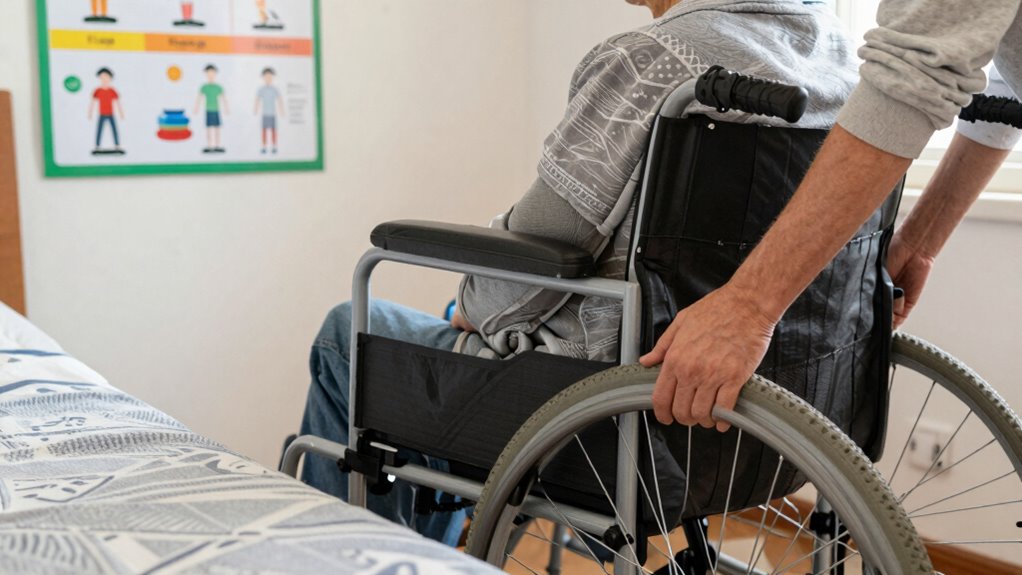
When a patient’s repositioning needs adjustment, certain signs become clear. You should pay close attention during skin assessments. Look for:
- New or worsening pressure sores, especially in areas previously unaffected
- Discoloration or redness that doesn’t fade after repositioning
- Swelling or warmth around bony prominences
- Persistent complaints of discomfort or pain during or after repositioning
These signs indicate that your current schedule may not be enough to prevent pressure buildup. Modifications are necessary to reduce the risk of skin breakdown. Regularly evaluating skin condition and being attentive to these cues helps ensure effective repositioning, keeping pressure sores at bay and supporting overall skin health.
How to Handle Resistance During Repositioning?

When your patient resists repositioning, it’s important to recognize what might be triggering their discomfort or fear. You can use specific strategies to encourage compliance, such as explaining each step or providing reassurance. Understanding these triggers helps you handle resistance effectively and makes repositioning safer and smoother for both of you.
Understanding Resistance Triggers
Resistance during repositioning is often a natural response, signaling discomfort, fear, or physical difficulty. Recognizing these triggers helps you address them effectively. Common resistance triggers include:
- Pressure discomfort: If pressure causes pain, your loved one may resist further movement.
- Fear of change: Sudden or unfamiliar repositioning can trigger anxiety or distrust.
- Physical fatigue: Tired muscles or joints make repositioning uncomfortable.
- Lack of caregiver education: Not understanding proper techniques can lead to unintentional discomfort or resistance.
Strategies to Encourage Compliance
To effectively encourage compliance during repositioning, it’s important to use gentle, patient techniques that address the underlying causes of resistance. Motivational techniques, such as offering reassurance and explaining each step calmly, can help ease anxiety and make the process feel less intimidating. Clear caregiver communication is essential—use a soothing tone, maintain eye contact, and involve the individual in the process when possible. Recognize signs of discomfort or reluctance and respond with empathy. Sometimes, small incentives or positive reinforcement can motivate cooperation. Remember, patience and understanding foster trust, making future repositioning easier. By combining motivational techniques with open, respectful communication, you create a supportive environment that encourages compliance and minimizes resistance.
How Supportive Devices Help With Pressure Relief
Have you ever wondered how supportive devices can effectively prevent pressure sores? These devices are designed to improve pressure redistribution, reducing prolonged pressure on vulnerable areas. Here’s how they help:
- Distribute body weight evenly across surfaces, minimizing pressure points.
- Reduce friction and shear forces that can damage skin.
- Contour to body shapes, offering customized support.
- Prevent tissue deformation by maintaining proper alignment.
How to Track and Adjust Your Repositioning Routine as Needs Change
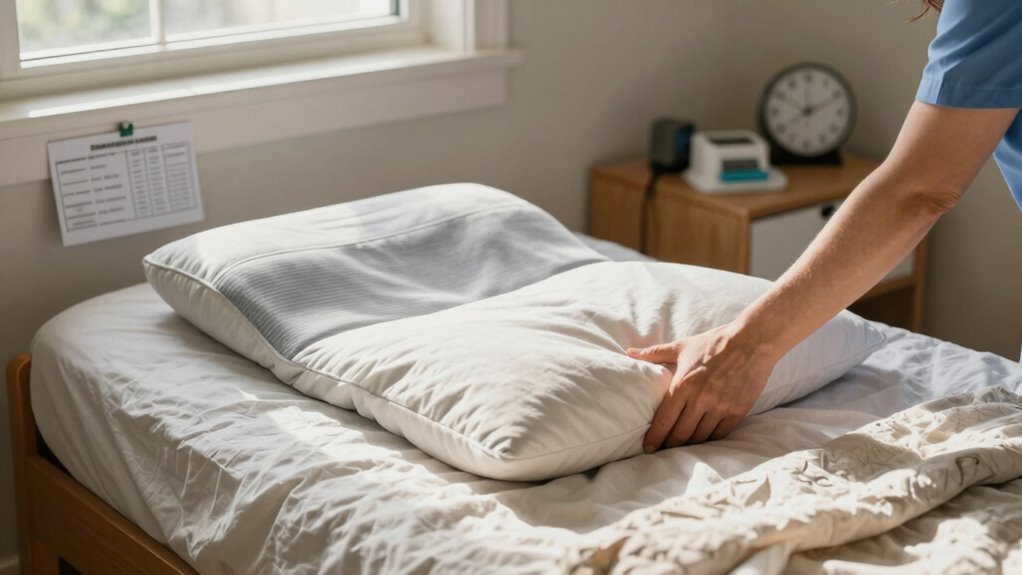
As your body’s needs change over time, regularly tracking and adjusting your repositioning routine becomes crucial to maintaining pressure relief. Pressure monitoring helps you identify areas that need more attention and guarantees you’re redistributing pressure effectively. Keep a simple log of repositioning times and any discomfort or redness you notice. This data guides adjustments to your schedule. caregiver training is essential; family members and caregivers should understand how to perform pressure checks and recognize signs of pressure buildup. As your condition evolves, you may need to increase repositioning frequency or try different positions. Regularly reviewing your routine with your healthcare team ensures your pressure relief plan stays personalized and effective, helping prevent pressure ulcers and maintain your comfort and health.
Frequently Asked Questions
Can Repositioning Help Prevent Other Health Complications Besides Pressure Ulcers?
Yes, repositioning helps with pressure management and skin health, which can prevent other health issues. When you regularly change positions, you reduce the risk of muscle stiffness, joint pain, and circulation problems. It also promotes better oxygen flow and decreases swelling. By maintaining good pressure management through repositioning, you support overall health, minimize discomfort, and help prevent complications like infections or respiratory issues that can arise from prolonged immobility.
Are There Specific Positions Recommended for Different Age Groups?
You’re about to discover that age-specific positions are vital for safe, effective pressure relief. For infants, gentle tummy time and supported sitting match their developmental needs, while adults benefit from alternating side-lying and semi-Fowler’s positions. Older adults require careful consideration of mobility and comfort, emphasizing developmental considerations. Tailoring positions to age groups helps prevent skin breakdown and other complications, ensuring health remains a top priority at every stage of life.
How Do I Comfort My Loved One During Repositioning?
You can comfort your loved one during repositioning by offering emotional support and physical reassurance. Speak gently, let them know you’re there, and maintain eye contact to foster trust. Use soothing words and a calm tone to ease any anxiety. Gentle touch or holding their hand can provide physical reassurance. Your presence and kindness help them feel safe, making repositioning less stressful and more comfortable.
What Are Common Mistakes to Avoid When Creating a Schedule?
Timing errors and neglecting comfort are common mistakes when creating a schedule. You might rush repositioning or overlook your loved one’s needs, leading to discomfort or skin issues. Avoid these by carefully planning timing and always prioritizing their comfort. Keep a flexible schedule, communicate clearly, and observe their reactions to ensure you’re providing effective relief without causing frustration or harm. This balance is key to successful pressure management.
How Can Family Members Coordinate Caregiving Responsibilities Effectively?
You can coordinate caregiving responsibilities effectively by maintaining clear caregiver communication and using scheduling tools. Regularly discuss each person’s availability, preferences, and responsibilities to make certain everyone’s on the same page. Utilize digital calendars or apps to assign and track repositioning times, making it easy to adapt as needed. This approach keeps caregiving organized, prevents overlaps, and ensures your loved one gets consistent pressure relief.
Conclusion
By following a simple repositioning schedule, you actively help prevent pressure ulcers and keep your loved one comfortable. Did you know that regular movement not only reduces skin damage but can also boost circulation and overall well-being? Staying consistent and attentive to signs of discomfort makes all the difference. Remember, even small adjustments can have a big impact—so trust the routine, stay flexible, and show your loved one you care through every repositioning.