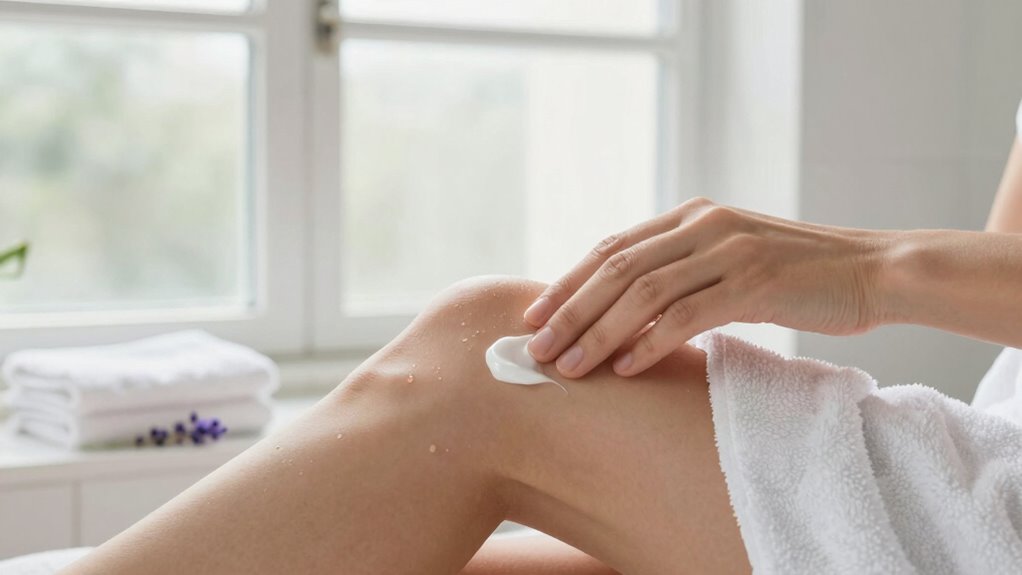

Maintaining a gentle perineal skin care routine is key to your comfort and dignity. Use fragrance-free cleansers, wash with lukewarm water, and pat dry gently to prevent irritation. Wear breathable cotton underwear and avoid harsh products. Regularly check for redness, soreness, or signs of infection to catch issues early. For sensitive skin or postpartum care, use soothing creams and avoid prolonged moisture. Keep your skin healthy—learn more to discover how to protect and care for this sensitive area effectively.
Key Takeaways
- Use gentle, fragrance-free cleansers and lukewarm water to maintain skin hygiene without irritation.
- Pat the area dry gently, avoiding rubbing to prevent skin damage and discomfort.
- Wear breathable cotton underwear to reduce moisture buildup and promote skin health.
- Regularly inspect the perineal area for redness, swelling, or signs of infection for early intervention.
- Apply soothing barrier creams or ointments, especially after hygiene, to protect and restore skin integrity.
Why Perineal Skin Care Is Important for Comfort and Health

Taking good care of the perineal skin is essential because it helps prevent discomfort, irritation, and infections. Proper hygiene and gentle cleansing reduce the risk of perineal skin infections, which can cause pain and further complications. When you maintain skin integrity, you’re actively preventing skin irritation and reducing the chances of irritation from moisture, friction, or harsh products. Keeping the area clean and dry supports the skin’s natural barrier, making it less vulnerable to irritants and pathogens. Regular care also helps you identify early signs of irritation or infection, allowing quick intervention. Prioritizing perineal skin care isn’t just about comfort; it’s about maintaining your overall health and dignity. A consistent routine ensures your skin remains healthy, resilient, and less prone to issues. Incorporating gentle cleansing techniques can further protect your skin and enhance comfort. Additionally, understanding skin barrier function can help you select appropriate products that support skin health and prevent irritation. Being aware of moisture management strategies can further reduce the risk of irritation and promote skin healing. Moreover, adopting proper drying methods ensures residual moisture is minimized, which is essential for preventing irritation and fostering skin recovery.
How to Recognize Common Perineal Skin Problems
Being able to identify common perineal skin problems early on helps you maintain comfort and prevent complications. Look for signs like redness, swelling, or irritation, which may indicate a rash. Recognizing rash identification early can help you address issues before they worsen. Pay attention to persistent soreness, moisture, or warmth, which might suggest an infection. Infection signs include increased pain, pus, foul odor, or fever. If you notice these symptoms, it’s important to act promptly. Regularly inspecting your perineal area helps you catch problems early, reducing discomfort and the risk of more serious infections. Understanding Free Floating concepts can also help you adopt holistic approaches to skin care and overall health, supporting your comfort and dignity. Staying vigilant about these signs enables you to seek proper care and maintain healthy, comfortable skin.
Daily Tips for Gentle Perineal Hygiene
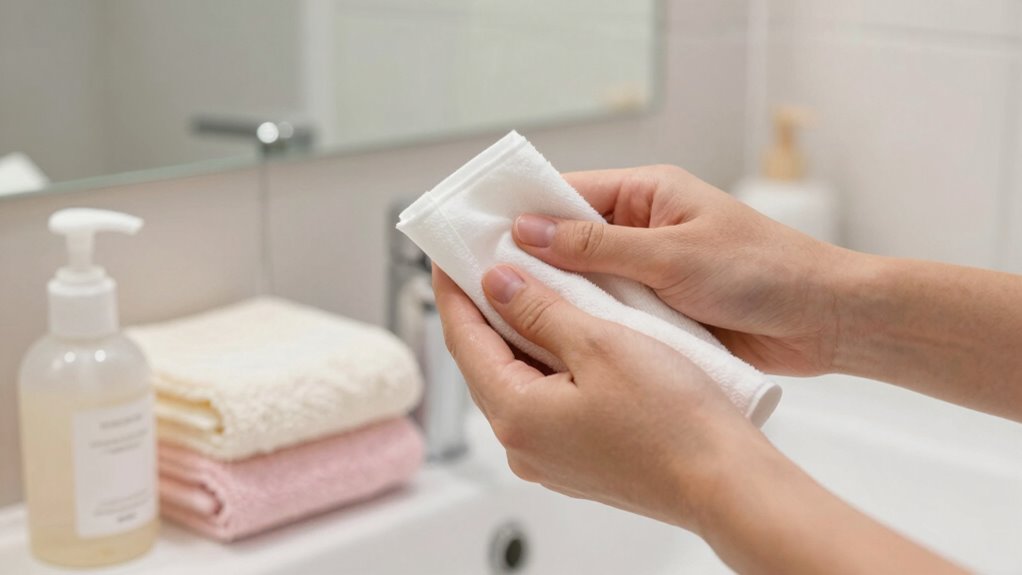
Maintaining gentle perineal hygiene is essential for preventing irritation and infections. Use fragrance-free cleansers to avoid unnecessary skin irritation and always wash with lukewarm water. After cleaning, pat the area dry gently—never rub—and opt for breathable fabrics like cotton underwear to promote airflow and reduce moisture buildup. Incorporating proper hygiene practices helps maintain skin integrity and overall comfort. Using safe cleansing products that are free from harsh chemicals can further reduce the risk of irritation. Additionally, choosing appropriate cleansing products can further enhance skin comfort and health. Being aware of regional flavor influences in products can also help you select options that suit sensitive skin. Consistently following these tips keeps your skin comfortable and protected.
Choosing the Right Products for Sensitive Skin
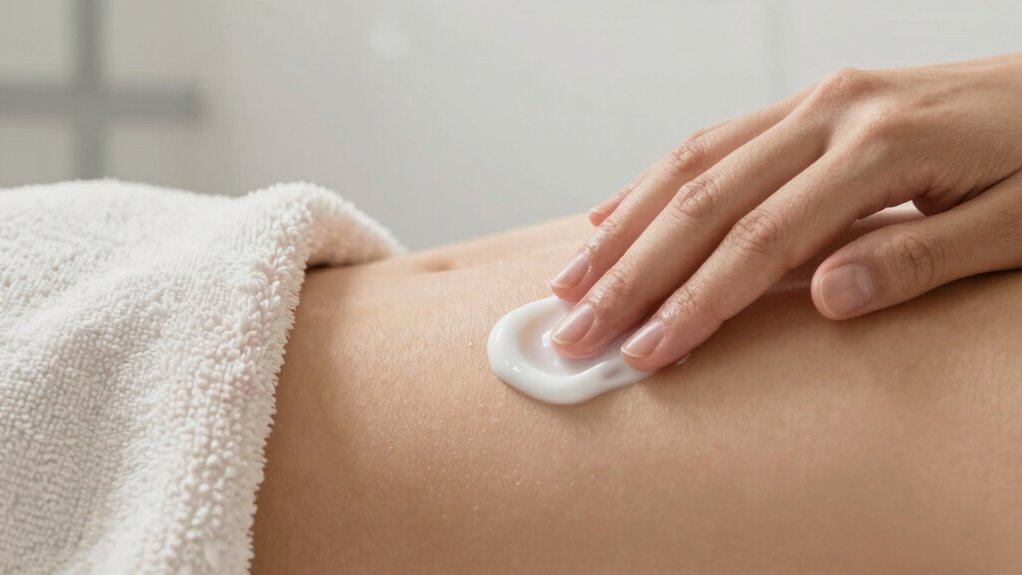
Choosing the right products for sensitive skin starts with selecting gentle, fragrance-free options that minimize the risk of irritation. When evaluating products, pay attention to product ingredient considerations, avoiding harsh chemicals or alcohol. Look for hypoallergenic product options designed specifically for delicate skin. These products are less likely to cause allergic reactions or redness. To help you choose wisely:
Choose gentle, fragrance-free, hypoallergenic products to protect sensitive skin from irritation and redness.
- Read labels carefully to identify gentle, fragrance-free formulas.
- Opt for products with minimal, natural ingredients.
- Choose hypoallergenic options tested for sensitive skin.
Special Care Tips for Postpartum, Aging, or Sensitive Skin
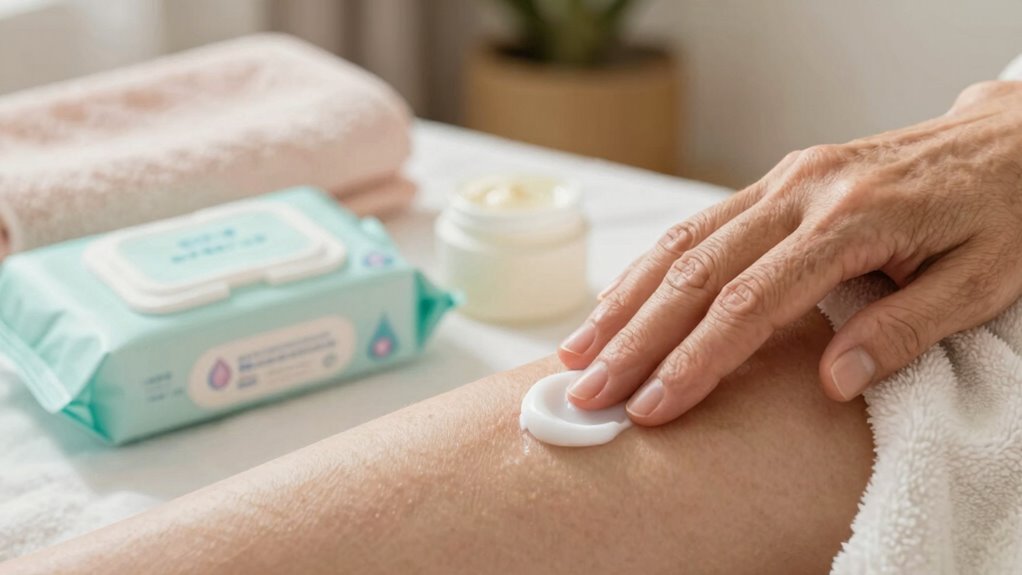
Are you aware that postpartum, aging, or sensitive skin requires extra gentle care to prevent irritation and promote healing? Hormonal changes can make your skin more delicate and prone to discomfort. To protect your skin, avoid harsh soaps and opt for mild, fragrance-free cleansers. Pat the area dry gently rather than rubbing, which can worsen sensitivity. Incorporate soothing products like barrier creams or ointments that help restore moisture and reduce irritation. Keep the skin clean and dry, and wear breathable cotton underwear to minimize friction. Avoid prolonged exposure to moisture or irritants that can worsen skin sensitivity. Understanding skin sensitivities can help you tailor your care routine more effectively. Engaging in curiosity-driven self-care practices can enhance your understanding of your skin’s needs and promote healing. Recognizing environmental factors that influence skin health is also essential for optimal care. Being aware of proper hygiene techniques can further prevent irritation and support recovery. Additionally, paying attention to skin hydration is crucial, as dry skin can become more sensitive and prone to discomfort. By giving your skin the gentle attention it needs, you support healing, reduce discomfort, and maintain your dignity and comfort during this vulnerable time.
Frequently Asked Questions
How Often Should I Schedule Professional Perineal Skin Assessments?
You should schedule professional perineal skin assessments at least once a year, or more often if you notice issues like redness, irritation, or discomfort. Regular skin inspections are essential for maintaining personal hygiene and preventing infections. If you’re hospitalized or have limited mobility, your healthcare provider may recommend more frequent evaluations. Staying proactive helps protect your comfort and dignity by catching problems early and ensuring proper skin care.
Are There Natural Remedies for Soothing Irritated Perineal Skin?
Did you know that up to 50% of women experience discomfort from irritated perineal skin? Natural soothing options like herbal remedies can help ease this discomfort. You might try aloe vera gel for its cooling effects or chamomile tea compresses for gentle relief. These natural remedies are gentle, effective, and promote healing without harsh chemicals, helping you regain comfort and dignity while supporting your skin’s health.
Can Specific Clothing Choices Improve Perineal Comfort and Health?
Yes, your clothing choices can improve perineal comfort and health. Opt for underwear made from breathable materials like cotton to reduce moisture and irritation. Make certain good underwear hygiene by changing daily and washing with gentle, fragrance-free detergents. Avoid tight-fitting clothes that trap heat and moisture. These simple steps help keep the area dry, reduce irritation, and support overall perineal health and comfort.
What Signs Indicate the Need for Medical Consultation for Perineal Issues?
You should see a doctor if you notice signs of infection like redness, swelling, or foul odor, or if you experience persistent discomfort that doesn’t improve with usual care. Coincidentally, these symptoms often sneak up after activities or habits you thought were harmless. Don’t ignore ongoing pain or unusual discharge—timely medical consultation helps prevent complications and guarantees your comfort and health are safeguarded.
How Do Diet and Hydration Impact Perineal Skin Health?
Your diet and hydration levels directly impact your perineal skin health. Maintaining a nutrition balance with enough vitamins and minerals helps keep your skin strong and resilient. Staying well-hydrated prevents dryness and irritation, reducing discomfort and the risk of infections. Make sure to drink plenty of water and eat a balanced diet rich in fruits, vegetables, and proteins to support healthy, protected perineal skin.
Conclusion
Taking good care of your perineal skin keeps you comfortable and healthy, much like a trusty knight guarding their castle. Stick to gentle daily habits, choose products wisely, and pay extra attention if your skin is sensitive or postpartum. Remember, a little care now prevents bigger issues later—think of it as your personal armor against discomfort. So, stay vigilant and treat your skin with kindness; your body will thank you, even in the age of chivalry!