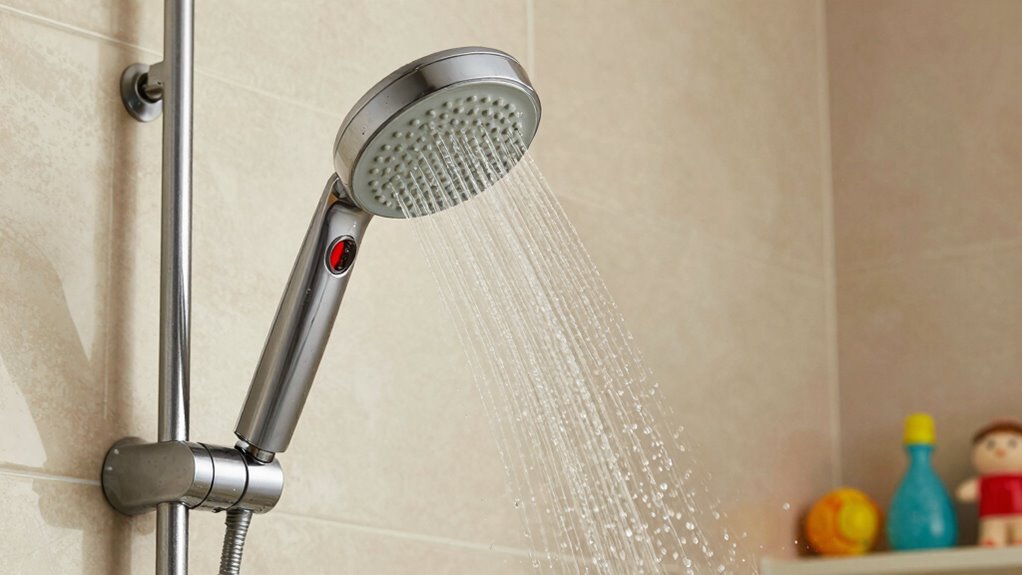
High shower water temperatures can be dangerous, especially for kids and the elderly. Keep your water heater set to a safe 120°F to prevent scalding. Always test the water with your hand before stepping in, and teach kids to do the same. Consider installing anti-scald devices for added safety. Don’t forget to have a bathing safety plan tailored for your family. There’s more to guarantee your loved ones stay safe during bath time.

Turn quiet afternoons into listening time
- Thousands of audiobooks, podcasts and originals
- Listen on your phone, tablet or Echo — also offline
- Cancel anytime
Key Takeaways
- Set your water heater to a maximum of 120°F to prevent scalding, especially for vulnerable groups like children and the elderly.
- Regularly test tap water temperatures to ensure they stay within the safe range of 100°F to 120°F.
- Install anti-scald devices, such as mixing valves, to automatically regulate hot water temperatures and prevent sudden spikes.
- Teach children to test water temperature with their hands and supervise them to ensure safe shower practices.
- Create and discuss a family bathing safety plan that includes regular checks and updates as needs change.
As an affiliate, we earn on qualifying purchases.
Why High Shower Water Temperatures Are Dangerous

High shower water temperatures can pose serious risks, especially if you’re not careful. You might think a hot shower feels great, but that comfort can hide significant scalding risks. Even brief exposure to water above 120°F can lead to burns, particularly for children and the elderly, whose skin is more sensitive. It’s essential to maintain temperature awareness to prevent accidents. You may not realize how quickly water can heat up or cool down, increasing the chances of an unexpected burn. Remember, a moment of inattention could lead to severe consequences. By being mindful of water temperature, you can enjoy your showers without putting yourself or your loved ones in harm’s way. Additionally, understanding filtration/suction basics can help ensure your shower’s water temperature remains consistent and safe. Stay informed and prioritize safety to avoid potential injuries.
As an affiliate, we earn on qualifying purchases.
Safe Shower Water Temperature Ranges for Family Safety

When you’re setting up your shower, understanding the safe temperature range can make a big difference in family safety. Experts recommend keeping the water temperature between 100°F and 120°F. This range helps prevent scalding while accommodating various family shower habits and temperature preferences. Younger kids and older adults are particularly vulnerable to burns, so it’s vital to find a balance that suits everyone. You might want to start at 100°F and adjust based on feedback from family members. Remember, monitoring the water temperature regularly can prevent accidents and guarantee a comfortable experience for all. By being mindful of these guidelines, you’re taking an essential step in creating a safe and enjoyable shower environment for your family.
As an affiliate, we earn on qualifying purchases.
How Fast Can Scalding Occur?

When it comes to shower water, understanding how quickly scalding can happen is essential for safety. Certain temperatures can cause serious burns in just seconds, especially for vulnerable age groups like children and the elderly. Knowing these thresholds can help you set your shower to a safe level and protect everyone in your home.
Scalding Temperature Thresholds
Scalding can occur surprisingly quickly, especially at elevated temperatures. At just 130°F, you can suffer a burn in about 30 seconds, while temperatures of 160°F can cause a burn in just seconds. That’s why effective scalding prevention is essential in your home. Regular temperature monitoring of your water heater can help you guarantee safe water temperatures. Ideally, you should set your water heater to 120°F or lower to minimize the risk of burns. Consider using anti-scald devices on faucets and showerheads, which can automatically adjust the water temperature. By being proactive about temperature control, you can protect yourself and your family from painful injuries. Remember, a few degrees can make a significant difference in safety.
Vulnerable Age Groups
Certain age groups are particularly vulnerable to scalding, as their skin can be more sensitive to heat. Infants and the elderly require specific precautions to prevent serious injuries. Infants may not react quickly to hot water, while the elderly often have decreased sensitivity.
Here’s a quick look at how rapidly scalding can occur in these vulnerable groups:
| Age Group | Reaction Time | Precautions |
|---|---|---|
| Infants | 1 second | Use safe water temperatures; test water before bathing. |
| Toddlers | 2 seconds | Always supervise; teach them to check water. |
| Adults | 5 seconds | Set water heater to safe levels. |
| Elderly | 3 seconds | Maintain stable footing; use adjustable shower heads. |
| All Ages | 10 seconds | Install anti-scald devices. |
Understanding these factors can help you keep everyone safe during bath time. Additionally, regular monitoring of water temperatures can help prevent serious injuries associated with scalding incidents.
Time to Scald
While you might think you have a moment to test the water, scalding can happen in just a few seconds, especially in vulnerable age groups. To keep everyone safe, consider these guidelines:
- Water Heater Settings: Keep your water heater at or below 120°F (49°C). This simple adjustment can considerably reduce the risk of burns, and it is similar to ensuring efficient HVAC solutions in your home for optimal safety. Additionally, best home security systems can provide peace of mind while you focus on bathroom safety.
- Temperature Monitoring: Regularly check the water temperature before anyone steps in. A quick test with your hand can prevent serious injuries.
- Vulnerable Groups: Be extra cautious with children and the elderly as their skin can be more sensitive and prone to scalding. Additionally, indoor air quality can be affected by the moisture from hot showers, making it important to ventilate the bathroom properly.
bathroom water temperature monitor
As an affiliate, we earn on qualifying purchases.
As an affiliate, we earn on qualifying purchases.
How to Adjust Your Water Heater for Optimal Safety

To guarantee your shower water temperature is safe and comfortable, adjusting your water heater is essential. Start by setting the temperature to 120°F (49°C), which strikes a balance between comfort and safety. You can usually find the thermostat on the water heater itself; simply adjust it according to the manufacturer’s instructions. After making the water heater adjustment, conduct regular safety checks. Check for leaks and verify the pressure relief valve works properly. It’s also wise to periodically test the water temperature at the tap to confirm it stays around the desired level. By staying proactive with these adjustments and checks, you’ll help prevent scalding and create a safer bathing environment for your family. Additionally, ensure proper airflow around the unit to enhance overall safety and functionality in your home. Remember that maintaining a safe water temperature can significantly reduce the risk of serious burns and protect vulnerable family members.
Which Anti-Scald Devices Should You Install?

When it comes to preventing scalding in your shower, choosing the right anti-scald devices is essential. You should consider installing a shower valve with thermostatic control, anti-scald mixing valves, and temperature limiting devices. These options can help guarantee a safe and comfortable shower experience for you and your family.
Shower Valve Thermostatic Control
Understanding how to maintain a safe shower temperature is crucial, especially if you have children or elderly family members at home. Installing a thermostatic valve can greatly enhance safety and comfort. Here are some key thermostatic valve benefits to take into account:
- Consistent Temperature: It automatically adjusts to maintain your desired water temperature, preventing sudden changes. Additionally, thermostatic valves can significantly improve overall user experience by ensuring a stable flow of water. This consistency is especially important for recumbent bikes for seniors, as it ensures comfort during post-shower activities. Moreover, maintaining a comfortable indoor climate can contribute to overall wellness and satisfaction in your home.
- Reduced Risk of Burns: By limiting maximum temperature, it minimizes the risk of scalding.
- User-Friendly: Most thermostatic valves are easy to operate, making showers safer for everyone.
For successful installation, follow these tips: confirm compatibility with your plumbing, check local codes, and think about hiring a professional for a seamless setup. Prioritizing safety can make your bathing experience worry-free! Additionally, using HEPA filters in your bathroom can help maintain air quality, making it a safer environment overall.
Anti-Scald Mixing Valves
While thermostatic valves play an essential role in maintaining safe shower temperatures, anti-scald mixing valves offer another layer of protection. These devices blend hot and cold water to prevent sudden temperature spikes, guaranteeing your shower remains comfortable and safe. With anti-scald technology, you can enjoy peace of mind, especially for children and elderly family members who are more vulnerable to burns.
When considering installation, look for high-quality mixing valves that comply with safety standards. Regular valve maintenance is vital; check for wear and tear, and verify they function correctly. By incorporating anti-scald mixing valves into your home, you greatly reduce the risk of scalding, making your shower experience safer for everyone. Additionally, understanding air systems and their impact on overall home safety can further enhance your family’s well-being.
Temperature Limiting Devices
To guarantee a safe shower experience, it’s essential to choose the right temperature limiting devices that fit your needs. These devices help maintain safe water temperatures and prevent scalding. Here are three popular options for effective temperature regulation:
- Thermostatic Mixing Valves: Automatically adjust water temperature, ensuring it stays within a safe range. Additionally, humidity control basics can play a role in maintaining a comfortable and safe bathing environment. Incorporating safe power usage practices in your home can further enhance overall safety. Regular inspections of your smart thermostat settings can also help ensure optimal performance. It’s important to understand that proper temperature regulation is crucial for preventing scalding burns.
- Anti-Scald Showerheads: Designed to limit the maximum temperature, providing immediate protection against scalding.
- Temperature-Limiting Devices: Installed on the faucet to restrict the maximum temperature output.
When considering device installation, be certain you select products that meet safety standards. By investing in these devices, you can create a safer bathing environment for your family. Additionally, incorporating mobility and recovery practices can enhance overall safety by ensuring everyone is agile and prepared for safe bathing experiences.
How Thermostatic Mixing Valves Keep Your Family Safe

When you step into the shower, you expect a comfortable experience, not a sudden blast of scalding water. That’s where thermostatic mixing valves come in. These valves use advanced thermostatic technology to automatically adjust water temperature, ensuring a steady flow that won’t change, even if someone flushes a toilet or turns on another faucet. This feature is essential for family safety, particularly for young children and older adults, who are more vulnerable to burns. By maintaining a consistent temperature, these valves reduce the risk of accidents, giving you peace of mind while you and your loved ones enjoy a relaxing shower. Additionally, acoustic drum shields can help create a serene environment by minimizing noise distractions during bath time. Investing in a thermostatic mixing valve is a simple step toward a safer home, as proper kitchen ventilation can also contribute to overall comfort and safety in your living spaces. Furthermore, integrating smart home automation can enhance your overall safety by monitoring water temperature and alerting you to any fluctuations. Safe travel tips can further improve your family’s overall well-being in the home.
Teaching Kids About Safe Shower Practices

Teaching kids about safe shower practices is essential, especially since they might not fully understand the risks involved. To help them develop good shower routines and temperature awareness, consider these key points:
- Check the Temperature: Teach your kids to always test the water with their hands before stepping in. They should feel for warmth without any discomfort.
- Set a Timer: Encourage them to limit shower time to avoid overheating, especially if the water’s warm.
- Stay Alert: Remind them to be aware of their surroundings and avoid distractions, like playing with toys, which can lead to accidents.
Top Shower Safety Mistakes Parents Should Avoid

While educating kids about safe shower practices is important, parents can inadvertently make mistakes that compromise their children’s safety. One common error is neglecting temperature awareness; parents might not check the water temperature before letting kids in. It’s essential to confirm the water is comfortably warm, not hot. Another mistake is allowing children to shower unsupervised too early. Young kids may not have developed proper shower habits, which increases the risk of accidents. Additionally, failing to teach kids how to adjust the faucet correctly can lead to burns. Always reinforce the importance of checking water temperature and staying alert while they shower. By avoiding these mistakes, you can create a safer shower environment for your family.
Recognizing Water Burns: When to Get Help?

How can you tell if a water burn requires medical attention? It’s essential to recognize the water burn symptoms early. If you notice any of the following, seek help:
- Blistering: If the skin forms blisters, it signals a more severe burn that needs treatment.
- Large Area Affected: Burns covering a significant portion of the body should be evaluated by a healthcare professional.
- Signs of Infection: If the burn area becomes red, swollen, or oozes, it may indicate an infection requiring medical care.
While waiting for help, remember to administer first aid by cooling the burn with lukewarm water and covering it with a clean, dry cloth. Don’t apply ice, as it can worsen the injury.
Creating a Family Bathing Safety Plan

Creating a family bathing safety plan is essential for preventing accidents. Start by evaluating your family’s specific bathing needs and setting temperature limits that everyone can follow. Then, make sure everyone understands safety practices to keep bath time enjoyable and safe. Incorporating simple exercises into your routine can also improve balance and mobility, further reducing the risk of slips and falls during bath time. Additionally, educating family members about financial safety can help them make informed decisions regarding home modifications for safer bathing environments. Consider implementing charging setups that provide additional safety features, ensuring a secure and comfortable environment for all family members during bath time.
Assess Family Bathing Needs
What factors should you consider when evaluating your family’s bathing needs? Understanding your family’s preferences and bathing habits is essential for safety. Here are three key elements to assess:
- Age Groups: Different ages have varying sensitivity to temperature. Infants and seniors are particularly vulnerable to scalding, so their needs should be prioritized.
- Health Conditions: Consider any family members with skin sensitivities or other health issues that might affect their bathing experience.
- Bathing Frequency: Determine how often each family member bathes. Frequent bathers may need a system that accommodates their routines while ensuring safety.
Set Temperature Limits
Setting temperature limits is an essential step in ensuring your family’s bathing safety. By adjusting your water control settings, you can create a comfortable and secure bathing experience for everyone. Aim for a maximum temperature of 120°F (49°C) to prevent scalding, especially for young children and older adults. You can easily set this limit on most modern water heaters, ensuring that the water doesn’t reach dangerous temperatures. Regularly check and adjust these temperature settings based on your family’s needs as they change over time. It’s also a good idea to involve everyone in this process, so they understand the importance of safe bathing practices. Prioritizing these limits helps protect your loved ones from potential burns and injuries.
Educate About Safety Practices
While you prioritize temperature limits, educating your family about safety practices is equally essential for a secure bathing experience. Here are some key safety reminders to share:
- Test the Water Temperature: Always check the water with your elbow or wrist before stepping in. It should feel warm but not hot.
- Supervise Young Children: Never leave kids unattended in the bath. Keep an eye on them, making sure they’re safe from scalding water.
- Use Anti-Scald Devices: Consider installing devices that regulate water temperature to prevent burns and guarantee a safer bathing environment.
Frequently Asked Questions
What Are the Signs of a Water Temperature That’s Too Hot?
If the water feels too hot to touch or you notice redness on your skin, it’s a sign the temperature’s too high. You should always prioritize burn prevention by checking the water first. If it makes you uncomfortable or you can’t keep your hand under it, adjust the temperature. Good temperature regulation guarantees a safe and pleasant shower experience, preventing burns and keeping everyone in your family safe.
Can Shower Curtains Contribute to Scalding Accidents?
You know what they say: “An ounce of prevention is worth a pound of cure.” Yes, shower curtains can indeed contribute to scalding accidents. If the curtain’s material isn’t heat-resistant, it may inadvertently trap heat or block you from noticing dangerously hot water. Always guarantee proper temperature control in your shower and consider using curtains designed for safety. This way, you can enjoy a comfortable shower without worrying about burns.
How Often Should I Check My Water Heater Settings?
You should check your water heater settings at least every six months. Regular water heater maintenance guarantees proper temperature regulation, reducing the risk of scalding accidents. Look for any fluctuations in temperature and adjust accordingly, aiming for a safe setting around 120°F. Keeping an eye on these settings not only enhances safety but also contributes to energy efficiency, saving you money in the long run. Don’t overlook this vital step!
Are There Specific Age Groups at Higher Risk for Burns?
Yes, certain age groups are at higher risk for burns. Young children and the elderly are particularly vulnerable due to thinner skin and slower reaction times. For child safety, always test the water temperature before bath time to prevent scalding. Likewise, elderly precautions like setting your water heater to a lower temperature can help reduce the risk of burns. Staying proactive about these measures protects your loved ones from serious injuries.
What Should I Do if a Burn Occurs?
If a burn occurs, don’t panic—quick action matters. First, cool the burn with lukewarm water for 10-20 minutes. This helps reduce pain and swelling. Next, cover it with a clean, dry cloth. For more serious burns, seek emergency response immediately. Don’t apply ice or butter, as they can worsen the injury. Always keep an eye on the burn for signs of infection, and consult a healthcare professional if needed.
Conclusion
To keep your family safe from the fiery wrath of scalding water, remember: a few degrees can mean the difference between a soothing shower and a trip to the emergency room! By being proactive and adjusting your water heater, installing anti-scald devices, and teaching your kids about safe practices, you can dodge disaster. So, don’t let your bathroom turn into a boiling cauldron—take action today and bask in the peace of mind that comes with a safe shower experience!
Fall Picks
fall essentials
As an affiliate, we earn on qualifying purchases.