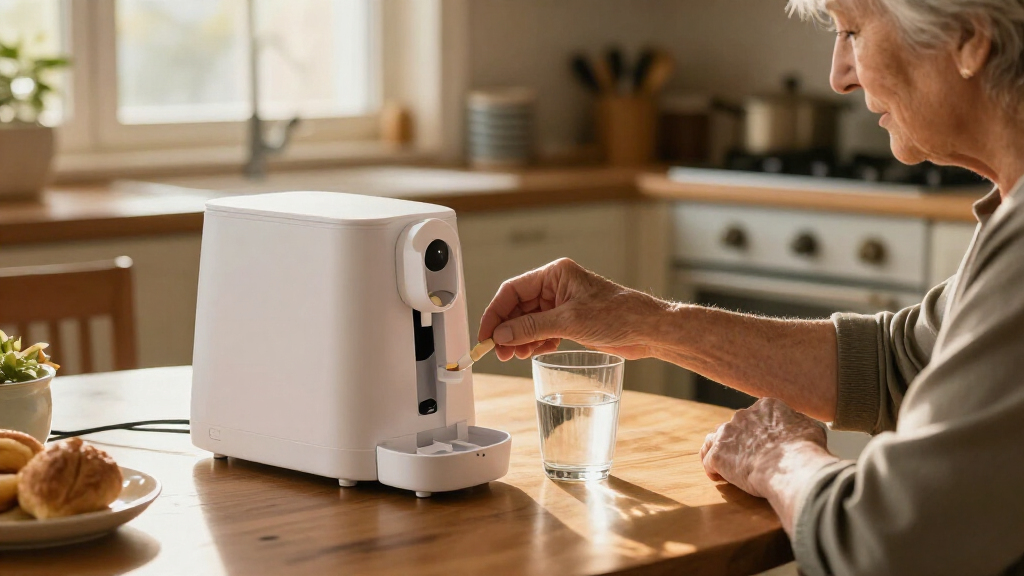
Automatic medication dispensers for seniors can simplify scheduled doses, but the right choice depends on medication frequency, help from caregivers, and comfort with technology. I name the 28-Day Automatic Pill Dispenser with Alarm and Key Lock my best overall pick for its balance of capacity, reminders, and access control. The 42-Day Expandable App-Controlled Dispenser stands out for households managing longer refill intervals, while the LiveFine model with removable cups may suit people who want to prepare doses for easier handling. The main tradeoff is between simple alarms and app-based monitoring, alongside capacity versus the effort of filling and maintaining a larger tray. Read on for my full comparison, buying advice, and recommendations by need.

Turn quiet afternoons into listening time
- Thousands of audiobooks, podcasts and originals
- Listen on your phone, tablet or Echo — also offline
- Cancel anytime
Complete the kit


Key Takeaways
- The 28-day alarm-and-key-lock model is the strongest all-around fit in this lineup because it pairs a useful refill interval with straightforward reminders and access control.
- Expandable capacity is the clearest differentiator among app-connected models: the 42-day and 56-day options target fewer refill sessions, but larger trays can take more time to load and organize.
- Removable cups set the LiveFine 21-compartment models apart for people who benefit from carrying or handing over a prepared dose, though their capacity differs from 28-day organizers.
- Bluetooth and Wi-Fi are not interchangeable conveniences: app-connected picks may help caregivers check schedules, but they add setup and phone-compatibility questions that simpler alarm models avoid.
- Reminder style varies across the selection: sound-and-light alerts and slide-door access can matter more than an app when the senior using the dispenser prefers visible, local cues.
| 28-Day Automatic Pill Dispenser with Alarm and Key Lock |  | Best for Frequent Daily Doses | Capacity: 28 compartments | Daily alarms: Up to 8 | Dosage rings: 8 | VIEW LATEST PRICE | See Our Full Breakdown |
| LiveFine Automatic Pill Dispenser with Removable Cups, 21 Compartments, and Alarm |  | Best for Easy Dose Retrieval | Compartments: 21 | Maximum supply: Up to 21 days | Dosage rings: 9 interchangeable rings; 1–9 doses per day | VIEW LATEST PRICE | See Our Full Breakdown |
| Automatic Pill Dispenser with Expandable 2-Tray Design, App Control, LCD Display, Digital Lock, and Alerts |  | Best for Caregiver App Monitoring | Tray count: 2 | Slots: 14 per tray; 28 total | Supply duration: 28 days once daily or 14 days twice daily | VIEW LATEST PRICE | See Our Full Breakdown |
| 21-Day Bluetooth Automatic Pill Dispenser with Alarm and App |  | Best for Nearby Bluetooth Check-Ins | Capacity: Up to 21 days | Connectivity: Bluetooth 5.0 | App: Scheduling and adherence logs | VIEW LATEST PRICE | See Our Full Breakdown |
| Colorwing Smart Pill Dispenser for Seniors, 31-Slot Automatic Medication Organizer |  | Best for Fingerprint Access and Voice Prompts | Capacity: 31 slots | Access: Palm-activated press-release picker box | Locking: Fingerprint scanner and physical backup key | VIEW LATEST PRICE | See Our Full Breakdown |
| 42-Day Automatic Pill Dispenser with Expandable 3-Tray Design, App Control, LCD Display, Digital Lock, and Alerts |  | Best for Longer Home Schedules | Capacity: 3 trays with 14 pill slots each | Dosing duration: Up to 42 days at once-daily dosing | Setup: Companion app or on-device buttons with voice guidance | VIEW LATEST PRICE | See Our Full Breakdown |
| Betife 28-Day Automatic Pill Dispenser with Bluetooth |  | Best for App-and-Button Flexibility | Capacity: 28 days | Connectivity: Bluetooth | Companion app: Pillcalendar | VIEW LATEST PRICE | See Our Full Breakdown |
| 28-Day Automatic Pill Dispenser with Slide-Door Cup, Sound and Light Alerts |  | Best for Easier Pill Retrieval | Capacity: 28 compartments | Dispensing design: Slide-door tray dispenses pills into a cup | Alerts: Sound-only, light-only, or sound and light | VIEW LATEST PRICE | See Our Full Breakdown |
| Automatic Pill Dispenser with Alarm for Seniors |  | Best for Straightforward, Non-App Reminders | Compartments: 28 | Reminder frequency: 1 to 6 times daily | Alerts: Audio alarm and flashing blue light | VIEW LATEST PRICE | See Our Full Breakdown |
| LiveFine Automatic Pill Dispenser with Locking Lid, 28-Day Capacity |  | Best for Frequent Daily Doses | Capacity: Up to 28 days | Reminders: Up to 9 doses per day | Pill capacity: Up to 18 pills per slot | VIEW LATEST PRICE | See Our Full Breakdown |
| Automatic Pill Dispenser with Alarm, 28 Compartments |  | Best for Flexible Schedules | Compartments: 28 | Maximum daily reminders: 6 | Access modes: Free, fixed time, and flexible window | VIEW LATEST PRICE | See Our Full Breakdown |
| 56-Day Automatic Pill Dispenser with Expandable Tray and App Control |  | Best for Long-Term Home Storage | Capacity: Up to 56 days | Tray configuration: 4 trays with 14 pill slots each | Dosing frequency: 1 to 4 doses per day | VIEW LATEST PRICE | See Our Full Breakdown |
| UUU Bluetooth Automatic Pill Dispenser, 28-Compartment Medication Organizer |  | Best for Bluetooth Schedule Tracking | Compartments: 28 | Dosage rings: 9 interchangeable rings for 1–9 doses per day | Connectivity: Bluetooth; nearby app use required | VIEW LATEST PRICE | See Our Full Breakdown |
| LiveFine Smart Pill Dispenser with Wi-Fi App, Removable Cups, 21 Compartments, Frosted Lid |  | Best for Remote Caregiver Monitoring | Compartments: 21 | Dosage rings: 9 interchangeable rings | Doses per day: 1–9 | VIEW LATEST PRICE | See Our Full Breakdown |
| Automatic Pill Dispenser with Alarm, Lock, Clear Lid, and 28-Day Medication Tray |  | Best for Simple Locked Storage | Capacity: Up to 28 days | Dosage schedules: 1 to 6 doses per day | Alerts: Beeping alarm and flashing lights for up to 30 minutes | VIEW LATEST PRICE | See Our Full Breakdown |
| automatic medication dispensers for senior | Alerts | Capacity |
|---|---|---|
| 28-Day Automatic Pill Dispense | — | 28 compartments |
| LiveFine Automatic Pill Dispen | Audible alarm and visual light ring | — |
| Automatic Pill Dispenser with | LED light, voice alert, buzzer, or melody | — |
| 21-Day Bluetooth Automatic Pil | — | Up to 21 days |
| Colorwing Smart Pill Dispenser | — | 31 slots |
| 42-Day Automatic Pill Dispense | LED light, voice alert, buzzer, or melody | 3 trays with 14 pill slots each |
| Betife 28-Day Automatic Pill D | Sound and light reminders; app push notifications | 28 days |
| 28-Day Automatic Pill Dispense | Sound-only, light-only, or sound and light | 28 compartments |
| Automatic Pill Dispenser with | Audio alarm and flashing blue light | — |
| LiveFine Automatic Pill Dispen | Audio and visual | Up to 28 days |
| Automatic Pill Dispenser with | — | — |
| 56-Day Automatic Pill Dispense | LED light, sound, buzzer, or melody | Up to 56 days |
| UUU Bluetooth Automatic Pill D | 3 tones, 3 volume levels; may continue for up to 30 minutes | — |
| LiveFine Smart Pill Dispenser | Flashing light ring and audible alarm repeating every 7 seconds for up to 30 minutes | — |
| Automatic Pill Dispenser with | Beeping alarm and flashing lights for up to 30 minutes | Up to 28 days |
More Details on Our Top Picks
28-Day Automatic Pill Dispenser with Alarm and Key Lock
For seniors with several scheduled doses each day, this model pairs a 28-compartment tray with up to eight daily alarms, giving it more scheduling headroom than the 21-Day Bluetooth Automatic Pill Dispenser with Alarm and App, which supports fewer days of storage. Audio and flashing-light reminders offer two ways to notice a dose, while the key lock and timed release can help limit access to medication between scheduled doses. The removable tray simplifies filling and cleaning, and the LCD with four-button controls and a rotary knob keeps setup on the device. The tradeoff is that caregivers do not get the remote app tools offered by the expandable two-tray model. It also relies on batteries, so users or caregivers need to track battery condition and replace them when needed.
Pros:- Twenty-eight compartments support up to four weeks of scheduled doses.
- Up to eight daily alarms suit complex routines better than the 21-day Bluetooth model.
- Audio and flashing-light reminders provide both sound and visual cues.
- Removable tray and clear lid make filling, cleaning, and checking medication easier.
Cons:- Schedules must be configured on the device rather than remotely through an app.
- Battery-powered operation requires monitoring and eventual battery replacement.
Best for: Seniors with multiple daily medication times who want a lockable, high-capacity dispenser and can manage device-based setup.
Not ideal for: Caregivers who need remote dose history or missed-dose alerts, or users who want a dispenser that avoids programming.
- Capacity:28 compartments
- Daily alarms:Up to 8
- Dosage rings:8
- Reminders:Audio alarm and flashing light
- Display and controls:LCD; four-button control with rotary knob
- Security:Key lock
- Compartment capacity:Up to 10 capsules or fish oil softgels per compartment
- Battery life:Up to 6 months
- Tray:Removable
Our verdict“Choose this dispenser for a senior with frequent daily doses who values a lock and clear reminders more than caregiver app access.”
LiveFine Automatic Pill Dispenser with Removable Cups, 21 Compartments, and Alarm
The standout here is not maximum capacity but the removable cup that extends automatically at dose time. That design can make taking medication less awkward for seniors with limited reach or hand control than the fixed-access tray on the 28-Day Automatic Pill Dispenser with Alarm and Key Lock. It stores up to 21 days and supports one to nine doses per day with interchangeable rings, so it can suit varied schedules despite its shorter refill interval. Sound and a light ring repeat reminders for up to 30 minutes, and three volume levels let households adjust the alert. That persistence may help when a dose is missed, but it could bother users who find repeated alarms stressful. The tradeoff against the 21-Day Bluetooth model is the lack of caregiver app logs; monitoring stays with the person using the dispenser.
Pros:- Automatically extending removable cup brings the scheduled dose within easier reach.
- Interchangeable rings support one to nine daily doses.
- Audible and light alerts offer more than one reminder cue.
- Three volume levels allow adjustment to the home environment.
Cons:- Twenty-one-day capacity means more frequent refilling than 28-day models.
- The alarm can repeat for up to 30 minutes, which may be intrusive.
- No app-based caregiver monitoring is listed.
Best for: Seniors who have trouble reaching into a medication tray and want the dose presented in a removable cup.
Not ideal for: Households that need remote adherence tracking or users who may find a repeating alarm disruptive.
- Compartments:21
- Maximum supply:Up to 21 days
- Dosage rings:9 interchangeable rings; 1–9 doses per day
- Alerts:Audible alarm and visual light ring
- Alert duration:Repeats every 7 seconds for up to 30 minutes
- Display:LCD with 12- or 24-hour time format
- Alarm volume:3 levels
- Power:4 AA batteries included
- Additional features:Removable cups, locking key, low-battery indicator
Our verdict“Pick this LiveFine model when easy physical access to each dose matters more than longer refill intervals or remote tracking.”
Automatic Pill Dispenser with Expandable 2-Tray Design, App Control, LCD Display, Digital Lock, and Alerts
This is the strongest fit in this group for caregivers who need to check medication routines from a phone: its companion app records dose history, sends missed-dose alerts, and allows remote schedule changes and locking. That gives it a clear advantage over the 28-Day Automatic Pill Dispenser with Alarm and Key Lock, which offers local alarms and a key lock but no app-based oversight. Two 14-slot trays provide up to 28 once-daily doses, or 14 days at twice daily, while voice guidance gives users an on-device setup option. LED, voice, buzzer, and melody alerts add flexibility for different hearing and reminder preferences. The main compromise is schedule flexibility: each tray represents one dosing time, which may not suit a complex routine. It is also specified for home or non-institutional use, not regulated care settings.
Pros:- App supports remote schedule updates, locking, and dose-history checks.
- Missed-dose alerts can help caregivers follow up when a dose is not recorded.
- Voice guidance offers an alternative to app-based setup.
- Sealed lid and desiccant pack help protect stored medication from moisture.
Cons:- Each tray represents one dosing time, limiting flexibility for more complex schedules.
- Not intended for assisted living, nursing homes, or other regulated institutions.
- Remote app features require a compatible phone and setup.
Best for: Families caring for a senior at home who want remote schedule management, missed-dose notifications, and dose history.
Not ideal for: People in nursing homes or regulated facilities, or seniors whose multiple daily dose times do not fit the two-tray schedule structure.
- Tray count:2
- Slots:14 per tray; 28 total
- Supply duration:28 days once daily or 14 days twice daily
- Setup:On-device with voice guidance or through companion app
- App features:Dose scheduling, intake history, missed-dose alerts, remote locking and unlocking, plan updates, emergency dispensing
- Alerts:LED light, voice alert, buzzer, or melody
- Storage protection:Sealed lid and built-in desiccant pack
- Display and lock:LCD display; digital lock
- Intended use:Home or non-institutional use
Our verdict“Choose this model for home caregiving when app-based follow-up is more useful than flexible multi-dose tray programming.”
21-Day Bluetooth Automatic Pill Dispenser with Alarm and App
This dispenser suits households that want adherence logs but do not need internet-based remote access. Its Bluetooth 5.0 app supports schedule setting and caregiver review when the phone is nearby, unlike the two-tray app model, which lists remote controls and missed-dose notifications. Sealed pods store up to 21 days of medication, and the automatic cup pushes out and returns after dosing, reducing the handling required from the senior. A locking cover, battery-compartment lock, low-battery alert, and two spare pods add practical safeguards. The limits are clear: syncing depends on proximity, so it is a weaker choice for caregivers checking in from another location. It also runs on four AA batteries with a stated two-to-three-month runtime, shorter than the six-month estimate for the 28-Day Automatic Pill Dispenser with Alarm and Key Lock.
Pros:- Bluetooth app provides scheduling and adherence logs during nearby check-ins.
- Automatic push-out and return cup reduces manual handling at dose time.
- Sealed pods help shield medication from moisture.
- Cover and battery compartment locks add access control.
Cons:- Caregiver syncing is limited to when the phone is nearby.
- Four AA batteries have a stated runtime of only two to three months.
- Batteries are not specified as included.
Best for: Seniors whose caregivers visit regularly and want to review adherence logs or adjust schedules nearby.
Not ideal for: Families who need remote monitoring from a different location or users seeking a longer battery interval.
- Capacity:Up to 21 days
- Connectivity:Bluetooth 5.0
- App:Scheduling and adherence logs
- Programmable alarms:9
- Dosing rings:9
- Pod capacity:Up to 12 capsules or softgels per pod
- Power and runtime:4 AA batteries; 2–3 months
- Locking system:Single-key operation with two cover lock points and battery-compartment lock
- Included spares:2 backup pods
Our verdict“Choose this model for local Bluetooth check-ins and automatic cup access, but skip it if caregivers need distance monitoring.”
Colorwing Smart Pill Dispenser for Seniors, 31-Slot Automatic Medication Organizer
Colorwing takes a more personalized approach to reminders and access than the other picks here. Its fingerprint scanner and backup key pair with a palm-activated picker box, a combination aimed at seniors who may struggle with small controls or remembering a key. Custom recorded voice prompts can make reminders more recognizable than the standard sound-and-light alerts on the 28-Day Automatic Pill Dispenser with Alarm and Key Lock. The 31-slot capacity also gives it the longest stated schedule among these five, and Bluetooth app support adds dose control and intake tracking. This flexibility brings extra setup demands: fingerprint enrollment, app pairing, and schedule programming may call for caregiver help. Battery life is listed as more than 30 days in energy-smart mode, but the rechargeable unit still needs periodic charging.
Pros:- Fingerprint access and a physical backup key provide two ways to secure medication.
- Palm-activated picker box is designed to reduce difficulty with small controls.
- Custom voice reminders can make dose prompts more personal and recognizable.
- Thirty-one slots and app-based intake tracking support longer scheduling and caregiver oversight.
Cons:- Bluetooth app use requires phone pairing and setup.
- Fingerprint and schedule configuration may require caregiver assistance.
- Rechargeable battery needs periodic charging despite its stated 30-plus-day runtime.
Best for: Seniors who benefit from personalized spoken reminders and easier palm-activated access, with a caregiver available to assist with setup.
Not ideal for: Users who want simple controls without phone pairing, fingerprint setup, or recurring charging.
- Capacity:31 slots
- Access:Palm-activated press-release picker box
- Locking:Fingerprint scanner and physical backup key
- Reminders:Custom recorded voice reminders or 3 alert tones
- Scheduling:Daily dose scheduling; 7 reversible dose rings
- Connectivity:Bluetooth 5.0
- App support:Dose control, reminders, and intake tracking
- Battery:1200mAh rechargeable; 30+ days in energy-smart mode
- Charging time:2 hours
Our verdict“Pick Colorwing for personalized voice prompts and fingerprint access if a caregiver can help with setup and charging.”
42-Day Automatic Pill Dispenser with Expandable 3-Tray Design, App Control, LCD Display, Digital Lock, and Alerts
For a senior who takes medication once daily and wants fewer reloads, the three-tray, 42-slot layout is the main reason to choose this model. It combines app scheduling and adherence history with on-device setup and voice guidance, giving a caregiver options if the user would rather not manage settings on a phone. Compared with the Betife 28-Day Automatic Pill Dispenser, it can cover a longer once-daily routine and adds remote unlocking, but its app connection is not Bluetooth-only as described for Betife.
Multiple alert modes, a digital lock, and a sealed lid with desiccant support home routines and storage. The tradeoff is that 42 days applies only to once-daily dosing; several daily doses shorten the interval. It is also explicitly not intended for assisted living, nursing homes, or regulated facilities.
Pros:- App and on-device setup accommodate different levels of comfort with smartphones.
- Dose history and missed-dose alerts give caregivers more information about adherence.
- LED, voice, buzzer, or melody alerts offer choices for different hearing and reminder needs.
- Digital lock, remote unlock, sealed lid, and desiccant pack support controlled, moisture-conscious storage.
Cons:- The 42-day capacity applies to once-daily dosing and drops with more frequent schedules.
- Not intended for assisted living, nursing homes, or regulated institutions.
Best for: Older adults living at home who take one scheduled dose daily and want app-based adherence records with the option of voice-guided, on-device setup.
Not ideal for: People taking several doses daily who expect a full 42 days between refills, or residents of assisted living, nursing homes, and other regulated facilities.
- Capacity:3 trays with 14 pill slots each
- Dosing duration:Up to 42 days at once-daily dosing
- Setup:Companion app or on-device buttons with voice guidance
- Display:LCD
- Alerts:LED light, voice alert, buzzer, or melody
- Security:Digital lock with remote unlock option
- Storage:Sealed lid and built-in desiccant pack
- App features:Dose scheduling, dosage history, adherence monitoring, and missed-dose alerts; no subscription required
- Intended use:Home and non-institutional use
Our verdict“Choose this for a home-based once-daily routine where longer capacity and caregiver app monitoring matter more than institutional suitability.”
Betife 28-Day Automatic Pill Dispenser with Bluetooth
The Betife suits seniors who want digital tracking without being forced to do every task in an app. Its six physical buttons and LCD allow on-device adjustments, while Bluetooth connection to the Pillcalendar app adds dose logs, medication details, and weekly or monthly statistics. That balance makes it a more flexible choice for hands-on setup than the 42-Day Automatic Pill Dispenser, though it gives up that model’s longer once-daily capacity and remote-unlock feature.
Up to six daily alarms, sound and light reminders, and phone notifications support more complex schedules. A timed lock helps limit access, with a mechanical backup lock as a separate fallback. The main caveat is that Bluetooth app functions require a compatible phone, and app adherence records depend on dose confirmation. Choose it for a 28-day routine and willing phone support, not for a user who needs fully caregiver-managed remote monitoring.
Pros:- Physical controls allow on-device adjustments without relying entirely on the app.
- Pillcalendar app supports dose logs and weekly or monthly statistics.
- Sound, light, and app push notifications provide multiple reminder routes.
- Timed locking includes a mechanical backup lock.
Cons:- Bluetooth and app features require a compatible phone.
- The app requires dose confirmation to log adherence.
- Its 28-day capacity is shorter than the 42-day model for once-daily dosing.
Best for: Seniors or family caregivers who want a 28-day organizer with both physical controls and optional Bluetooth tracking, and can use a compatible phone.
Not ideal for: People without a compatible smartphone who need app notifications or dose statistics, or anyone seeking a longer interval between refills than 28 days.
- Capacity:28 days
- Connectivity:Bluetooth
- Companion app:Pillcalendar
- Daily alarms:Up to 6
- Display and controls:LCD with 8 icons and 6 physical buttons
- Alerts:Sound and light reminders; app push notifications
- Medication tracking:Dose logs and weekly or monthly statistics
- Security:Timed lock with mechanical backup lock
Our verdict“Pick Betife when a senior wants app tracking but still needs physical controls for everyday setup.”
28-Day Automatic Pill Dispenser with Slide-Door Cup, Sound and Light Alerts
This model’s defining advantage is the slide-door tray that dispenses into a cup, rather than asking the user to tip or shake pills from a compartment. That can be a meaningful difference for a senior with limited grip or steadiness. Compared with the Automatic Pill Dispenser with Alarm for Seniors, which uses a sliding retrieval window, this design spells out a cup-based dispensing path and includes dual desiccant slots; the other model lists a removable tray and dosage rings instead.
Sound and light reminders can work separately or together, giving households some control over how alerts are delivered. The 28 compartments suit a standard four-week organization cycle, but there is no support for add-on trays, and gummy-style capsules are not recommended. It is intended for home use, not regulated care settings. Check pill shape and compartment fit before choosing it, especially for unusual or gummy medications.
Pros:- Slide-door cup dispensing avoids tipping or shaking pills from the organizer.
- Sound and light alerts can be used separately or together.
- Water-resistant lid, silicone seal, and dual desiccant slots help limit moisture exposure.
- Compartment capacity examples are provided for common tablet and capsule sizes.
Cons:- Gummy-style capsules are not recommended.
- Add-on trays are not supported, limiting expansion.
- Intended for home and non-institutional use only.
Best for: Seniors at home who have difficulty tipping pills out of a tray and whose medication consists of compatible tablets or capsules.
Not ideal for: People using gummy-style capsules, those who need expandable tray capacity, or residents in assisted living, nursing homes, and regulated facilities.
- Capacity:28 compartments
- Dispensing design:Slide-door tray dispenses pills into a cup
- Alerts:Sound-only, light-only, or sound and light
- Moisture protection:Water-resistant lid, silicone seal, and dual desiccant slots
- Example pill capacity:16 tablets at 0.79 inches; 14 vitamins at 0.31 inches; 13 capsules at 0.75 inches
- Compatibility:Gummy-style capsules are not recommended
- Expansion:Add-on trays are not supported
- Intended use:Home and non-institutional use
Our verdict“Choose this dispenser when cup-based retrieval is the priority and the senior’s pills fit its compartment guidance.”
Automatic Pill Dispenser with Alarm for Seniors
For a senior who needs scheduled prompts but does not want app pairing, this dispenser keeps the routine centered on audio and flashing-blue-light alerts with an LCD and physical tray. Its 28 compartments can be organized for daily, weekly, or monthly use, while six dosage rings help mark a chosen schedule. Compared with the Betife 28-Day Automatic Pill Dispenser with Bluetooth, it avoids reliance on a phone and app tracking; Betife is the stronger fit for families who want digital dose logs.
The reminder range of one to six times daily gives it flexibility for multiple scheduled doses, and the sliding retrieval window is designed to ease access. The tradeoff is a more hands-on setup: programming is required, and this model relies on four AA batteries. It also lacks the app-based missed-dose monitoring and remote features of the 42-day app-controlled option, so caregivers get fewer ways to check routines remotely.
Pros:- Audio alarm and flashing blue light provide both sound and visual reminders.
- Programmable reminders cover one to six doses daily.
- Removable 28-compartment tray supports daily, weekly, or monthly organization.
- Sliding retrieval window and included dosage rings support a more structured routine.
Cons:- Requires programming before use.
- Runs on four AA batteries, which need replacement over time.
- Does not list app-based dose tracking or remote monitoring like the Betife and 42-day models.
Best for: Seniors who need a programmable, multi-dose reminder with a visible and audible alert but do not want app-based controls.
Not ideal for: Families seeking remote adherence monitoring or dose logs, and users who prefer a dispenser that does not require programming or battery replacement.
- Compartments:28
- Reminder frequency:1 to 6 times daily
- Alerts:Audio alarm and flashing blue light
- Display:LCD
- Tray:Removable tray made of food-grade materials
- Dosage rings:6 included
- Power:4 AA batteries included
- Included accessories:6 dosage rings, 3 black keys, and instruction manual
Our verdict“Choose this for a senior who wants a programmable, no-app reminder system and can manage initial setup and battery changes.”
LiveFine Automatic Pill Dispenser with Locking Lid, 28-Day Capacity
Where many 28-day dispensers focus on a once-daily calendar, the LiveFine is specified for up to nine doses per day, making it a stronger match for seniors with frequent medication times. Its jumbo LCD, three-button interface, audio and visual alerts, and sliding retrieval window keep the controls and access path relatively direct. Compared with the Automatic Pill Dispenser with Alarm for Seniors, which supports up to six reminders daily, LiveFine offers a wider stated reminder range; the other model includes a removable tray and dosage rings instead.
A lockable lid with a manual key helps restrict access, and battery operation avoids dependence on a nearby outlet. The limits are practical: the stated capacity is up to 18 pills per slot, which may not accommodate a large dose, and batteries must be maintained. Although described as 28-day capacity, frequent daily dosing may mean refilling sooner, so buyers should match the schedule to the tray rather than assume a month between reloads.
Pros:- Supports reminders for up to nine doses daily.
- Jumbo LCD and three-button interface make the controls easy to distinguish.
- Sliding retrieval window may be easier for people with limited dexterity.
- Lockable lid with manual key helps limit access, and battery operation suits home use or travel.
Cons:- Capacity is limited to up to 18 pills per slot, which may not suit larger doses.
- Battery-operated design requires battery maintenance.
- No app-based tracking or remote adherence features are listed.
Best for: Seniors with several medication times each day who want a large display, a sliding retrieval window, and a keyed locking lid.
Not ideal for: People whose individual doses exceed the stated 18-pills-per-slot capacity, or users who want app tracking or to avoid battery upkeep.
- Capacity:Up to 28 days
- Reminders:Up to 9 doses per day
- Pill capacity:Up to 18 pills per slot
- Display:Jumbo LCD
- Alerts:Audio and visual
- Lid:Lockable with manual key
- Access:Sliding retrieval window
- Controls and power:3-button interface; battery-operated
Our verdict“Choose LiveFine for a senior with frequent daily medication times, provided each dose fits its per-slot capacity.”
Automatic Pill Dispenser with Alarm, 28 Compartments
For seniors whose medication times shift from day to day, this dispenser’s three access modes are its clearest advantage. The flexible window allows pickup up to an hour before or after an alarm, while fixed-time and on-demand modes suit more predictable routines. Its audible alarm and flashing light offer two reminder cues without requiring a phone or Wi-Fi, unlike the app-connected UUU Bluetooth Automatic Pill Dispenser. A press-and-slide cup also avoids lifting or tipping the unit to retrieve a dose. The tradeoff is basic power: it needs four AAA batteries, not included, and cannot be recharged. Its 28 compartments and six reminders per day are useful, but buyers seeking remote family monitoring or dosage history should choose a connected model instead.
Pros:- Three access modes accommodate both fixed routines and changing pickup times.
- Audible and visual alerts provide reminders without a smartphone.
- Press-and-slide cup makes dose retrieval easier than lifting or tipping the dispenser.
- Key-locked cover and desiccant slots help protect stored medication.
Cons:- Four AAA batteries are required and are not included.
- Not rechargeable, so batteries need periodic replacement.
- No app, Wi-Fi, or remote dose tracking.
Best for: Seniors who want multiple daily reminders and a flexible pickup window without app setup or internet access.
Not ideal for: People who want rechargeable power, remote caregiver monitoring, or a dose-history log.
- Compartments:28
- Maximum daily reminders:6
- Access modes:Free, fixed time, and flexible window
- Flexible pickup window:Up to 1 hour before or after an alarm
- Alerts and display:Audible alarm, flashing light, and LCD
- Power:4 AAA batteries, not included; not rechargeable
- Medication protection:Key-locked cover and slots for desiccant packs
- Setup:On-device controls; no app or Wi-Fi required
Our verdict“Choose this model for flexible reminder timing and straightforward operation, but skip it if caregivers need remote updates.”
56-Day Automatic Pill Dispenser with Expandable Tray and App Control
The standout here is up to 56 days of storage across four trays, which means fewer refill sessions than the 28-compartment UUU Bluetooth Automatic Pill Dispenser. It suits households managing steady schedules of one to four doses per day, and schedules can be set on the device or through the Ideerfit app. Dosage history and remote schedule adjustments give a family caregiver more visibility than a basic alarm-only unit, while sealed storage and a built-in desiccant add humidity protection. The app does not require a subscription. That capacity comes with a specific limitation: the product is intended for home and non-institutional use, not regulated care facilities. Remote unlocking may also be needed for emergency dispensing, so households should decide who controls access before relying on the digital lock.
Pros:- Four trays hold up to 56 days of medication, reducing refill frequency.
- App and on-device controls allow schedule management from different locations.
- Dosage history helps caregivers check medication activity.
- Sealed storage with a built-in desiccant helps limit humidity exposure.
Cons:- Not intended for assisted living facilities, nursing homes, or other regulated institutions.
- Remote unlocking may be needed for emergency dispensing.
- Supports one to four doses per day, fewer than some models with schedules up to nine doses.
Best for: Seniors at home with a regular one-to-four-dose schedule, especially when a caregiver wants app-based history and fewer refills.
Not ideal for: Residents of nursing homes or regulated assisted-living settings, and households that do not want app-managed access or remote unlocking.
- Capacity:Up to 56 days
- Tray configuration:4 trays with 14 pill slots each
- Dosing frequency:1 to 4 doses per day
- Controls:On-device controls and Ideerfit app
- Alerts:LED light, sound, buzzer, or melody
- Medication protection:Sealed design with built-in desiccant
- Security and app features:Digital lock, remote unlock options, dosage history, and schedule adjustments
- Intended use:Home and non-institutional use; no app subscription required
Our verdict“Pick this for high-capacity home use with caregiver app access, but not for institutional care or schedules above four daily doses.”
UUU Bluetooth Automatic Pill Dispenser, 28-Compartment Medication Organizer
This UUU model is a fit for seniors who want more schedule flexibility than an alarm-only dispenser but do not need Wi-Fi access. Its nine interchangeable dosage rings cover one to nine doses per day, while the Bluetooth app can show dose status and medication history when a phone is nearby. That is more schedule range than the 56-Day Automatic Pill Dispenser with Expandable Tray and App Control, though the latter stores substantially more medication and offers remote app features. The sliding retrieval window, clear lid, and anti-slip base support everyday access without making the entire tray easy to handle. There are limits: app features depend on a nearby Bluetooth connection, pill fit varies by size and shape, and battery runtime is unspecified. The moisture seal is described as resistant to everyday moisture, not waterproof.
Pros:- Nine dosage rings support schedules from one to nine doses per day.
- Bluetooth app offers schedule setup, dose-status checks, and medication history.
- Three alert tones and three volume levels allow reminder adjustments.
- Sliding retrieval window, clear lid, and anti-slip base support convenient use.
Cons:- App functions require an active nearby Bluetooth connection; remote Wi-Fi monitoring is not offered.
- Pill fit varies with medication size and shape.
- Battery runtime is unspecified, and the seal is not described as waterproof.
Best for: Seniors or nearby caregivers who want one-to-nine-dose scheduling and local app-based status checks without Wi-Fi.
Not ideal for: Families needing remote monitoring away from the dispenser, or users who need a clearly specified battery runtime or waterproof storage.
- Compartments:28
- Dosage rings:9 interchangeable rings for 1–9 doses per day
- Connectivity:Bluetooth; nearby app use required
- App features:Schedule setup, remaining-dose checks, medication history, and alert-status checks
- Alerts:3 tones, 3 volume levels; may continue for up to 30 minutes
- Access and lid:Clear lid with sliding retrieval window
- Size and weight:8.6 x 9.2 x 2.5 inches; 1 lb
- Power:4 AA batteries included; runtime not specified
Our verdict“Choose this for flexible scheduling and nearby Bluetooth tracking, but select a Wi-Fi model if caregivers need remote access.”
LiveFine Smart Pill Dispenser with Wi-Fi App, Removable Cups, 21 Compartments, Frosted Lid
Among these five, this LiveFine is the clearest fit when a caregiver needs to check a senior’s schedule from elsewhere. Its Wi-Fi app supports remote monitoring, dose alerts, and 14-day activity history, unlike the UUU Bluetooth dispenser, whose app functions require a nearby phone. The 21 compartments and interchangeable rings support one to nine doses daily, while automatically extending removable cups bring the dose forward when an alarm sounds. That can be easier for someone who struggles to reach into or tip a tray. AC power is backed by four AA batteries, adding a fallback the battery-only Automatic Pill Dispenser with Alarm, 28 Compartments does not offer. The tradeoffs are its smaller compartment count than 28-slot options and dependence on Wi-Fi for remote features. Its alarm can repeat every seven seconds for up to 30 minutes, which may bother light sleepers or others nearby.
Pros:- Wi-Fi app provides remote schedule monitoring, dose alerts, and 14-day activity history.
- Removable cups extend automatically for easier dose access.
- AC power includes a four-AA battery backup for outages.
- Nine dosage rings support schedules from one to nine doses daily.
Cons:- Remote app monitoring depends on Wi-Fi.
- 21 compartments provide less capacity than 28-compartment models.
- Audible alarm repeats every seven seconds for up to 30 minutes.
Best for: Seniors who need one-to-nine daily doses and families who want remote Wi-Fi alerts and activity history.
Not ideal for: People without reliable Wi-Fi, those who need more than 21 compartments, or households sensitive to prolonged repeating alarms.
- Compartments:21
- Dosage rings:9 interchangeable rings
- Doses per day:1–9
- Connectivity and app:2.4 GHz and 5 GHz Wi-Fi; remote monitoring, dose alerts, and 14-day activity history
- Alerts:Flashing light ring and audible alarm repeating every 7 seconds for up to 30 minutes
- Power:AC adapter with four-AA battery backup
- Display and lid:LCD with 12- or 24-hour format; locking frosted lid
- Cups and volume:Automatically extending removable cups; 3 adjustable volume levels
Our verdict“Choose this LiveFine for remote caregiver oversight and extending cups, provided Wi-Fi and its repeating alarm suit the home.”
Automatic Pill Dispenser with Alarm, Lock, Clear Lid, and 28-Day Medication Tray
This is a straightforward choice for seniors who want a locked 28-day tray and reminders without app setup. Six included dosage rings let the dispenser handle schedules of one to six doses daily; beeping and flashing alerts can continue for up to 30 minutes. Compared with the Automatic Pill Dispenser with Alarm, 28 Compartments, this model provides a clear lid and includes four AA batteries, while the other offers flexible-window access and three dispensing modes. That makes the other unit a better match for shifting pickup times; this one favors a simpler, conventional schedule. The locking design can help limit unscheduled access, but the product data does not specify an app, remote monitoring, or a flexible pickup window. Its long alert period may also be disruptive in a quiet home, and battery power means replacements will be part of upkeep.
Pros:- 28-day capacity organizes medication for a full four-week period.
- Six dosage rings support schedules from one to six doses per day.
- Beeping and flashing alerts provide both sound and visual reminders.
- Four AA batteries are included, along with two metal keys.
Cons:- No app-based monitoring or dosage history is specified.
- Alerts may beep and flash for up to 30 minutes.
- Battery-powered operation requires eventual battery replacement.
Best for: Seniors who want a locked 28-day medication tray, visual and audible reminders, and no connected-app features.
Not ideal for: Caregivers seeking remote dose tracking, users who need flexible pickup windows, or households bothered by prolonged alarms.
- Capacity:Up to 28 days
- Dosage schedules:1 to 6 doses per day
- Alerts:Beeping alarm and flashing lights for up to 30 minutes
- Included schedule accessories:6 dosage rings
- Security:Locking design with 2 metal keys
- Included power:4 AA batteries
- Included items:Dispenser, clear lid, medication tray, dosage rings, keys, and user manual
Our verdict“Pick this for a simple locked tray and included batteries, but choose the 28-compartment flexible-mode model if pickup timing varies.”
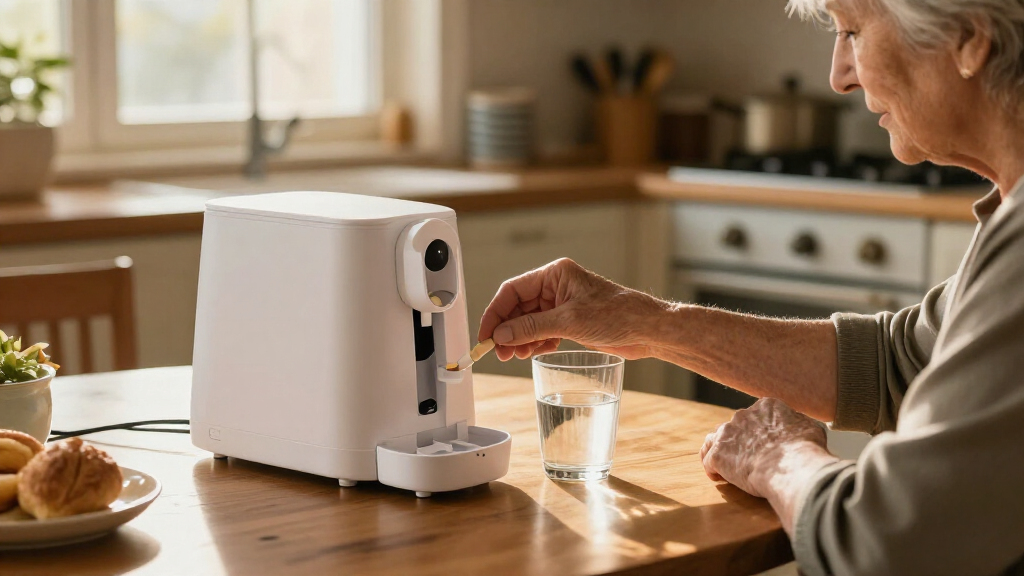
How We Picked
I compared the 15 listed dispensers around the practical jobs they need to do for older adults: release the intended dose on schedule, make missed doses easier to notice, and remain manageable to load and use. Capacity, alarm style, locking or access control, removable cups, display design, and whether alerts depend on Bluetooth, Wi-Fi, or an app all informed the comparison. I also weighed caregiver usefulness against the setup and maintenance those features can add.
The ranking favors a balanced, easy-to-understand routine over a longer feature list. That puts the 28-day alarm-and-key-lock option ahead as the best overall, while expandable app-controlled units rank better for households prioritizing longer intervals between refills or remote oversight. Models with similar capacities separate based on practical details such as cup access and alert format; a simpler unit may suit a senior better than a connected one if app setup adds friction. Product names and listed features guide these recommendations, so buyers should check the exact model instructions and medication compatibility before use.
Factors to Consider When Choosing Automatic Medication Dispensers For Seniors
Choosing among automatic medication dispensers is less about collecting the most features and more about matching the device to a real medication routine. I would start with who fills it, who responds to missed-dose alerts, and how the senior prefers to retrieve a dose.
Match Capacity to the Refill Routine
A longer capacity can reduce how often a caregiver needs to refill the device, but it does not automatically make the dispenser easier to live with. First count scheduled doses and check how the device defines a day or compartment; product names such as 21-day or 28-day do not by themselves explain every possible dosing schedule. A large tray may also mean a longer filling session and more opportunities to misplace a pill during setup. If medication changes often, a smaller or more accessible organizer can be easier to correct than a heavily loaded tray. For a stable routine and limited caregiver visits, expandable 42- or 56-day designs may be attractive. Choose the refill interval around the household’s actual support schedule, not the largest number on the label.
Choose Alerts the User Will Notice
An alarm only helps when the person taking medication can hear, see, and understand it in their everyday environment. Sound-and-light alerts may offer a local cue without requiring a phone, while app notifications can add another route for caregiver awareness. Check whether a reminder repeats, how it stops, and what happens if the dose is not collected; those details can matter more than having many alert types. A loud environment, hearing difficulty, low vision, or a phone kept in another room can change which format works best. Avoid assuming that a connected model automatically provides dependable monitoring, since connectivity and notification settings need setup. When possible, let the intended user try the alert and retrieval steps before relying on the device.
Decide Whether App Access Solves a Real Problem
Bluetooth or Wi-Fi features can help a caregiver stay involved when they are not in the same home, but they also add setup and upkeep. Confirm who owns the phone used for setup, whether more than one caregiver needs access, and whether the app works with the household’s devices and network. Bluetooth models may depend on proximity for some functions, while Wi-Fi models raise home-network and account questions; check the manufacturer’s instructions for the exact behavior. If the senior prefers not to use a smartphone, make sure daily dispensing and alerts still work without opening an app. A simpler alarm-and-lock model may be the better fit when local reminders are enough. Pay for connected features only when someone will actively use the information they provide.
Treat Locks as One Part of Medication Safety
A locking lid or digital lock can reduce casual access to stored medication, which may matter in a shared home or when a senior has trouble distinguishing scheduled doses from other pills. A lock does not replace supervision, safe medication storage, or advice from a clinician or pharmacist. Ask who will hold the key or manage the code and how access works during a power interruption or device problem. Also consider whether a caregiver can open the dispenser quickly to refill it or address a schedule change. A clear lid can make the tray easier to inspect, but visibility is not the same as secure access. Choose the level of access control that fits the household rather than treating every lock feature as necessary.
Check Handling, Visibility, and Dose Retrieval
The senior’s ability to see and handle the dispenser can matter as much as its schedule settings. Look at display readability, button size, lid-opening effort, and whether pills drop into a cup that is easy to grasp. Removable cups, such as those offered on the LiveFine 21-compartment models, may help a caregiver hand over a prepared dose or make retrieval less fiddly. A slide-door design can change how a dose is accessed, so confirm that the person can operate it independently. Before buying, compare the physical footprint with the intended bedside or kitchen surface and check that the device will not be awkward to reach. A hands-on fit check can prevent a feature-rich dispenser from becoming a device the user avoids.
Plan for Refills, Medication Changes, and Backup
Automatic dispensers work best when one person is clearly responsible for loading the correct pills and checking the schedule after prescriptions change. Ask a pharmacist whether each medication is suitable for storage in the dispenser, especially if it has special packaging, storage, or timing instructions. Keep the original containers and a current medication list available rather than treating the organizer as the only record. Decide how the household will handle a missed dose, travel, a power issue, or a dispenser malfunction before the first scheduled use. Bigger capacity can reduce refill frequency, but it can also leave more doses affected if the setup is wrong. A repeatable refill check by a caregiver can matter more than a small difference in compartment count.
Frequently Asked Questions
Is a 56-day dispenser a better choice than a 28-day model?
It can be a better fit when a caregiver cannot visit often and the medication schedule stays stable. The longer interval reduces refill sessions, but loading a larger tray may take more care, and a prescription change can affect more prepared doses. A 28-day model may be easier to manage when the routine changes frequently or a caregiver checks the device every few weeks. Compare the actual compartment schedule with the prescribed doses rather than relying on the capacity label alone. I would choose the longer-capacity unit only if its refill process and access features suit the person who will maintain it.
Should I choose an app-connected dispenser if I live far from my parent?
An app-connected model may be useful if it gives you information you will check and the device supports the kind of remote alerts you need. Before choosing one, verify whether its connection is Bluetooth or Wi-Fi and what functions remain available when the connection drops. Ask whether the senior can still take a dose using local controls without a smartphone. Agree on who will handle app setup, account access, and notification troubleshooting. If those tasks would fall to the senior and feel burdensome, a local alarm model may be the more dependable household choice.
Can a pill dispenser handle every medication in a senior’s routine?
No single dispenser should be assumed to suit every medication. Some medicines have storage, packaging, timing, or handling instructions that may make transferring them into a compartment inappropriate. Check with a pharmacist or prescribing clinician before moving any medication from its original container, especially for pills with special instructions. Also confirm that the compartment layout can represent the prescribed schedule without combining doses incorrectly. Keep an up-to-date medication list and use the dispenser only for medicines approved for that setup.
What if the senior misses an alarm or cannot retrieve the dose?
Plan for that possibility before choosing a model: check whether alerts repeat, whether a caregiver can be notified, and how the dispenser indicates an uncollected dose. A sound-and-light alert may help some users, while others may need a caregiver’s follow-up rather than a louder alarm. Ask the pharmacist or clinician what to do after a missed dose; the right response depends on the medication and schedule. Do not assume a dispenser can decide whether a missed dose should be taken later. If missed alerts are a recurring concern, prioritize a caregiver response plan over extra capacity.
How do I know whether removable cups or a slide-door design will be easier to use?
Think about the exact motion the senior will perform at dose time: opening a lid, sliding a door, or lifting and holding a cup. Removable cups may make it easier for a caregiver to hand over a dose, but they can be misplaced or require extra handling. A slide-door model may keep retrieval direct, yet the user needs enough grip and coordination to operate it consistently. If possible, have the intended user try a demonstration unit or inspect the controls in person before purchase. Ease of use should be judged by the person taking the medication, not only by the caregiver who fills the tray.
Conclusion
For most households, I recommend the 28-Day Automatic Pill Dispenser with Alarm and Key Lock as the best overall choice because it balances capacity, reminders, and controlled access without making app use the center of the routine. For best value in practical features, compare the basic alarm-and-lock 28-day models and choose the one whose lid, display, and alert controls best fit the user; the listed options do not provide enough verified information to declare a price-based value winner. For a premium, caregiver-connected setup, the expandable 42- or 56-day app-controlled models make more sense when remote oversight and fewer refill visits are priorities. For beginners, I would start with a straightforward alarm model rather than adding app setup before it is needed. For specific handling needs, consider the LiveFine dispenser with removable cups; for people who respond better to visual cues, look closely at the slide-door sound-and-light option. Match the final choice to the senior’s routine and abilities, and confirm medication suitability with a pharmacist or clinician.
Black Friday Picks

Withings Body Scan Smart Scale with Segmental Body Composition and ECG, Black
As an affiliate, we earn on qualifying purchases.