
TL;DR

Turn quiet afternoons into listening time
- Thousands of audiobooks, podcasts and originals
- Listen on your phone, tablet or Echo — also offline
- Cancel anytime
A Swedish cohort study found that longer reproductive lifespan and reported use of menopausal hormone therapy were associated with more favorable brain MRI measures in older women. The observational findings do not show that estrogen exposure caused the differences or that hormone therapy prevents dementia.
A Swedish study of 352 cognitively unimpaired women linked longer reproductive lifespan and menopausal hormone therapy use with lower burden of cerebral small vessel disease on brain scans, a finding relevant to research on women’s brain aging. The observational study, published in Neurology, reports associations—not evidence that estrogen exposure prevents dementia or causes healthier brain tissue.
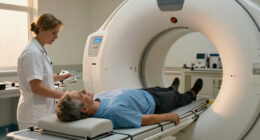
Researchers led by Anna Marseglia of the Karolinska Institutet studied women in the 1944 Gothenburg H70 birth cohort. Participants had brain MRI at age 70; 286 returned for an examination five years later. The women had an average reproductive lifespan of 37.1 years, calculated from age at first menstruation to age at menopause or ovary removal. At baseline, their mean Mini-Mental State Examination score was 29.2, consistent with the study’s description of the group as cognitively unimpaired.
A longer reproductive span was associated with 8% lower odds of having at least two signs of cerebral small vessel disease (odds ratio 0.92; 95% confidence interval 0.86 to 0.99). The researchers also reported that menopausal hormone therapy use was associated with lower odds of greater small vessel disease burden (odds ratio 0.41; 95% confidence interval 0.20 to 0.81) and higher white matter integrity. These are statistical associations in this cohort, not estimates of a treatment effect.
Women who reported both oral contraceptive use earlier in life and menopausal hormone therapy later had the lowest measured small vessel disease burden and the highest white matter integrity among the groups described. Among participants carrying an APOE4 gene variant, hormone therapy use was associated with greater thickness in brain regions commonly affected by Alzheimer’s disease. About 31% of the cohort carried APOE4. The study assessed MRI markers, including white matter lesions, small brain bleeds, and other vascular abnormalities; it did not establish that these measures translated into a lower rate of dementia.
Why Brain Vascular Markers Matter
The results add to research asking whether reproductive and hormone histories may be associated with brain aging. Cerebral small vessel disease can be seen through MRI markers such as white matter hyperintensities, lacunes, and microbleeds. Changes in these markers matter to researchers because vascular injury may contribute to cognitive decline, though this study did not show that the participants’ MRI differences caused or predicted dementia.
The findings may help shape future studies that examine vascular and Alzheimer’s-related brain measures together, rather than focusing only on Alzheimer’s disease. They do not establish a reason for an individual to start, stop, or change hormone therapy. Treatment decisions involve potential benefits and harms that depend on a person’s health and circumstances, and the cohort results cannot resolve those clinical questions.
Products Worth Considering

Fitbit Versa 2 Health and Fitness Smartwatch with Heart Rate, Alexa, Music, Sleep and Swim Tracking

Fitbit Inspire 3 Health and Fitness Tracker Bundle

Fitbit Charge 6 Fitness Tracker – Obsidian/Black
As an affiliate, we earn on qualifying purchases.
How Researchers Measured Hormone Exposure
The study estimated reproductive lifespan from the reported ages at menarche and menopause or oophorectomy, and also examined reported use of oral contraceptives and menopausal hormone therapy. Its small vessel disease score combined several MRI findings, while other outcomes included white matter integrity and cortical thickness in Alzheimer’s-related regions. The cohort’s average cognitive screening score was high, and participants were selected as cognitively unimpaired, so the study was not a trial of dementia prevention.
Earlier hormone research has produced mixed results. The source report notes that the Women’s Health Initiative Memory Study in 2003 found increased probable dementia risk with estrogen-plus-progestin formulations among women aged 65 or older. That research, along with findings of other health risks, contributed to warnings later removed by the FDA in 2026. The current Swedish study is different in design and does not overturn those trial results: it observed associations in a cohort and did not assign participants to hormone treatment.
In an accompanying editorial, Tracy Madsen of the University of Vermont said the role of estrogen exposure could help researchers investigate mechanisms of dementia. She also pointed to projections that dementia cases among women in the United States may exceed those among men by 233,000 in 2060. Those projections provide broader context, not a result measured by the Swedish cohort.
“The idea of reproductive lifespan and ovarian longevity as a potential modifiable target is a critical concept for women’s health.”
— Tracy Madsen, University of Vermont, in an accompanying editorial
Limits of the Swedish Cohort Findings
The study cannot determine whether longer estrogen exposure led to the observed brain measures. Participants reported their hormone use, which the researchers said could be affected by recall errors or misclassification. The study also lacked detailed information about the types, doses, and timing of oral contraceptives and hormone therapy, limiting conclusions about particular regimens.
The cohort was relatively small, drawn from one Swedish birth cohort, and consisted of women without cognitive impairment at baseline. The report describes associations with MRI markers, but it does not establish whether those markers predict later dementia in these participants. It is also unclear from these findings how results would apply to other populations or to people with different health histories.
Further Follow-Up and Replication
Researchers can use longer follow-up and larger, more diverse cohorts to test whether the MRI associations persist and whether they relate to later changes in cognition or dementia diagnoses. Studies with more detailed records of hormone type, dose, and age at use would help clarify which exposures are being compared. The 286 participants who returned five years after baseline provide a follow-up group, but the report does not establish a schedule or result for further assessments.
For now, the report is evidence for continued investigation of reproductive history and brain aging, not a basis for changing hormone treatment. The study authors’ cautions about cause and effect remain central to interpreting the results.
Key Questions
Did the study show that estrogen prevents dementia?
No. It found associations between reported hormone exposure and brain MRI measures. It did not show that estrogen prevents dementia or that the MRI findings led to fewer dementia diagnoses.
What did the researchers mean by reproductive lifespan?
They calculated it by subtracting a participant’s age at menarche from her age at menopause or oophorectomy. The cohort’s average reproductive lifespan was 37.1 years.
What brain measures were associated with hormone exposure?
The study reported associations with cerebral small vessel disease burden, white matter integrity, and, among APOE4 carriers, cortical thickness in regions commonly affected by Alzheimer’s disease. These were imaging outcomes, not proof of clinical benefit.
Can the findings guide an individual’s hormone therapy decision?
The study does not establish that hormone therapy causes better brain health and cannot determine an individual’s balance of benefits and risks. Anyone considering treatment decisions should discuss them with a qualified health professional.
Source: medpagetoday.com