
TL;DR

Turn quiet afternoons into listening time
- Thousands of audiobooks, podcasts and originals
- Listen on your phone, tablet or Echo — also offline
- Cancel anytime
A preliminary study of 758 adults older than 78 found that those with masked high blood pressure—normal office readings but high home readings—had a 70% higher rate of falls than peers with high readings in both settings. The findings were presented at the American Heart Association’s 2026 Hypertension Scientific Sessions; they show an association, not proof that masked hypertension causes falls.
A preliminary study of 758 adults older than 78 found that those with masked high blood pressure—normal readings at a clinic but high readings at home—had a 70% higher rate of falls than peers whose blood pressure was high in both settings. The findings were presented at the American Heart Association’s Hypertension Scientific Sessions in Arlington, Virginia, and suggest home readings may help clinicians identify a possible fall-risk signal that office measurements miss.
Researchers classified participants by readings taken in medical and home settings. 15.4% had masked high blood pressure, while 34.5% had sustained high blood pressure, meaning readings were high in both settings. Another 17.0% had white coat high blood pressure, in which readings are high in a medical setting, and 33.2% had normal readings in both settings.
Across a median follow-up of 350 days, 23.4% of participants reported having fallen at least once during the previous 12 months. The researchers also found that, when office and home readings were examined as a continuous measure, lower office blood pressure relative to home blood pressure was associated with a higher incidence of falls.
The 70% comparison is between participants with masked high blood pressure and those with sustained high blood pressure. The study was preliminary, and its findings show an association; they do not establish that masked high blood pressure caused the falls. The supplied report does not specify the number of falls in each group or describe a mechanism linking the readings to falls.
Why Home Readings May Matter
Blood pressure measured at a clinic may not capture what a person’s readings are like at home. The results suggest that looking at both settings could reveal information relevant to older adults’ care, including a possible association with falls. This matters because falls can lead to injury, disability and loss of independence.
The study’s presenting author, Frances Wang of Beth Israel Deaconess Medical Center, said home readings can help identify “hidden high blood pressure at home” and may provide useful information for clinical assessment. The findings do not show that measuring blood pressure at home prevents falls, or that changing blood pressure treatment would reduce fall risk.
For readers, the practical point is about sharing measurements with a health care team rather than interpreting a single home or clinic reading on its own. Blood pressure monitoring and treatment decisions should be discussed with a qualified health professional, particularly for older adults whose care may involve multiple health concerns.
As an affiliate, we earn on qualifying purchases.
Study Findings in Guideline Context
The American Heart Association’s 2025 blood pressure guideline recommends annual blood pressure monitoring for all adults. It also recommends home monitoring to help confirm a clinic diagnosis and to track readings, progress and care as part of an integrated plan. The guidance provides context for why researchers examined both office and home measurements; it does not mean this study tested the guideline or proved that home monitoring changes fall outcomes.
Low blood pressure is often considered a fall risk, but the report says the study builds on emerging evidence associating high home blood pressure with more falls among older adults. The research adds a specific comparison involving masked high blood pressure in people older than 78, while leaving open why that pattern might be associated with falls.
“These findings highlight that, in addition to office blood pressure measurement, home blood pressure readings can be an important way to identify hidden high blood pressure at home and risk of falls in older adults.”
— Frances Wang, Ph.D., M.S., the study’s presenting author and a researcher at Beth Israel Deaconess Medical Center
As an affiliate, we earn on qualifying purchases.
What the Study Cannot Explain
The findings are preliminary research presented at a scientific meeting. The report does not establish that masked high blood pressure leads to falls, nor does it explain what might account for the association. Blood pressure variability and the body’s regulation of blood pressure were suggested by Watson as possibilities, not confirmed mechanisms.
The available report also does not give the number of falls within each blood pressure group, the exact fall rates behind the 70% comparison, or details needed to judge how other factors may have affected the result. Participants reported falls, and the study’s follow-up period had a median of 350 days; the reported history of falls covered the previous 12 months. Further research will be needed to test whether the association holds and whether it can inform prevention or treatment.
As an affiliate, we earn on qualifying purchases.
How Clinicians May Use Home Readings
The study was presented during the American Heart Association’s October 7–11, 2026, meeting. The supplied report does not identify a publication date for a full study paper or describe planned follow-up research, so those next steps remain unclear.
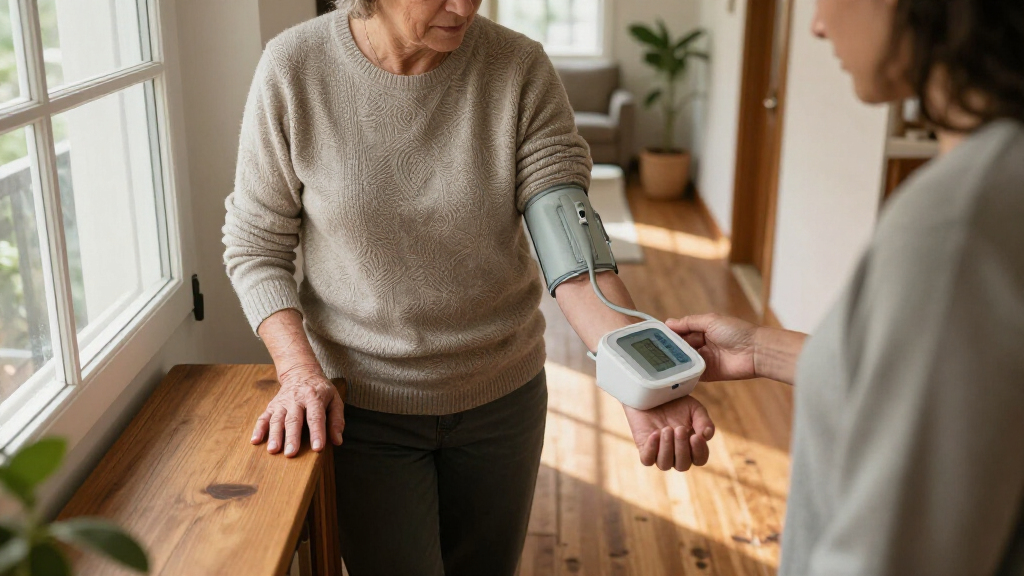
Wang encouraged older adults, family members and caregivers to measure blood pressure regularly at home and share the readings with a health care team. Clinicians can consider home measurements alongside office readings and a person’s broader health information. Whether doing so leads to fewer falls has not been established by this study.
blood pressure monitor for home use
As an affiliate, we earn on qualifying purchases.
As an affiliate, we earn on qualifying purchases.
Key Questions
What does masked high blood pressure mean?
It refers here to normal blood pressure readings in a medical setting but high readings at home. The study compared readings from both settings among adults older than 78.
How much higher was the fall rate?
The study reported a 70% higher rate of falls among participants with masked high blood pressure than among those with high readings both at home and in the office. The report does not provide the group-specific rates behind that comparison.
Does the study show that masked hypertension causes falls?
No. The findings show an association, not causation. Researchers did not establish why the groups differed or whether high home readings caused falls.
How many participants reported a fall?
During a median follow-up of 350 days, 23.4% of participants reported at least one fall during the previous 12 months. The report does not state how many falls occurred in each blood pressure category.
What should older adults do with home blood pressure readings?
The study’s presenting author recommended sharing home readings with a health care team. People should discuss how to monitor blood pressure and interpret results with a qualified health professional; the study does not show that home monitoring alone prevents falls.
Source: rss
Fall Picks
fall essentials
As an affiliate, we earn on qualifying purchases.