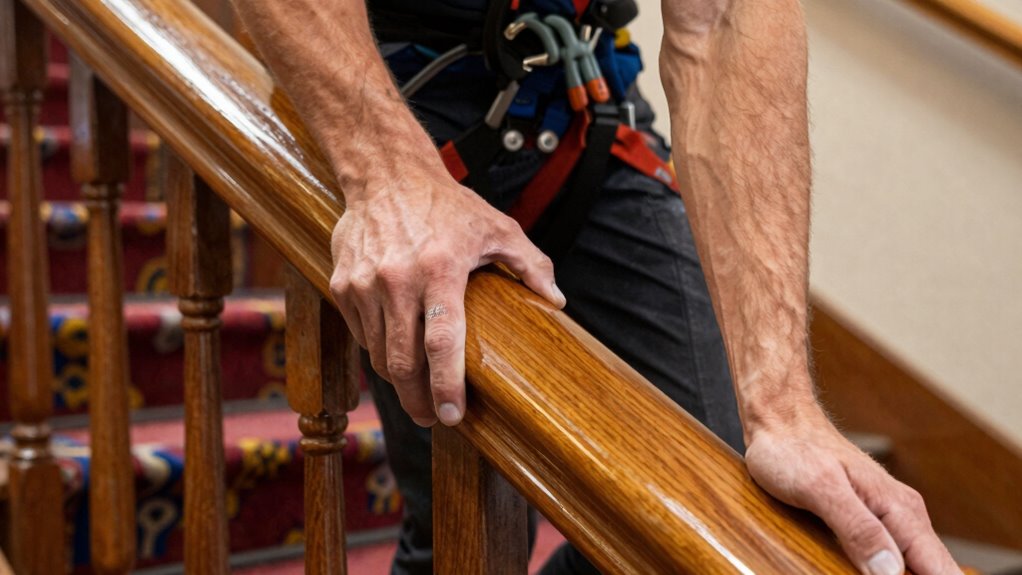

Using both hands on the handrail when going up or down stairs is a simple but effective way to prevent falls. It helps you maintain better balance, distribute your weight evenly, and react quickly if you stumble. Keep your grip firm, dry, and steady, and focus on the stairs without distractions. This easy habit greatly boosts safety and can save you from serious injuries — if you want to learn more, keep exploring these helpful tips.
Key Takeaways
- Using both hands on handrails provides increased stability and control during stair navigation, reducing fall risk.
- The ‘Two-Hand Rule’ helps distribute weight evenly and enhances balance on uneven or slippery stairs.
- Practicing the habit improves safety awareness and acts as a safety buffer in unexpected slip situations.
- Proper grip with both hands allows quick reactions to slips, preventing falls and injuries.
- Combining the ‘Two-Hand Rule’ with good lighting and stair maintenance maximizes overall safety.
As an affiliate, we earn on qualifying purchases.
Why Are Stairs a Fall Hazard and Who’s Most at Risk?
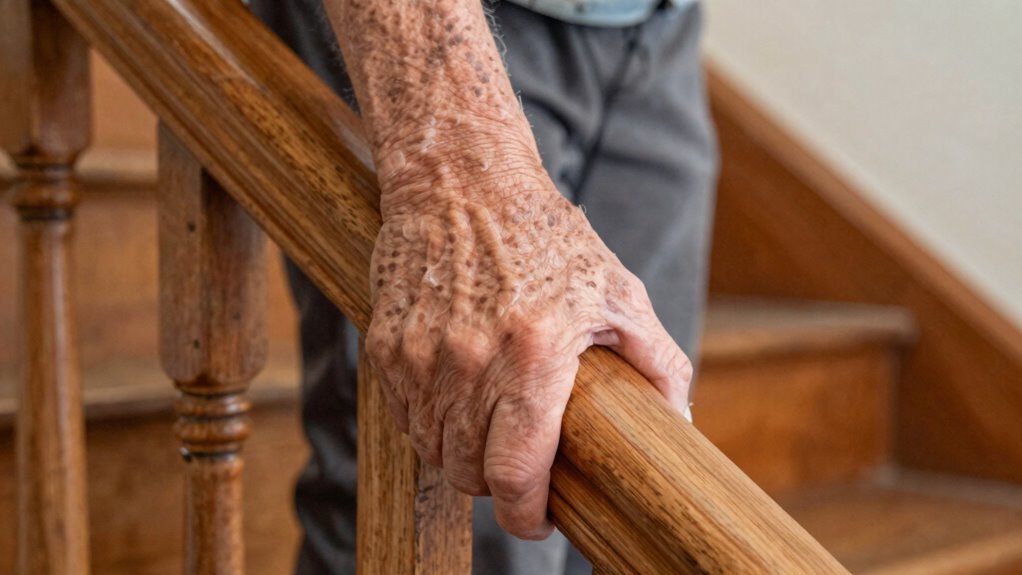
Have you ever wondered why stairs are such common fall hazards? It mostly comes down to stair design and lighting conditions. Poorly designed stairs—like those with uneven steps, narrow treads, or missing handrails—make trips and slips more likely. Additionally, insufficient lighting can hide hazards or create shadows that distort your perception of each step. When lighting is dim or uneven, you might misjudge your footing or miss a step altogether. Certain groups, such as the elderly, people with mobility issues, or those carrying objects, are especially vulnerable. These factors combine to increase the risk of falls on stairs. Recognizing hazardous stair features can help you take precautions and prevent accidents. Regularly inspecting stairways for safety hazards and ensuring precise stair measurements are maintained can significantly reduce the risk of accidents, especially considering how stair dimensions influence safety. Being aware of stairway lighting and maintaining proper illumination can further improve safety. Understanding these hazards helps you stay alert and take extra caution when moving through stairs, especially in poorly lit or poorly designed environments.
stair safety handrails for elderly
As an affiliate, we earn on qualifying purchases.
As an affiliate, we earn on qualifying purchases.
Why Using Both Hands on the Handrail Boosts Your Safety
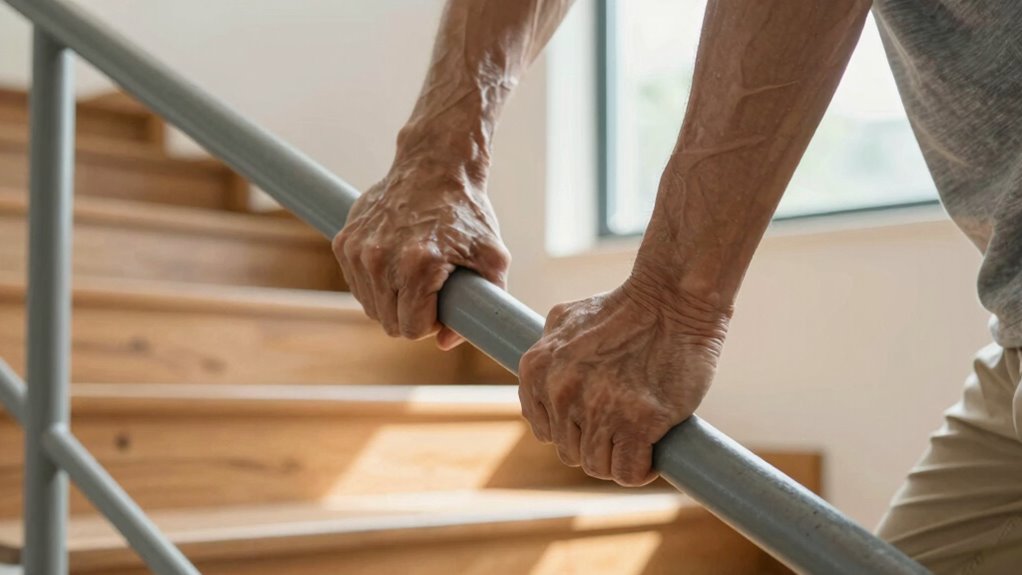
Using both hands on the handrail substantially increases your stability and control as you navigate stairs. A firm handrail grip distributes your weight evenly, reducing the chance of slips or falls. Engaging both hands provides a significant balance boost, especially on uneven or slippery surfaces. This double grip also helps you react quickly if you stumble, preventing a fall before it happens. To understand the benefits better, consider this: workspace and tech gear can also help create a safer environment around stairs by keeping your hands free or ensuring railing stability. Additionally, maintaining proper lighting conditions around stairways can improve visibility and further reduce accident risks. Proper staircase maintenance is also essential to ensure the handrails and steps remain secure and safe for use. Incorporating smart home safety devices can further enhance stair safety by alerting you to potential hazards or issues with the stairs. Regular inspections and safety checks are vital for identifying and addressing any hazards before an accident occurs.
As an affiliate, we earn on qualifying purchases.
How to Practice the ‘Two-Hand Rule’ Step by Step
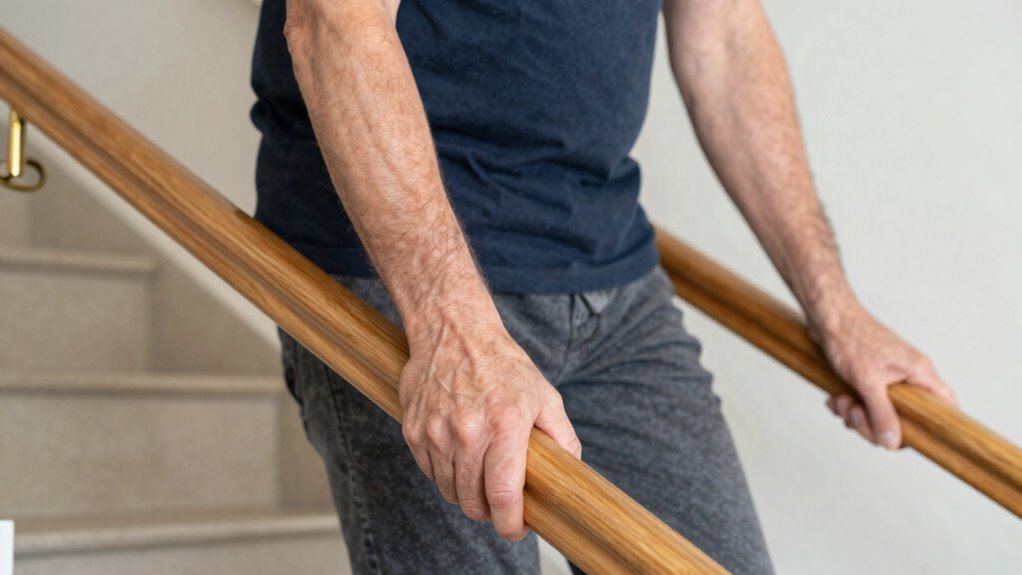
To effectively adopt the ‘Two-Hand Rule,’ start by practicing in a safe environment where you can focus on your grip and balance. Begin on a low step or staircase with sturdy handrails. Focus on your hand positioning, ensuring both hands firmly grasp the rail with a comfortable grip. Improve your grip strength by holding the handrails firmly without overexerting. As you step up or down, maintain steady contact with both hands, feeling your hands and arms working together for stability. Practice slowly at first, paying attention to how your grip feels and how your body responds. Remember that balance and stability are crucial for preventing falls and maintaining safety. Developing proper technique can help reinforce safe habits. Incorporating consistent practice on stairs can accelerate your skill development. Additionally, paying attention to individual needs, such as different hand sizes or physical limitations, can ensure the technique is accessible and effective for everyone. Incorporating awareness of hazards into your practice can further enhance safety and confidence. With consistent practice, your hand positioning will become natural, and your grip strength will improve—helping you confidently use the ‘Two-Hand Rule’ every time you navigate stairs.
As an affiliate, we earn on qualifying purchases.
Other Tips to Prevent Falls on Stairs

Always use handrails whenever you’re on the stairs to maintain your balance. Keep the stairs clear of clutter and obstacles to prevent tripping. These simple tips can make a big difference in keeping you safe. Incorporating urban traffic confidence techniques can also help you stay alert and prepared when navigating stairs in busy environments. Additionally, being aware of proper footwear can further reduce the risk of slipping or falling. Developing spatial awareness skills can enhance your overall safety on stairs and in crowded areas. Practicing visual scanning can help you better anticipate hazards and react quickly.
Use Handrails Always
Holding onto handrails provides essential support and stability as you navigate stairs, reducing the risk of slips and falls. Always use the handrail on either side, maintaining a firm handrail grip to guarantee maximum stair safety. Don’t rely solely on the wall or your other hand—using both hands increases stability, especially on uneven or slippery steps. Keep your hands dry and free of objects to maintain a secure grip. When ascending or descending, focus on the handrail and avoid distractions, like looking at your phone. Using handrails consistently reinforces good habits and helps prevent accidents. Remember, strong handrail grip combined with attentive stair safety practices is a simple but effective way to reduce fall risk and stay safe on stairs. Proper grip technique is also important to ensure maximum stability and safety. Additionally, practicing these habits regularly can help create a fall prevention mindset and improve overall safety. Incorporating safety awareness into your routine can further enhance your ability to recognize hazards before they lead to accidents. Paying attention to stair environment conditions can make a significant difference in preventing falls.
Keep Stairs Clear
Keeping stairs free of clutter is essential to prevent trips and falls. Regular clutter removal guarantees your path remains clear, reducing the risk of tripping over toys, boxes, or other objects. Improving lighting makes it easier to see each step clearly, especially in low-light conditions, enhancing safety. To emphasize the importance of these habits, consider this: Navigating Ethical Choices in Modern Consumer Life. Additionally, being mindful of boundaries and support helps create a safe environment for everyone. Incorporating home safety standards into your planning can further reduce hazards and promote a secure living space.
Signs You Should Seek Professional Stair Safety Help
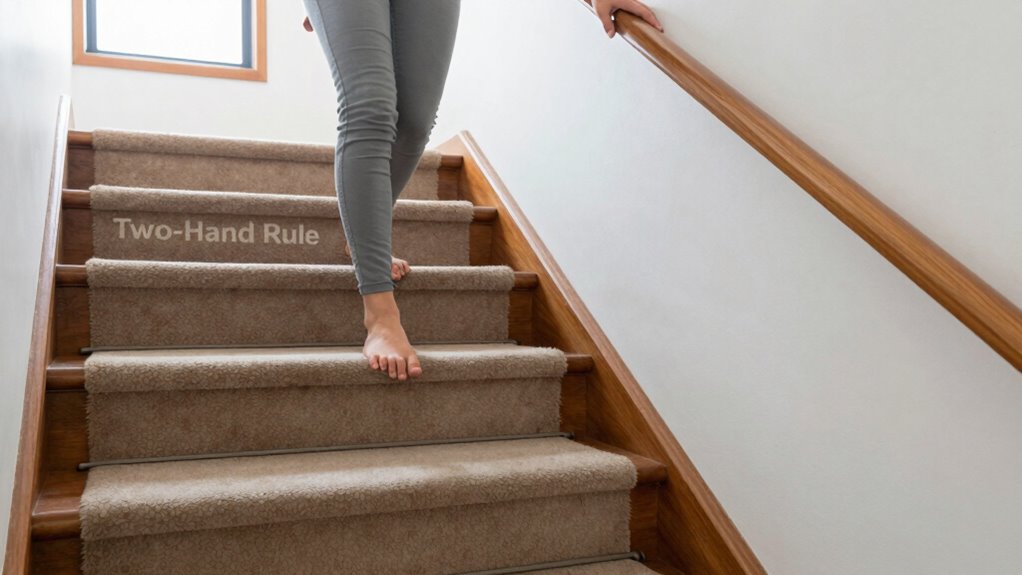
Have you noticed persistent creaking, wobbling, or uneven steps on your staircase? These are clear signs you should seek professional stair safety help. If you experience mobility challenges or difficulty maintaining balance, your stairs may need inspection or repair. Visual impairments can make it harder to see hazards, increasing your risk of falls. Cracks, loose railings, or worn treads are warning signs that your staircase isn’t safe. Ignoring these issues can lead to accidents. If your stairs feel unstable or if you notice any structural damage, don’t delay calling a professional. Ensuring your stairs are secure and accessible is vital for your safety. Addressing these signs promptly helps prevent falls and provides peace of mind for you and your loved ones.
Real-Life Stories: How the ‘Two-Hand Rule’ Prevented Falls
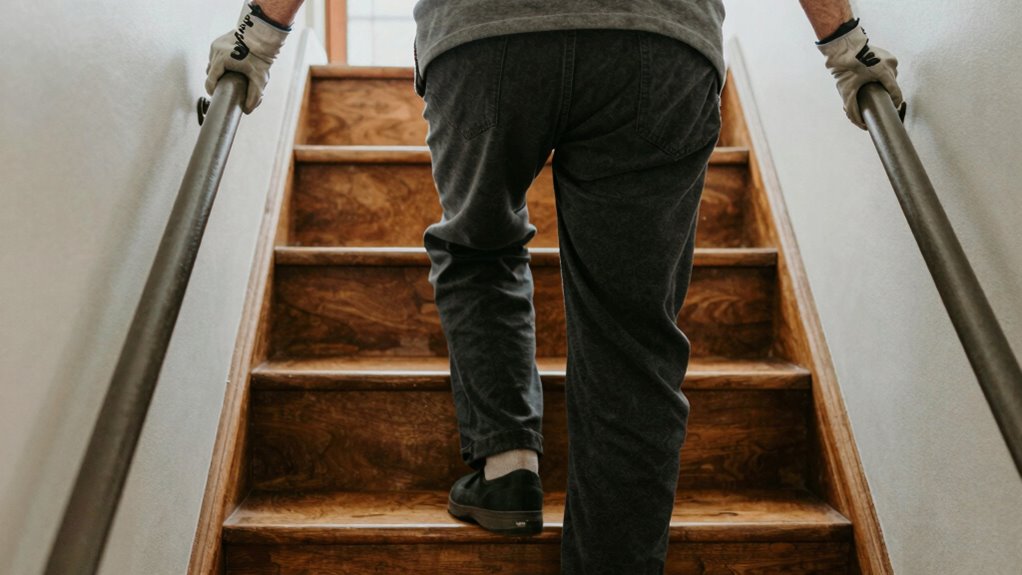
Many people have experienced moments where following the ‘Two-Hand Rule’ prevented a fall just in time. These stories highlight how simple safety habits can make a big difference in personal safety. Sharing these lessons can inspire you to stay vigilant and avoid accidents on the stairs.
Personal Safety Successes
Across the country, countless individuals have successfully avoided falls on stairs by consistently applying the ‘Two-Hand Rule.’ One woman recalls gripping both handrails firmly during her daily climb, preventing a potential slip that could have led to serious injury. These personal safety successes highlight how simple safety habits can make a significant difference. By committing to the two-hand approach, you reduce the risk of losing balance, especially on uneven or crowded stairs. Many people have shared stories of moments where the rule prevented falls during unexpected slips or hurried steps. These real-life examples show that integrating the ‘Two-Hand Rule’ into your routine can enhance fall prevention and give you confidence with every step. Small habits like this truly protect you from unnecessary accidents.
Lessons From Incidents
What can real-life stories teach us about the effectiveness of the ‘Two-Hand Rule’? They show that practicing this habit markedly enhances injury prevention and heightens safety awareness. For example, someone missed a step but instinctively held onto the handrail with both hands. This quick reflex kept them steady and prevented a fall that could have resulted in broken bones or worse. Another story involves a person distracted while carrying groceries; by adhering to the ‘Two-Hand Rule,’ they maintained balance and avoided slipping. These incidents highlight how consistently using both hands on the handrail provides a vital safety net, especially in unexpected situations. Learning from real incidents emphasizes that this simple habit can make a notable difference in preventing falls and injuries on stairs.
Frequently Asked Questions
Can the ‘Two-Hand Rule’ Be Effective for All Types of Stairs?
The two-hand rule can be effective across most stair designs, but its success depends on your stair’s layout and handrail materials. If your stairs have sturdy, well-placed handrails made from slip-resistant materials, using both hands provides extra stability. However, on narrow or uniquely shaped stairs, this habit might be less practical. Always assess your stair design and choose the safest approach, including proper handrail use, to prevent falls.
Is the ‘Two-Hand Rule’ Suitable for Elderly Individuals With Limited Mobility?
Sure, the ‘Two-Hand Rule’ might sound like a magic trick, but for elderly folks with limited mobility, it’s more like a whimsical suggestion. Assistive devices like handrails or walkers are usually better suited, giving extra support where mobility limitations make the two hands on the stairs tricky or unsafe. Remember, safety isn’t a one-size-fits-all, so adapt habits to fit your needs—no shame in that!
How Often Should I Practice the ‘Two-Hand Rule’ to Ensure Safety?
You should practice the ‘two-hand rule’ consistently, ideally every time you use stairs. Regular practice helps turn it into a habit, making it automatic and reliable. Aim to practice at least daily or several times a week until it feels natural. Consistency is key to habit formation, ensuring you remember to use both hands every time. Over time, this simple habit will boost your safety and reduce fall risk.
Are There Any Common Mistakes People Make When Using the Handrail?
Did you know that falls on stairs are a leading cause of injuries? When stair navigation, you might make mistakes like gripping the handrail too loosely or holding it unevenly. These errors can reduce stability. To stay safe, make sure you maintain a firm, two-handed grip on the handrail, and keep your hands evenly placed. Avoid rushing or leaning heavily on one side to prevent slips or falls.
Can Installing Additional Handrails Improve Stair Safety Beyond the ‘Two-Hand Rule’?
Yes, installing additional handrails can improve stair safety beyond the ‘two-hand rule.’ You should also focus on good stair lighting and non-slip treads to prevent falls. Extra handrails give you more support, especially on wide or steep stairs, reducing risk. Combined with proper lighting and secure, non-slip treads, these measures create a safer environment, helping you maintain better balance and avoid accidents.
Conclusion
By embracing the ‘two-hand rule,’ you turn every staircase into a fortress of safety, like a steady lighthouse guiding you through dark waters. This simple habit transforms your stairs from potential danger zones into secure pathways, shielding you from falls. Remember, safety isn’t just about avoiding accidents—it’s about building a life where each step is confident and secure. Make this small change today, and let your staircase be a bridge, not a trap.