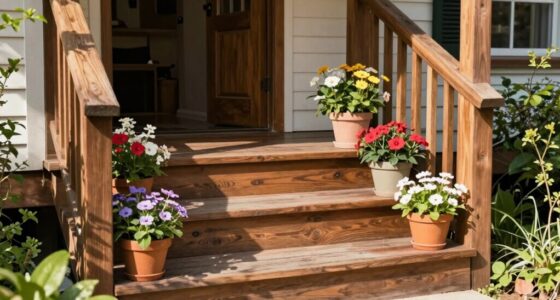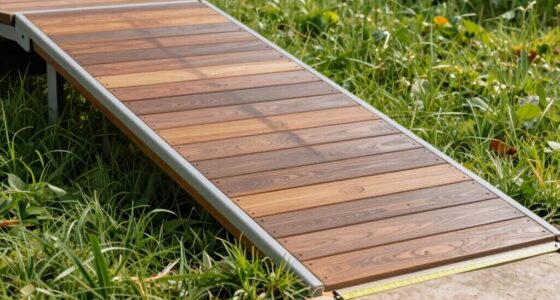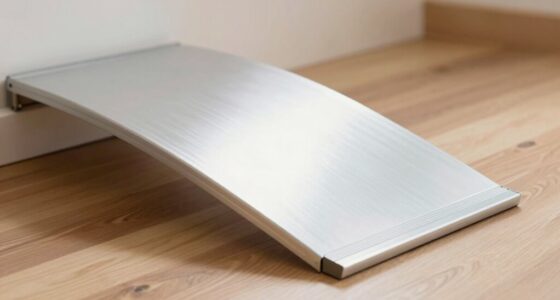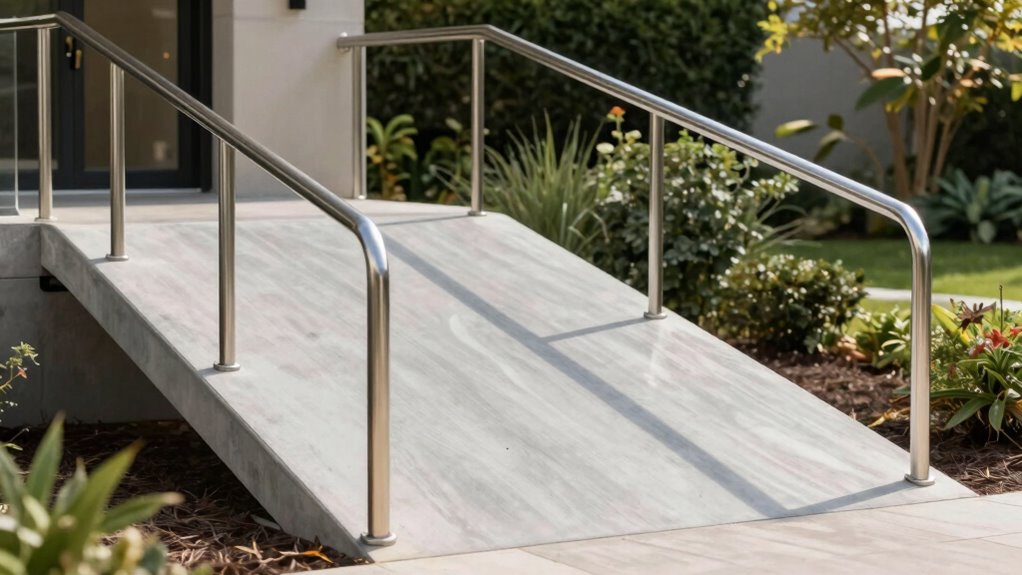

When you’re choosing a ramp, focus on width, landing dimensions, and handrails to guarantee safety and accessibility. Aim for a ramp wide enough to accommodate mobility devices comfortably. Your landing should be at least 5 feet by 5 feet for easy maneuvering. For handrails, select durable materials and maintain a height between 34 to 38 inches for support. This checklist can guide your selection, revealing important details about materials, regulations, and budgeting along the way.

Turn quiet afternoons into listening time
- Thousands of audiobooks, podcasts and originals
- Listen on your phone, tablet or Echo — also offline
- Cancel anytime
Key Takeaways
- Ensure ramp width accommodates mobility devices, allowing two users side by side for enhanced safety and accessibility.
- Verify landing dimensions of at least 5 feet by 5 feet for optimal maneuverability and smooth transitions.
- Select durable, slip-resistant materials for landings and ramps, considering maintenance needs and weather conditions.
- Install handrails at 34 to 38 inches high, ensuring they are sturdy, visible, and comfortable to grip.
- Familiarize yourself with local regulations and ADA guidelines to ensure compliance and minimize liability risks.
As an affiliate, we earn on qualifying purchases.
How to Determine the Right Ramp Width for Safety
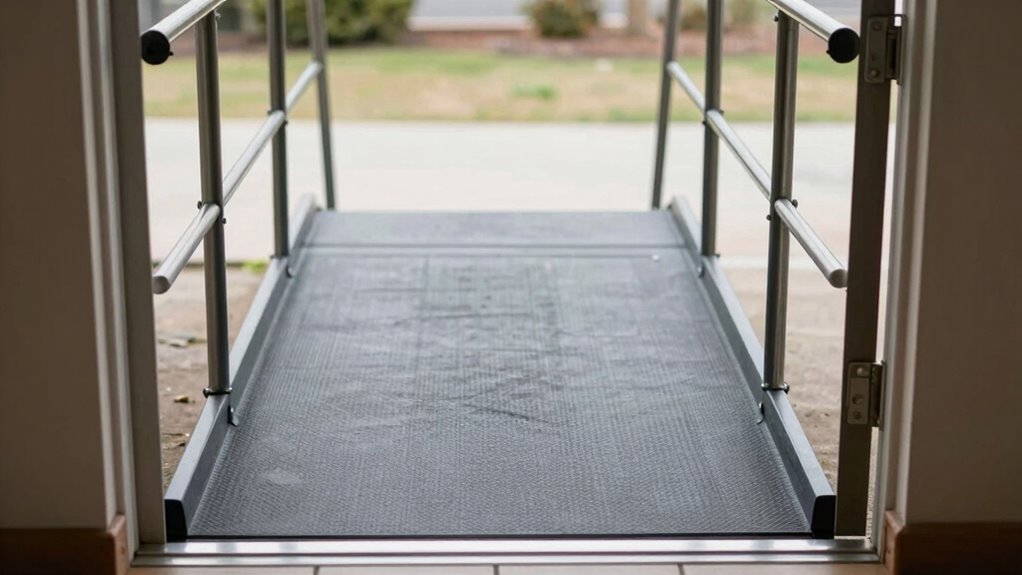
When determining the right ramp width for safety, it’s important to take into account both the intended use and the users’ needs. Start by evaluating the ramp accessibility features you require. Think about the types of mobility devices users will be using, like wheelchairs or scooters. A wider ramp can accommodate two users side by side, enhancing safety and ease of movement. Gathering user experience feedback is vital; listen to those who will be using the ramp. Their insights can help you identify specific requirements, ensuring the ramp meets various needs. Remember, a well-designed ramp not only facilitates access but also promotes confidence and independence for all users. Prioritize safety, comfort, and usability in your decision-making process.
slip-resistant ramp landing surface
As an affiliate, we earn on qualifying purchases.
As an affiliate, we earn on qualifying purchases.
Optimal Landing Dimensions: Ensuring Comfort and Accessibility
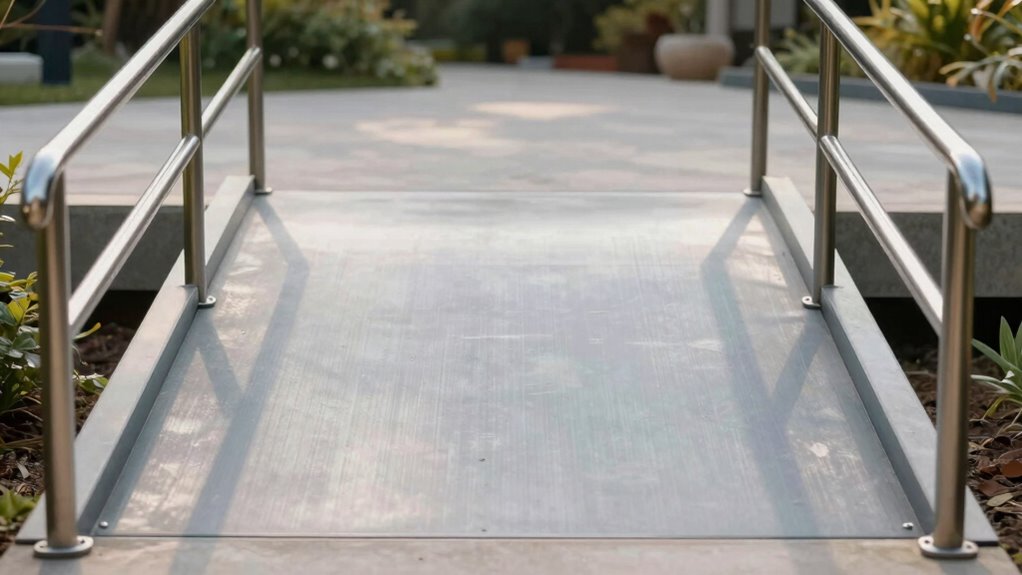
Ideal landing dimensions play an essential role in ensuring comfort and accessibility for all users. When planning your ramp, focus on creating a landing that’s spacious enough for easy maneuverability. A minimum of 5 feet by 5 feet is usually recommended. Consider using durable landing surface materials like textured rubber or concrete to provide stability and grip. This helps prevent slips, especially in wet conditions. Additionally, maintaining optimal slope ratios is important for ease of use; a gentle incline allows for smooth changes. Remember, an accessible landing not only enhances safety but also encourages independence for users, making it a key component of your ramp design. Prioritize these dimensions to create a welcoming environment for everyone. Furthermore, incorporating proper sleep hygiene practices can greatly improve overall well-being, which is essential for those relying on ramp accessibility. Maintaining indoor air quality is also crucial, as it can significantly affect the health and comfort of users in the space. Incorporating air quality improvements can help create a healthier indoor environment. Finally, ensuring ergonomic principles are applied in your ramp design can enhance user experience and promote long-term well-being. Additionally, utilizing pressure washing techniques can help maintain the cleanliness of landing surfaces, ensuring they remain safe and slip-resistant.
As an affiliate, we earn on qualifying purchases.
Essential Handrail Specifications for Safe Ramp Use
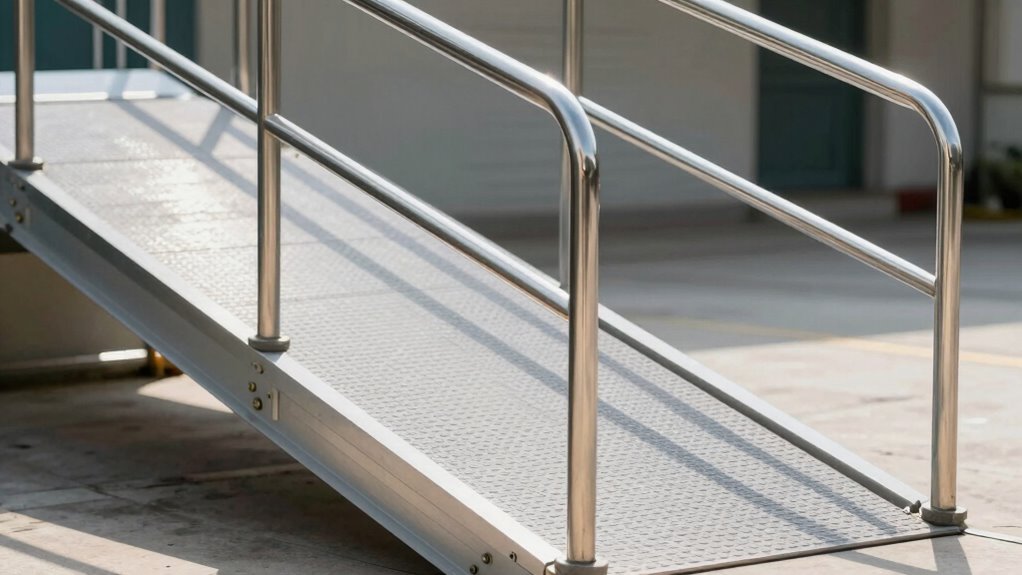
To guarantee safety and accessibility on ramps, handrails must meet specific requirements. Start with handrail height; it should be between 34 and 38 inches for ideal support. Choose a durable handrail material, like metal or high-quality plastic, to promote longevity. A comfortable handrail grip is essential, so look for designs that allow users to hold on securely, even in wet conditions. Pay attention to handrail spacing as well; it should be consistent along the ramp. Aesthetic matters too—select handrail colors that contrast with the ramp to enhance visibility. Additionally, consider incorporating acoustic drum shields to minimize noise interference when ramps are used in performance spaces. By focusing on these specifications, you’ll create a safer and more accessible environment for everyone using the ramp.
As an affiliate, we earn on qualifying purchases.
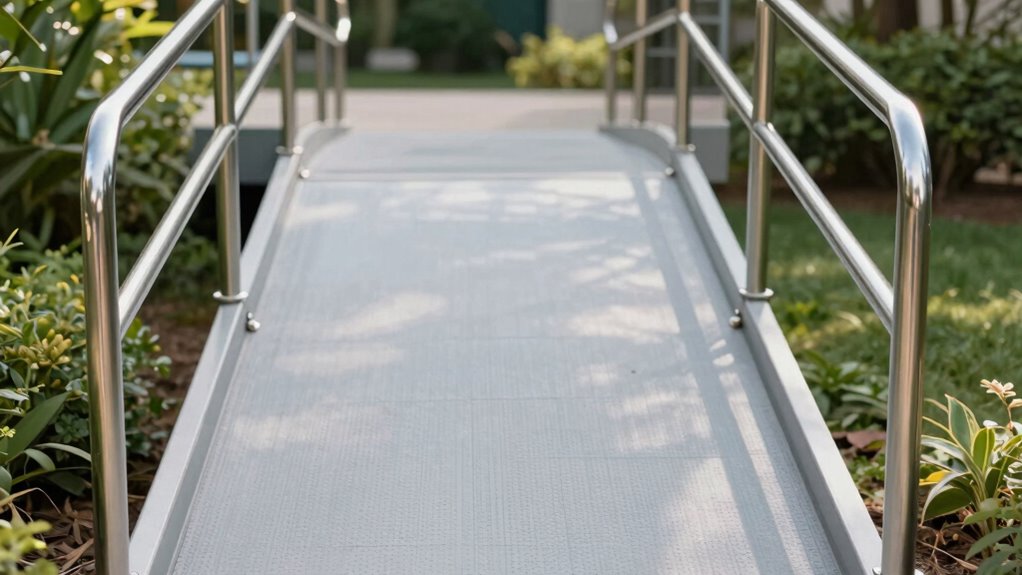
Understanding ramp regulations is essential for guaranteeing safety and compliance. You need to familiarize yourself with local laws and guidelines governing ramp accessibility. These regulations often specify dimensions, slope ratios, and landings to enhance usability for everyone, particularly those with mobility challenges. Compliance with safety standards not only protects users but also minimizes liability risks for property owners.
Before purchasing a ramp, check if it meets the Americans with Disabilities Act (ADA) requirements and any state-specific codes. This helps guarantee it’s designed for safe use and accommodates various needs. Remember, a well-constructed ramp can make a significant difference in accessibility, allowing smooth changes and enhancing overall safety for all users. Don’t overlook these critical regulations during your selection process.
Choosing Ramp Materials: Wood, Metal, or Composite?
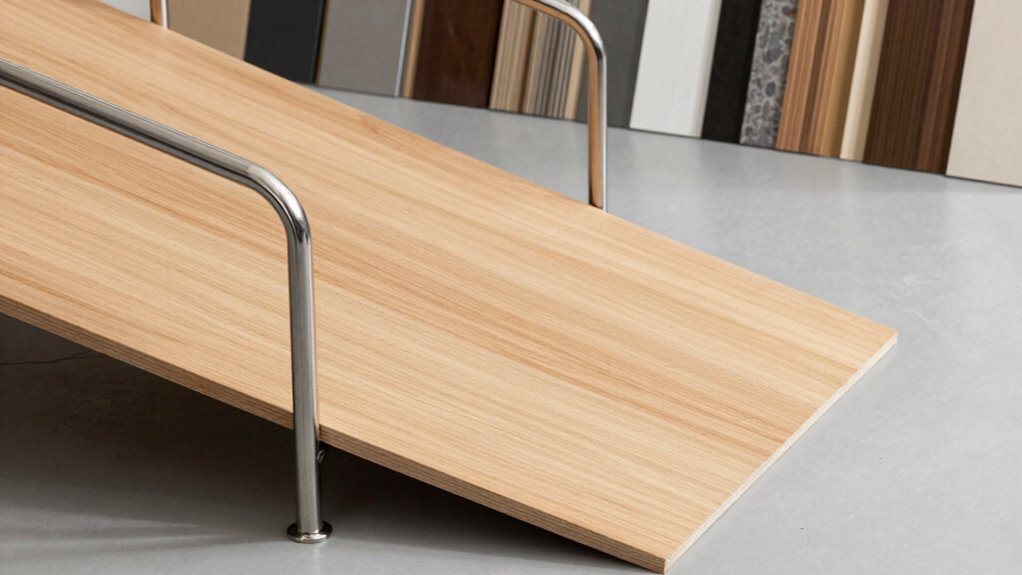
Choosing the right material for your ramp can greatly impact its durability and usability. Wood offers excellent durability but requires regular maintenance to prevent rot. If you prefer a robust option, metal provides strength but can suffer from corrosion over time, especially in wet conditions. On the other hand, composite materials combine the best of both worlds, boasting impressive longevity without the upkeep hassles of wood or the corrosion issues of metal. When you weigh your options, consider the cost comparison: wood may be cheaper upfront, while metal and composite can save you money in maintenance over the years. Additionally, consider how recycled materials in gardening can influence your choice, especially if you’re aiming for a more eco-friendly solution. It’s also important to understand how urban greening initiatives can impact material sourcing and availability, making it easier to choose sustainable options. It’s also worth noting that pests such as aphids can compromise the integrity of any organic materials used in your construction. Ultimately, your choice should align with your budget and long-term needs, especially when considering backup power systems to ensure safety during unexpected outages. Moreover, opting for materials produced through sustainable textile practices can further enhance the eco-friendliness of your ramp construction.
Ramp Weight Capacity: How to Assess Your Needs?
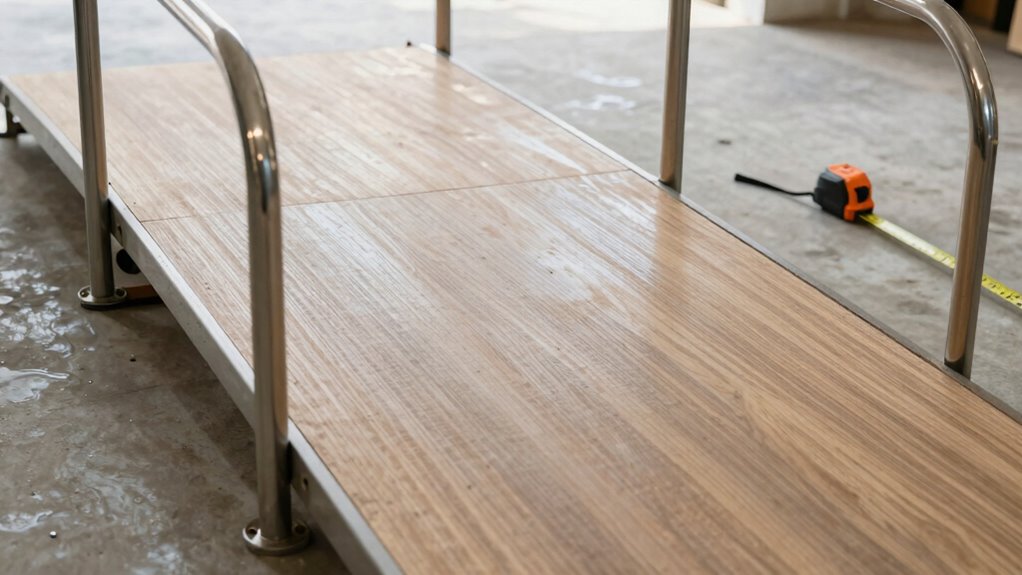
When selecting ramp materials, it’s just as important to evaluate how much weight your ramp needs to support. Understanding your ramp usage and specific user needs will help you make the right choice. Here’s how to assess:
Evaluating the weight capacity of your ramp is essential for ensuring safety and functionality.
- Identify the heaviest item: Consider all wheeled devices, including wheelchairs or scooters, that will use the ramp.
- Account for additional weight: Don’t forget to factor in the user’s weight plus any extra cargo they might carry.
- Check manufacturer specifications: Always refer to the ramp’s weight capacity to guarantee it meets or exceeds your requirements. Additionally, understanding assisted living expenses can provide context on the overall costs associated with mobility products.
Ramp Maintenance: Tips for Long-Lasting Safety

To keep your ramp safe and functional, regular inspections are a must. Check for any signs of wear or damage and clean debris promptly to prevent slips. Staying proactive can make all the difference in ensuring long-lasting safety for everyone who uses it.
Regular Inspections Essential
Regular inspections are essential for maintaining the safety and functionality of ramps. To guarantee your ramp stays in top shape, make routine checks a priority. Here are three key areas to focus on during your safety assessments:
- Surface Condition: Look for cracks, wear, or slippery spots that could pose a hazard, as pool surfaces can significantly impact safety and accessibility. Regular maintenance can help ensure the ramp remains as durable as best exterior home security cameras, enhancing its longevity. Additionally, consider using pet-friendly cleaning products to keep the surface safe for your furry friends. Regular cleaning and inspections can also help prevent mechanical failures that could compromise safety.
- Handrail Stability: Confirm handrails are secure and free from any damage; they should support weight if needed.
- Slope and Width: Verify that the ramp’s slope and width comply with safety standards for accessibility. Additionally, consider safe window cleaning as part of your overall home safety strategy to prevent accidents while maintaining your property.
Clean Debris Promptly
Keeping ramps clear of debris is essential for safety and accessibility. Regular debris removal not only prevents slips and falls but also guarantees that everyone can use the ramp without obstruction. Make it a habit to inspect your ramps frequently, especially after storms or heavy use. During these safety inspections, look for leaves, trash, or any items that could pose a hazard. If you notice any buildup, address it immediately. A clean ramp enhances the overall experience for users and reduces liability for you. Remember, maintaining a clear path is just as important as the ramp’s design. By prioritizing debris removal, you contribute to a safer environment for everyone who relies on the ramp. Additionally, making sure that the ramp is properly drained and dried after water exposure can further enhance safety and prevent damage.
Choosing Between Custom and Pre-Fabricated Ramps
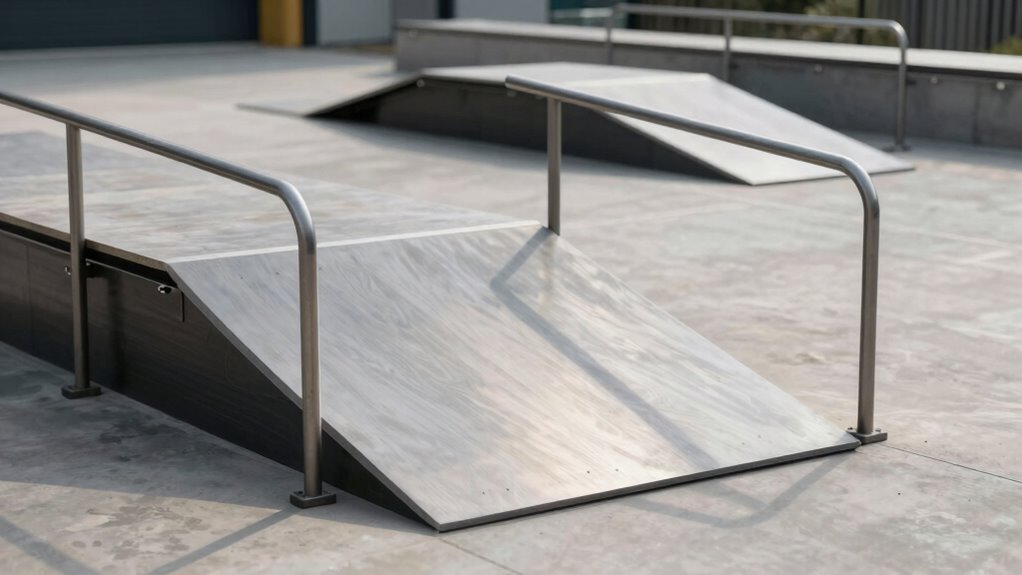
When you’re deciding between custom and pre-fabricated ramps, consider your budget and the costs involved. Custom ramps offer personalization options that might better fit your needs, but they can be pricier. On the other hand, pre-fabricated ramps often come with easier installation and lower maintenance requirements.
Cost Considerations And Budget
Choosing between custom and pre-fabricated ramps can greatly impact your budget, especially if you’re working with limited funds. It’s essential to evaluate all associated costs, including installation and any hidden fees. Here are three key considerations to keep in mind:
- Financing Options: Explore available financing plans to ease upfront costs. Many travel gear retailers offer financing options that can help manage expenses. Additionally, understanding your credit score can help you secure better financing terms. Consider how home upgrades can improve your property value in the long run. Furthermore, investing in personalized in-home care may enhance the living environment for seniors, making it easier for them to navigate their homes.
- Insurance Coverage: Check if your insurance covers part of the ramp costs, potentially reducing your out-of-pocket expenses.
- DIY Considerations: If you’re handy, a DIY ramp could save you on installation costs, but be sure to factor in long-term savings and maintenance. Additionally, consider how tax planning strategies can help offset some of these expenses through potential deductions or credits.
Customization And Personalization Options
While evaluating your ramp options, understanding the differences between custom and pre-fabricated ramps is essential. Custom ramps allow you to tailor design features to fit your specific needs, ensuring that every angle and height is perfect. You can choose materials and colors that match your home’s aesthetic choices, creating a seamless look.
On the other hand, pre-fabricated ramps come with set dimensions and styles, offering a quicker and often more affordable solution. They may lack some personalized touches but provide immediate functionality. Consider what’s more important for you: the unique design features of a custom ramp or the convenience and cost-effectiveness of pre-fabricated options. Your choice will ultimately reflect your lifestyle and design preferences.
Installation And Maintenance Ease
Although both custom and pre-fabricated ramps serve the same purpose, their installation and maintenance can differ greatly. When deciding between the two, consider the following factors:
- Installation Techniques: Pre-fabricated ramps often come with straightforward installation guides, making them easier for DIY enthusiasts. Custom ramps may require professional help, adding to your costs. Additionally, understanding kitchen appliance installation can provide insights into making the process smoother.
- Maintenance Schedules: Pre-fabricated ramps usually need less upkeep, as they’re designed for durability. Custom ramps might require more frequent inspections and maintenance, depending on materials used.
- Adaptability: If your needs change, pre-fabricated ramps may be easier to relocate or modify. Custom installations can be more challenging to adjust once built.
Additionally, understanding ADAS sensor calibration can help ensure that any modifications you make do not interfere with vehicle safety features.
Ultimately, think about your specific requirements and long-term plans when choosing.
Budgeting for Your Ramp: Cost Breakdown and Considerations

When budgeting for your ramp, it’s crucial to take into account various factors that can affect the overall cost. First, consider the materials you want to use; aluminum, wood, or concrete all have different price points. Next, think about the ramp’s length and width, as this will greatly impact your expenses. Don’t forget to factor in installation costs, which can vary based on complexity.
Look into funding options available to you, such as local programs or community initiatives. You might also explore grant assistance that could help cover some expenses. By evaluating these elements, you can create a realistic budget that guarantees you get a safe and functional ramp without breaking the bank.
Frequently Asked Questions
What Types of Ramps Are Best for Outdoor Use?
For outdoor use, folding ramps and portable solutions are your best bets. They’re lightweight, easy to transport, and can handle various surfaces. Look for ramps made from durable materials that resist weather damage. A non-slip surface is essential for safety, especially in wet conditions. Plus, their versatility allows you to use them for different vehicles or equipment. With the right ramp, you’ll enjoy seamless access wherever you go.
How Do I Measure My Space for a Ramp Installation?
Measuring your space for a ramp installation is like piecing together a puzzle. Start by determining where the ramp will go, then grab a tape measure. You’ll need to note the length and height differences for accurate ramp measurements. Don’t forget to check for any obstacles that might trip you up! Use installation tips to guarantee everything fits snugly and safely, creating a pathway that’s as smooth as silk.
Are There Grants Available for Ramp Construction?
Yes, there are grants available for ramp construction. You should explore various funding sources, including local government programs, non-profits, and disability advocacy organizations. Each program has its own application process, so be sure to check the eligibility criteria and required documentation. Applying early can increase your chances of securing funds. Don’t hesitate to reach out for assistance if you need help managing the options available to you.
Can Ramps Be Used for Pets as Well?
Absolutely, ramps can be a game-changer for pets! Imagine your furry friend confidently maneuvering obstacles with ease. When considering pet ramp features, look for non-slip surfaces and a sturdy design. Pet safety considerations are essential, so verify the ramp’s height and angle are suitable for your pet’s size and abilities. With the right ramp, you’ll enhance your pet’s mobility and independence, making life a whole lot easier for both of you.
What Is the Lifespan of Different Ramp Materials?
The lifespan of ramp materials varies considerably. For example, aluminum ramps typically offer excellent durability, lasting over a decade with proper care. Wooden ramps can last around five to seven years, depending on weather exposure and maintenance. Plastic options usually hold up for about five years. When considering ramp durability, think about your specific needs and how each material compares in strength and longevity. This’ll help you make a more informed decision.
Conclusion
To summarize, picking the right ramp is like building a bridge to accessibility—carefully consider width, landing dimensions, and handrails. By understanding regulations and choosing the right materials, you’ll guarantee safety and comfort for everyone. Keep weight capacity and maintenance in mind, too. Whether you go custom or pre-fabricated, budgeting effectively will help you create a solution that fits your needs and your space. Your ramp should be a pathway to freedom, not a hurdle.
Halloween Picks
halloween
As an affiliate, we earn on qualifying purchases.