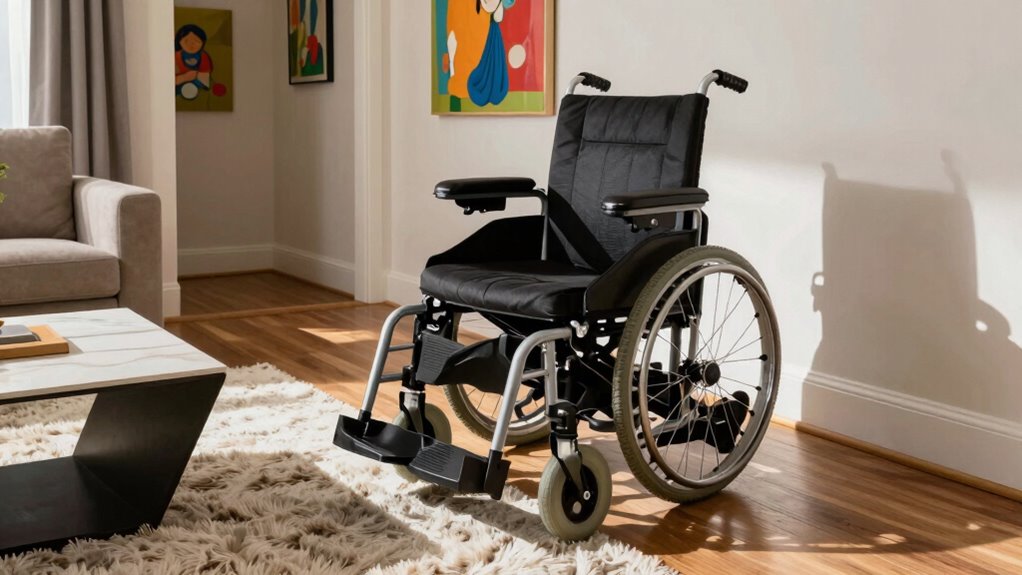

Before you buy a power wheelchair, assess key obstacles in your home. Start by measuring doorway widths to guarantee a good fit. Check your flooring types, as some surfaces can hinder movement. Look for steps or elevation changes, and make certain hallways are spacious enough to navigate comfortably. Don’t forget about potential hazards in living areas and the bathroom. There’s a lot more to evaluate for effortless mobility, so keep exploring the details ahead.
Open a free Amazon Business account
Business pricing, bulk buying and tax-exempt orders.
As an affiliate, we earn on qualifying purchases.
Key Takeaways
- Measure doorways and consider widening them to ensure power wheelchair accessibility throughout your home.
- Evaluate indoor flooring types; low-pile carpets and smooth surfaces are easier for navigation.
- Identify and address steps or elevation changes with ramps or lifts for seamless transitions.
- Ensure hallways are at least 36 inches wide and declutter for safe navigation.
- Assess outdoor terrain for steep inclines and choose a wheelchair with appropriate power for rough conditions.
Assess Your Doorway Widths for Power Wheelchair Access
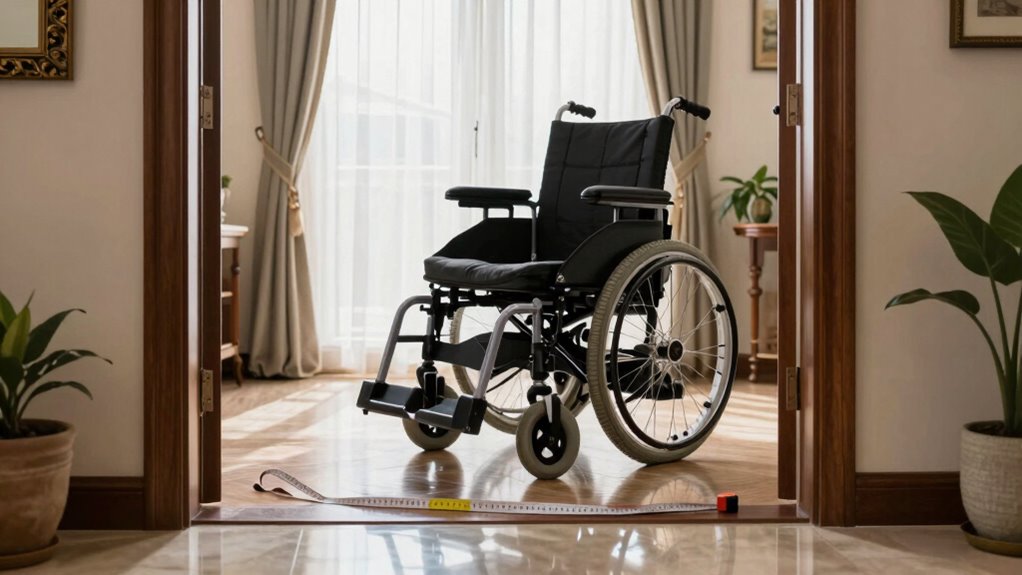
Have you ever considered how your doorways impact your mobility? If you’re planning to buy a power wheelchair, evaluating your doorway widths is vital. Standard doorways can often be too narrow for many wheelchair dimensions. You’ll want to measure each doorway to guarantee it accommodates your new chair comfortably. If adjustments are needed, think about widening doorways or installing pocket doors to improve access. Remember that even small spaces can create big obstacles. The last thing you want is to find your dream wheelchair stuck because of a tight fit. By making necessary doorway adjustments, you can enhance your mobility and enjoy your home without limitations. Don’t overlook this essential step before making your purchase.
Evaluate Surface Types for Wheelchair Mobility
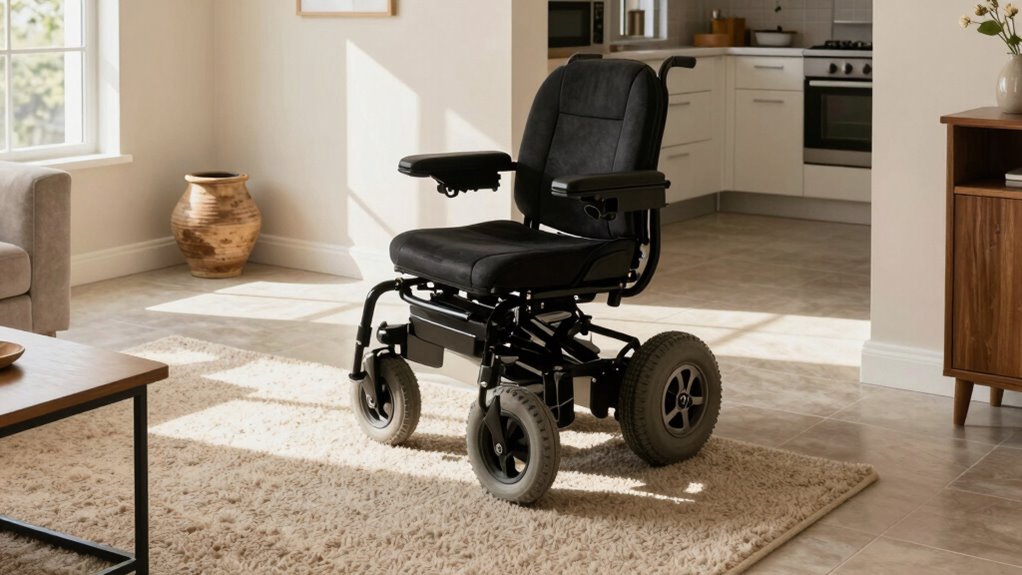
When evaluating your home for wheelchair mobility, consider the types of surfaces you’ll encounter. Indoor flooring can vary greatly, affecting your ease of movement, while outdoor terrain presents its own set of challenges. Additionally, be mindful of threshold heights that can create obstacles as you shift between spaces. Ensuring a smooth transition between different surfaces can significantly enhance independence and dignity for seniors navigating their homes. For instance, using acoustic drum shields can help mitigate noise from hard surfaces, making it easier to move around without distractions.
Indoor Flooring Considerations
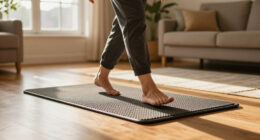
Choosing the right indoor flooring is essential for guaranteeing smooth and safe mobility in a power wheelchair. If you have carpet, consider the carpet type; low-pile options are generally easier to navigate than high-pile ones. Tile can be great, but watch out for tile friction that might slow you down. Hardwood floors often provide excellent mobility, but confirm they’re treated for hardwood safety to prevent slips. When placing rugs, keep them secured and avoid loose edges, as they can pose a tripping hazard. Additionally, think about mat stability; mats should lie flat to prevent any wobbling. Regularly evaluating indoor air quality can also help maintain optimal conditions for mobility. Furthermore, selecting ergonomically designed surfaces can enhance comfort and stability while navigating your space. By evaluating these factors, you’ll create a more accessible and comfortable environment for your power wheelchair use. Regularly cleaning your flooring can also help maintain optimal conditions for mobility, as proper maintenance prevents deterioration and enhances safety.
Outdoor Terrain Challenges
While traversing outdoor terrains, understanding the surface types can greatly impact your power wheelchair mobility. Different terrain types, such as grass, gravel, and pavement, present unique challenges. For instance, gravel can cause your wheelchair to sink or skid, while grass may slow you down. Smooth, flat surfaces like pavement are generally the easiest to navigate. Additionally, designing an outdoor area with easy-to-navigate surfaces can make a significant difference in accessibility.
Effective route planning is crucial. Before heading out, review your route for potential obstacles like uneven ground or steep inclines. Consider the distance you’ll travel and the surfaces you’ll encounter. By evaluating these factors, you can avoid frustrating situations and guarantee a smoother ride. Keeping terrain types in mind will help you enjoy outdoor activities without unnecessary hindrances. Additionally, investing in off-road gear tailored to your needs can enhance comfort and performance on various surfaces.
Threshold Height Assessments
Evaluating threshold heights is essential for ensuring smooth changes in and out of your home. Understanding threshold measurements helps you identify the right ramp requirements for your power wheelchair. Here’s a quick reference table to guide you:
| Threshold Height | Ramp Length (Minimum) |
|---|---|
| 0 – 1 inch | 1 foot |
| 1 – 2 inches | 2 feet |
| 2 – 3 inches | 3 feet |
| 3 – 4 inches | 4 feet |
| 4 – 5 inches | 5 feet |
Identify Steps and Elevation Changes Impacting Accessibility
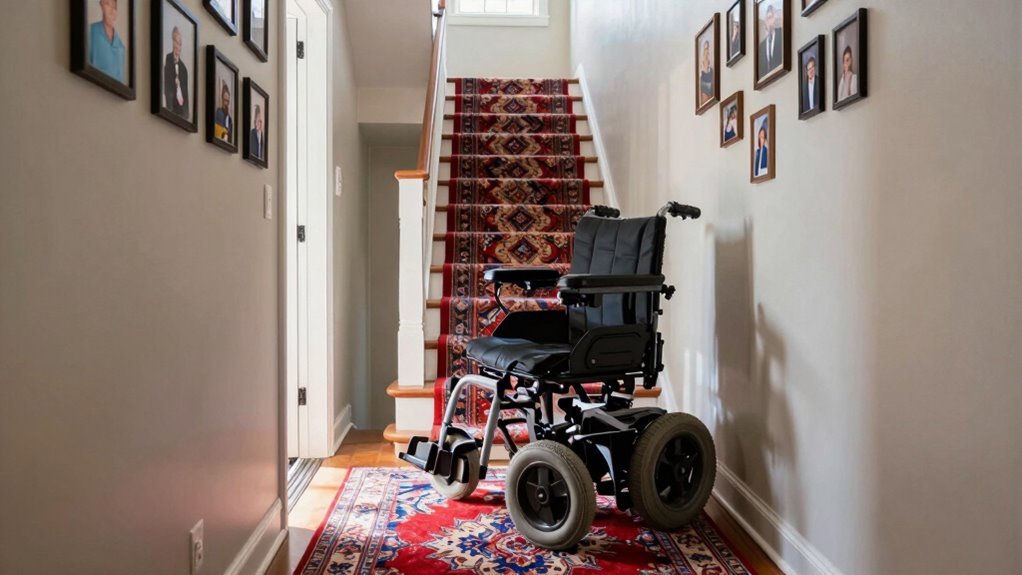
When maneuvering a home with a power wheelchair, steps and elevation changes can greatly impact your accessibility. You’ll want to identify any elevation gradients that could pose challenges. Steep inclines or declines may make navigation difficult or unsafe, so consider how these changes affect your daily movement.
If you encounter steps, look into step modifications like ramps or lifts to guarantee smooth shifts between levels. These adjustments can considerably enhance your mobility and independence. Before making a purchase, assess both the interior and exterior of your home for these obstacles. By addressing steps and elevation changes, you can create a more accessible environment that supports your needs and lifestyle.
Check Hallway Space for Easy Maneuvering
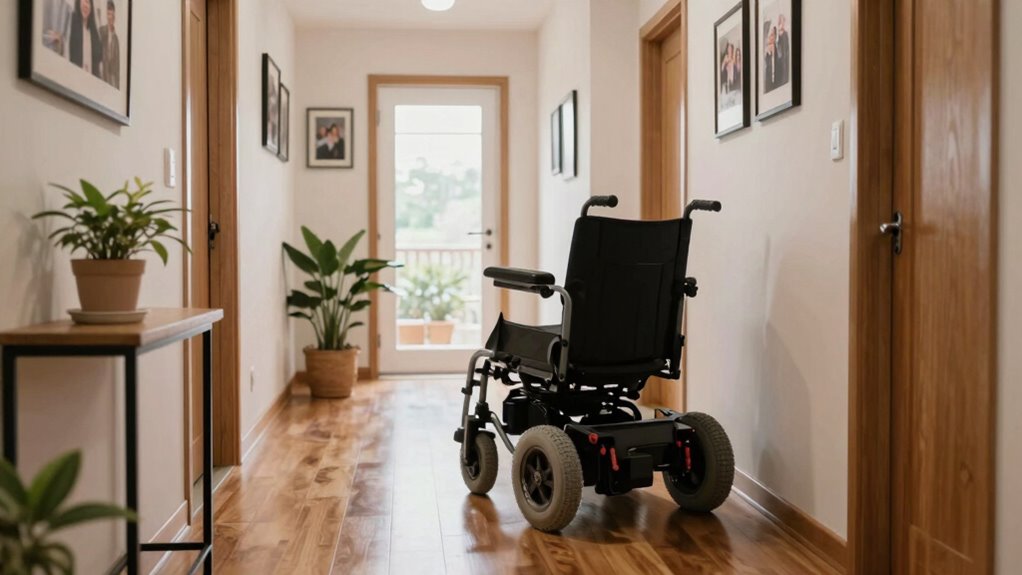
To guarantee easy maneuvering in your home, check the hallway space for any potential obstacles. Assess the hallway layout to confirm it accommodates your power wheelchair comfortably. You’ll want at least 36 inches of width for smooth navigation. Pay attention to corners and turns; if the layout is too tight, it could lead to frustration. Consider furniture placement, doorways, and any decorative items that might crowd the space. If possible, remove unnecessary items to create ample maneuvering space. Remember, a clear path not only enhances your independence but also reduces the risk of accidents. By taking these steps, you can confirm that your home is welcoming and accessible, making your power wheelchair experience much more enjoyable.
Spot Potential Obstacles in Living Areas
Sure! Here’s your revised content:
—
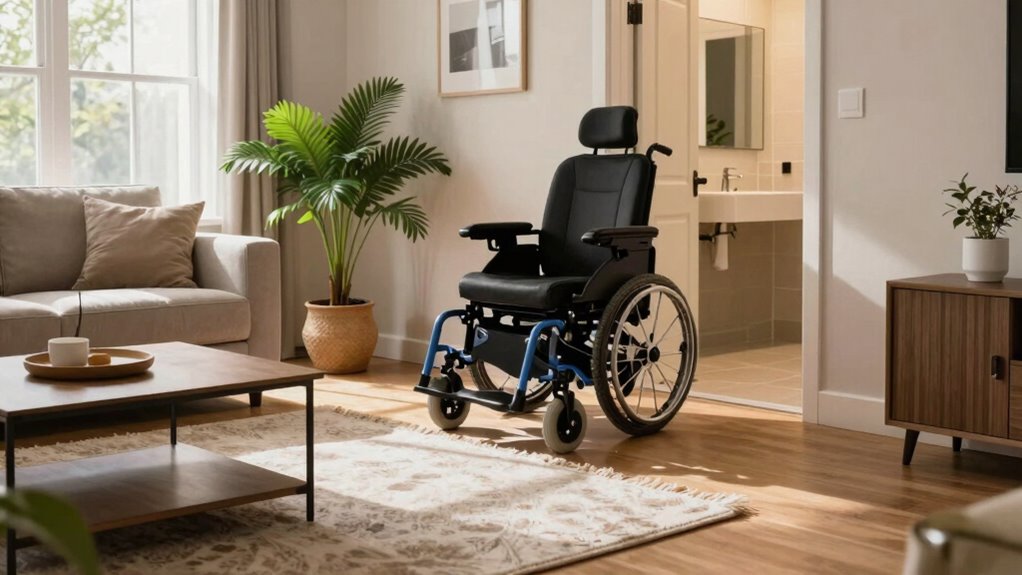
As you navigate your living areas, spotting potential obstacles is essential for maintaining your independence and safety. Pay attention to furniture arrangement and lighting conditions, as both can greatly impact your mobility. Here’s a quick guide to help you identify common obstacles:
| Obstacle | Impact on Mobility | Solution |
|---|---|---|
| Cluttered pathways | Tripping hazard | Regularly declutter |
| Low furniture | Difficulty passing | Rearrange or remove items |
| Poor lighting | Reduced visibility | Install brighter fixtures |
| Rugs and mats | Potential to snag | Secure or eliminate rugs |
Improving your home’s air quality can also enhance your overall well-being, making it easier to navigate through your living spaces with cleaner air tips.
Is Your Bathroom Wheelchair-Friendly?
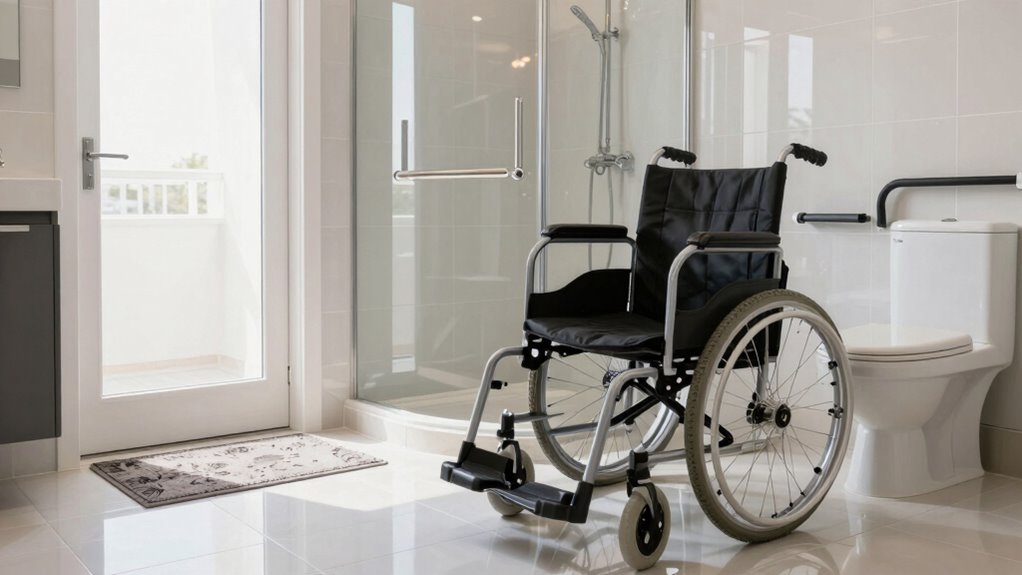
When evaluating if your bathroom is wheelchair-friendly, start by checking the doorway width to guarantee easy access. Next, consider accessible shower options to make your daily routine smoother. These adjustments can greatly enhance your comfort and independence.
Doorway Width Considerations
Many bathrooms aren’t designed with wheelchair users in mind, making doorway width a significant factor for accessibility. Before purchasing a power wheelchair, measure your bathroom door frames to guarantee they’re wide enough for your chair. Standard door widths often fall short, so you may need door frame adjustments to accommodate your needs.
Consider the type of wheelchair accessories you might use, like a transfer board or grab bars, as these can also affect maneuverability. If your wheelchair can’t fit through the door, it limits your independence and comfort. Confirming adequate doorway width not only enhances accessibility but also promotes safety, allowing you to navigate your space with confidence. Don’t underestimate this essential aspect when planning your bathroom layout.
Accessible Shower Options
To guarantee your bathroom is truly wheelchair-friendly, exploring accessible shower options is essential. Consider installing roll-in showers that allow easy access for your shower wheelchair, ensuring you can move freely. Include waterproof seating to enhance comfort and safety while showering. Don’t forget shower grab bars for added stability and support. Non-slip mats will help prevent slips, making your shower experience safer. Adjustable showerheads can provide convenience, letting you customize the height and angle to suit your needs. Look for easy access controls that are simple to operate, even with limited mobility. Additionally, incorporating eco-friendly materials can enhance the sustainability of your bathroom renovations. According to regular maintenance practices, keeping these features in good condition can significantly improve their longevity and effectiveness. Proper ventilation is also crucial for maintaining indoor air quality and preventing mold growth in your bathroom. Installing safety products can further enhance your home’s accessibility and comfort. Finally, consider essential home safety tips to ensure your shower area is equipped with all necessary safety features. With these features, your shower can become a safe and enjoyable space for you.
Plan for Outdoor Terrain and Navigation Challenges

While traversing outdoor terrain can be challenging, planning ahead makes it manageable. Consider the various terrain types you might encounter, like gravel, grass, or uneven sidewalks. Each type can affect your power wheelchair’s performance. Incorporating navigation aids can also enhance your outdoor experience, ensuring you stay on track.
- Assess your route for steep inclines or declines.
- Choose a wheelchair with sufficient power for rough terrain, especially when considering standby vs. portable generators for backup energy needs. Additionally, look into marine GPS systems that can help you navigate unfamiliar areas. For added peace of mind, consider investing in portable power stations to ensure you have energy on the go. A good understanding of strength training fundamentals can also contribute to your overall mobility and independence.
- Familiarize yourself with local pathways and their conditions.
- Keep a map or GPS app handy for quick navigation.
- Understanding the importance of long-term financial planning for assisted living needs can help ease the overall burden of mobility challenges.
Frequently Asked Questions
What Is the Average Turning Radius of a Power Wheelchair?
The average turning radius of a power wheelchair typically ranges from 20 to 30 inches. This measurement’s essential for maneuvering tight spaces, like hallways or doorways in your home. If you’re considering a power wheelchair, think about where you’ll use it most. A smaller turning radius lets you navigate easily, while a larger one might limit your access to certain areas. Always test the wheelchair’s turning capabilities before making a decision.
How Much Weight Can a Power Wheelchair Typically Support?
A power wheelchair typically supports a weight capacity ranging from 250 to 450 pounds, depending on the model. It’s essential to choose one that meets your specific needs for user comfort and safety. If you exceed the weight limit, it can affect both performance and durability. Always check the specifications before making a decision to guarantee you get the right fit for your lifestyle and mobility requirements.
Are There Power Wheelchairs Specifically Designed for Outdoor Use?
When it comes to power wheelchairs, you’ve got options that are built for the great outdoors. These models boast outdoor durability and terrain adaptability, allowing you to tackle everything from gravel paths to grassy fields. Whether you’re cruising through the park or maneuvering over uneven surfaces, outdoor-specific wheelchairs can handle the bumps in the road. So, if you’re ready to hit the trails, make sure to choose a wheelchair designed for adventure!
How Can I Test a Wheelchair’s Maneuverability in My Home?
To test a wheelchair’s maneuverability in your home, first measure the wheelchair dimensions. Confirm it fits through doorways and tight spaces. Move around your home, traversing corners and furniture to see how easily it turns. Consider your space planning—check if the wheelchair can access all areas you need. Try different surfaces, like carpets and tile, to gauge performance. This hands-on approach helps you find the best fit for your lifestyle and environment.
What Accessories Enhance a Power Wheelchair’s Functionality Indoors?
To truly make your power wheelchair shine indoors, think about enhancing its functionality with handy accessories. Indoor ramps can ease changes between rooms and make traversing thresholds a breeze. You might also consider wheelchair storage solutions, like wall-mounted racks or baskets, to keep your space organized. With these additions, you’ll not only improve mobility but also guarantee you’re living life to the fullest, without missing a beat.
Conclusion
As you prepare to welcome your new power wheelchair, think of your home as a garden. Just as a gardener clears away rocks and weeds to guarantee flowers bloom, you must identify and remove obstacles for smooth mobility. By nurturing a space that embraces accessibility, you create a thriving environment that allows you to explore life’s beauty. So, take these steps to transform your home into a vibrant sanctuary where freedom and independence can flourish.
Flea & tick season Picks
flea and tick prevention
As an affiliate, we earn on qualifying purchases.